Day 24: Friction, Mistakes Whiteboarding, & Gas Law Problems

AP Physics: Friction

Students worked on collecting data for variables that affect the force of friction. I have some friction blocks with a fuzzy side and a plain wood side, and asked students to make a graph of friction force vs. mass for each side, then prepare a CER for whether surface area and speed matter. A few groups opted to add a graph of friction force vs. mass for the narrow side of the block to answer whether surface area matters, and got beautiful results where the slope matched for both sides covered in the same material.

friction.jpg

Physics: Mistakes Whiteboarding

We did mistakes whiteboarding with Thursday’s problems. I dropped the ball on taking pictures, but there were some fantastic mistakes, especially on problems where neither the final nor the initial velocity is zero. I’m also seeing some great things emerge in the way my students approach discussion; in my 1st hour, there is one student who tends to be one of the most vocal, but both he and the rest of the class were very conscious of finding opportunities for other students to speak up.

Chemistry Essentials: Gas Law Problems

Students worked on some problems doing calculations with the gas laws. Since a lot of my students have very weak algebra skills, we are doing these problems proportionally. While my students worked, my co-teacher and I conferenced with each student about their grade and their progress so far.
Day 23: Board Meeting, Annotating Graphs, & Gas Laws

Today was students’ last day before a 3-day weekend and our homecoming pepfest, so classes were short and students were more energetic than usual.

AP Physics: Board Meeting

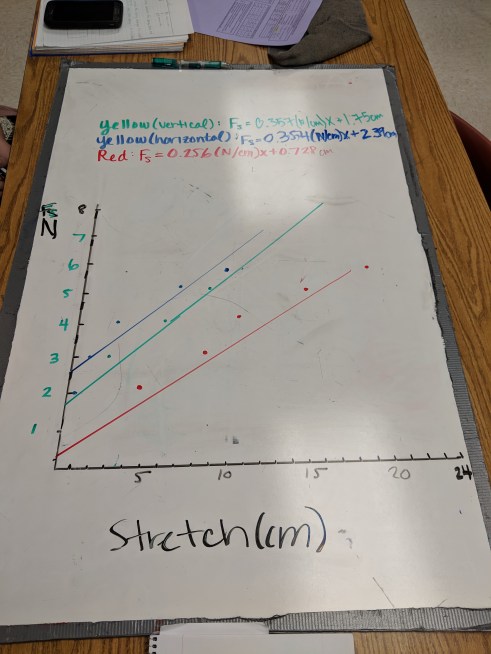
We had a board meeting for the spring force lab. Students initiated some good discussion about the intercepts in both sections, but I had to do a little coaxing to get them thinking about the values of the slopes. One of the challenges was a lot of groups hadn’t distinguished between mass and force of gravity, which tells me I should have done a little more pre-lab discussion, especially since that distinction was just introduced earlier this week.

spring wb.jpg
Physics: Annotating Graphs

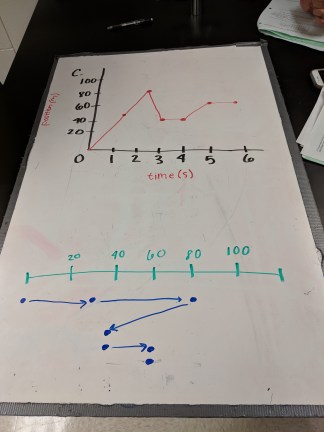
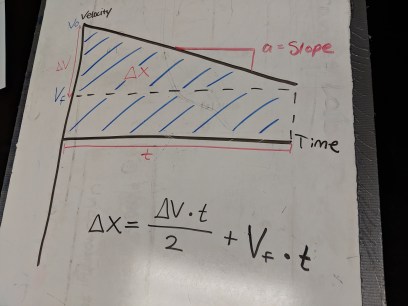
Students whiteboarded yesterday’s problems for a short gallery walk before trying some calculations. I think this is the first year where I didn’t have any students opt to use the formula for the area of a trapezoid on any of their graphs; it just felt more natural to most of my students to split the graph into a triangle and rectangle (which is what I usually do). When students started working with numbers, I had a lot of students independently start talking about specific times and velocities as coordinate pairs, which I haven’t seen students do before and was pretty great.

annot wb.jpg

Chemistry Essentials: Gas Laws

Students sketched their graphs from the past few days for a simplified board meeting. One of the things I really appreciate about this group is I have some students who are really willing to speak up when they are confused about something; one of my students was struggling to see how the graphs fit with the qualitative relationships we found earlier this week and didn’t hesitate to say so, which lead to some valuable discussion about how to read a graph.

gas laws wb.jpg

Day 22: Spring Force, Annotating Graphs, & Pressure vs. Volume

AP Physics 1: Spring Force

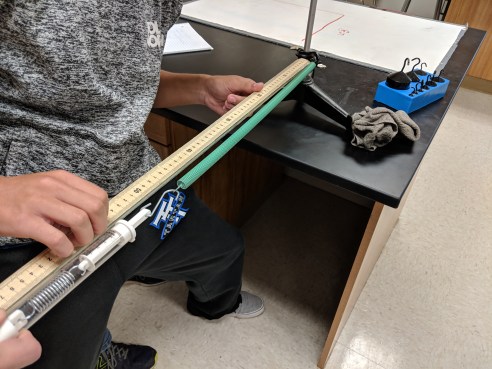
Students collected data for a relationship between the force on a spring and how much it stretches. I have them collect data for at least two different springs hanging vertically, then pick a spring where they also collect data by pulling it horizontally. I love the moment when groups call me over because something is “wrong” with their graphs because the line for when the spring is vertical matches the line for when the spring is horizontal.

spring lab.jpg

Physics: Annotating Graphs

As a stepping stone to graphical solutions for constant acceleration, students worked on annotating velocity vs. time graphs and building equations from the slope and intercept. Last year, this was really tough, so I changed some of the language I used to try and connect the annotations to the visible features of the graph a little more clearly, and it seemed to click for a lot of students.

graphical soln.jpg

Chemistry Essentials: Pressure & Volume

I am being compensated by Pivot Interactives for participating in a pilot of their chemistry materials.

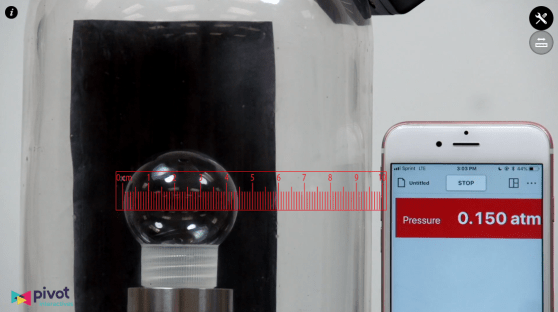
Students used another Pivot Interactives activity. This one used a bubble in a vacuum chamber to allow students to find a relationship between pressure and volume. In a previous lab on volume, finding the volume of a cylinder was a big hurdle for a lot of my students, so it was really nice for them to be able to use the tools in Pivot to do that number crunching without getting hung up on the math.

pivot pressure vol.PNG

Day 20: Force of Gravity, Graph Stacks, & Gas Laws

AP Physics 1: Force of Gravity

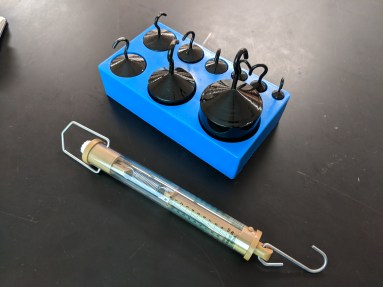
Students collected data to find a relationship between the force of gravity on an object and its mass. Not surprisingly, data is coming out pretty nicely. This is also giving students a chance to have some good conversations about uncertainty since their cognitive load on the rest of the lab is a little lighter.

gravity lab

Physics: Graph Stacks

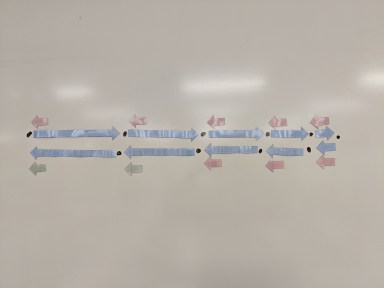
Students whiteboarded some problems from the Modeling Instruction curriculum sketching kinematic graph stacks for a cart on a ramp, a few of which we tested using a ramp with a motion encoder cart. I also got out Brian Frank’s magnetic vectors for the first time, which made it much easier to discuss the motion maps. For the problems we couldn’t test, I had students whiteboard a problem, then get with a group that did the same problem to come to a consensus, which lead to some great conversations between groups that disagreed.

motion map (2).jpg

Chemistry Essentials: Gas Laws

I got out some sealed syringes to do a qualitative exploration of ideal gas laws. Students made some great observations, and developed a nice, kinesthetic understanding of what pressure is.

gas laws.jpg

Day 19: Assessment, Card Sort, & Vocab

AP Physics 1: Assessment

Students took a quiz on impulse which took a lot longer than I expected; a lot of students spent a lot of time staring in confusion. I think spending Tuesday and Wednesday on forces lead a lot of students to forget how to do impulse and momentum, which tells me I need to work on helping them firm up that model.

Physics: Cart Sort Part 2

Students continued Kelly O’Shea’s kinematics card sort. Today, I added in the word cards and had them record a few of their sorts in their packet.

Chemistry Essentials: Vocab

Before today’s quiz, I had each group prepare a whiteboard with a particle diagram for a  different vocabulary term, then had students do a gallery walk.

chem vocab.jpg

Day 17: Free Body Diagrams, Whiteboard Prep, & Describing Substances

AP Physics 1: Free Body Diagrams

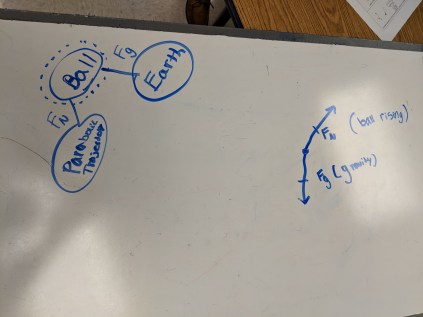
Students started working on some free body diagrams by diving straight into some mistakes whiteboarding. There was a lot of great conversation about the problems where an object was moving with a constant velocity as students did the expected wrestling with how an object is moving forward without a force in that direction. One of my classes also had some surprisingly good conversation about systems with a problem about an object at rest.

ap mistake (1).jpg

Physics: Whiteboard Prep

Students worked on their graphs and prepped whiteboards to discuss the ramp lab. With this being their first experience linearizing and their first time using Desmos, it took some time to get the boards ready. I think next year I’d like to introduce Desmos with the buggy lab so there is a little less new material going on in the ramp lab.

Chemistry Essentials: Describing Substances

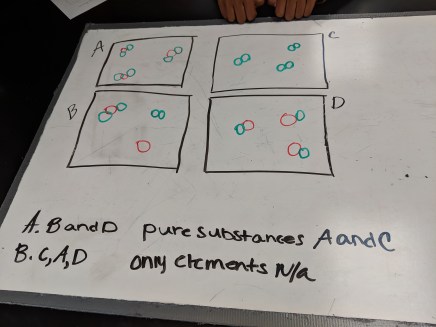
Students did a worksheet to practice with yesterday’s vocabulary, then I had them prep whiteboards and do a gallery walk to check their work.

chem paeti le.jpg

Day 15: SOS Diagrams, Ramp Lab, & Density Representations

AP Physics 1: SOS Diagrams

I took a few minutes to introduce SOS diagrams for momentum and impulse, then had students whiteboard some problems. The biggest challenge was thinking through what are useful snapshots to use but, once students wrapped their heads around that, things seemed to go very smoothly.

sos.jpg

Physics: Ramp Lab

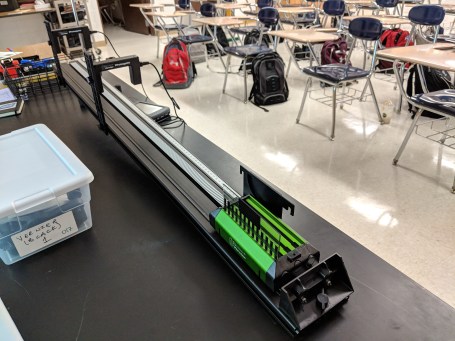
Students started collecting data to make position vs. time graphs for a cart on a ramp. This was their first time using the tracks and their first time using LabQuests, so it was a lot to take in. Several groups commented the first data point was the hardest to get, but, once they knew what they were doing, the data collection was quick and easy.

ramp lab.jpg

Chemistry Essentials: Density Representations

Today was the density quiz, so we started by using whiteboards to review some different ways to represent density. Most students seem pretty solid on the particle diagrams, but mass vs. volume graphs are challenging for a lot of them. In general, graphs have been challenging for a lot of my chemistry students this year, largely because I overestimated their prior knowledge and haven’t adapted as well as I’d like.

density particle.jpg

Day 14: Board Meeting, Dueling Buggies, & Density Challenge

AP Physics 1: Board Meeting

We had a board meeting on the impulse lab students have been working on. There were a few groups with really nice results, but this is a very tough one to get consistently accurate slopes, which made the discussion tough, even though my students did a nice job. It was a little tricky getting to the formula we’ll be using for impulse since the lab had a non-constant force, but the equation assumes a constant one. Next year, I might switch to the half-Atwood machine, rather than saving it for unbalanced forces.

impulse lab.jpg

Physics: Dueling Buggies

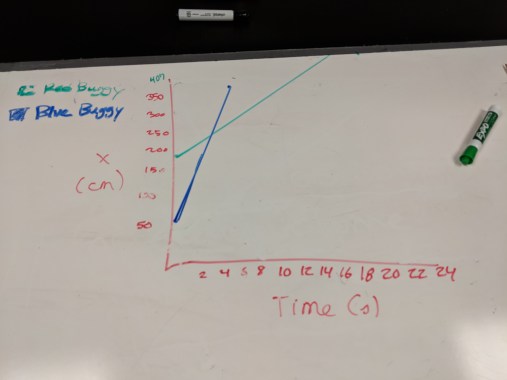
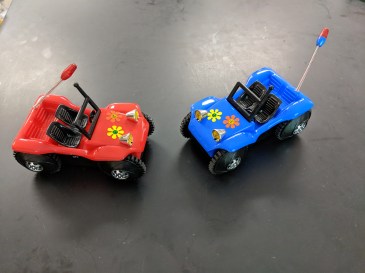
Students finished up the dueling buggies lab practical. I saw a much wider range of approaches than in my AP classes this year; most of my AP students are in the same math classes, which I think encourages them to think about problems in similar ways. My regular classes, meanwhile, have a much wider range of students, so there was a lot of great discussion about different ways to think about this problem.

dueling buggies.jpg

Chemistry Essentials: Density Challenge

I am receiving access to Pivot Interactives this year in exchange for piloting some of their chemistry activities.

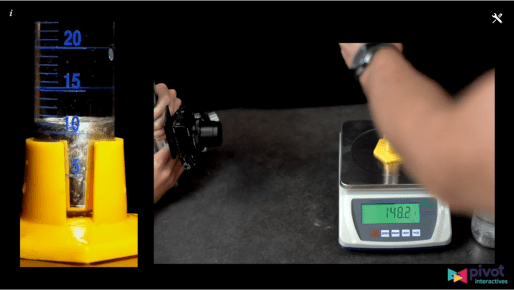
Students used Pivot Interactives to make mass vs. volume graphs to identify unknown liquids by their density. A lot of students had some trouble getting started, but, once I pointed out the similarities to the density of water lab we’d done, they were very successful. The videos don’t zero the balance so that the graph will end up with an intercept; this was the first graph with a non-zero intercept they’ve seen in this class, so it was challenging, but we were able to work through it. I think just about every group picked gallium as their unknown liquid, which is fitting, since it would be the hardest to do in the classroom.

pivot density.PNG

Day 13: Impulse, Dueling Buggies, & Mistakes Whiteboarding

AP Physics 1: Impulse

Students finished up their data collection for the impulse lab. Some groups have really nice looking data, while other groups have graphs where the pattern is much less clear. I need to spend some time trouble-shooting this lab to see about getting more consistent results. Most of the groups did a nice job of taking turns operating the LabQuest, even without me explicitly directing them to.

IMG_20180919_100054.jpg

Physics: Dueling Buggies

Students wrapped up yesterday’s mistakes whiteboarding, then started work predicting where two buggies would collide. My classes, especially my 1st hour, are taking very quickly to mistakes whiteboarding, so the conversations were much better than I usually expect at this time of year.

dueling buggiea.jpg

Chemistry: Density Mistakes Whiteboarding

We only got through one problem yesterday, so we finished doing mistakes whiteboarding for some density problems. Yesterday, it was very tough to get students to speak up, so today I had students spend a minute or two talking to a neighbor about each whiteboard before we shifted to whole class discussion, which helped a little. The biggest factor was a few students who were gone yesterday were very eager to participate and, once they asked some questions, other students seemed more comfortable speaking up.

Day 12: Impulse & Mistakes Whiteboarding

AP Physics 1: Impulse

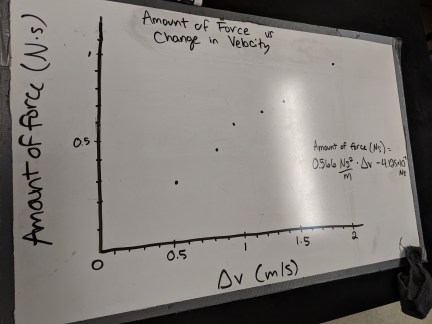
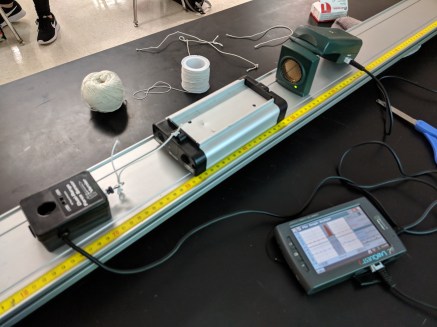
We started by discussing the idea that both the magnitude of a force and the amount of time its applied seem to matter for changes in momentum to get to the idea that we could compare the area of a force vs. time graph to the change in velocity. Students used elastic strings to connect carts to force sensors and started collecting data. This was the first lab where students used the dynamics track and where they collected quantitative data from the LabQuests, but students seemed to get comfortable with the equipment pretty quickly.

impulse.jpg

Physics: CVPM Mistakes Whiteboarding

Students did mistakes whiteboarding with yesterday’s quantitative CVPM problems. In my 1st hour, a lot of groups were very vocal about picking a mistake one of them had made, and I love the way this places a value on their mistakes and gives them the opportunity to conquer the mistake.

phys mistake.jpg

Chemistry Essentials: Density Mistakes Whiteboarding

This was my chemistry class’s first experience with mistakes whiteboarding. I started the hour with a short vocabulary review that seemed to help cement the key concepts we’re working with. The class was very quiet during the whiteboard presentations, so we only go through one. I think tomorrow I’ll have them do some talking to a neighbor about each board before we shift to whole class.

chem mistake.jpg