Day 94: Whiteboarding, Bouncy Ball Energy, & Classifying Matter

AP Physics: Whiteboarding

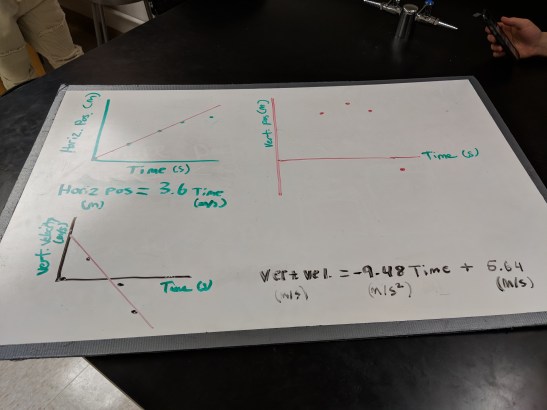
Students whiteboarded their answers to yesterday’s problems. There were a couple of meaty ones on the worksheet, so I had all groups whiteboard the same problem and then we had several consensus-building conversations.
quantization.jpg

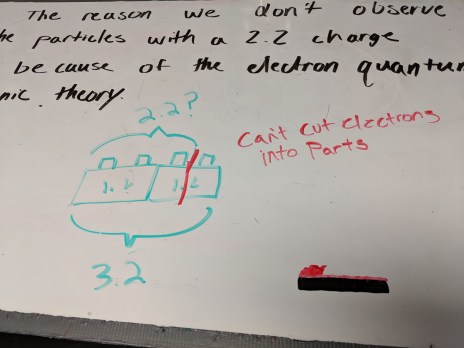
A visual for quantization of charge

Physics: Bouncy Ball Energy

We wrapped up figuring out where a bouncy ball dissipates energy. As part of the follow-up, we dropped a kickball under a motion detector (thanks to Brian Frank for the idea!) to produce energy vs. time graphs and confirm the results from students’ video analysis.
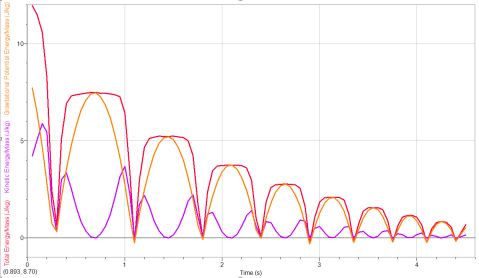
kickball e-t graphs.PNG

Chemistry Essentials: Classifying Matter

Students worked on a worksheet to connect particle diagrams to the vocabulary for classifying matter that we introduced yesterday. I also was able to have really good individual interactions with a couple of students I’ve been butting heads with a lot, which helped make the whole classroom feel more relaxed and positive. I’ve been getting overwhelmed in chemistry a lot this year and have not done a good job of making time to talk to students about things besides chem, and I can’t underestimate the value of those conversations.
Day 91: Coulomb’s Law, Bouncy Balls, & Bohr Model

AP Physics: Coulomb’s Law

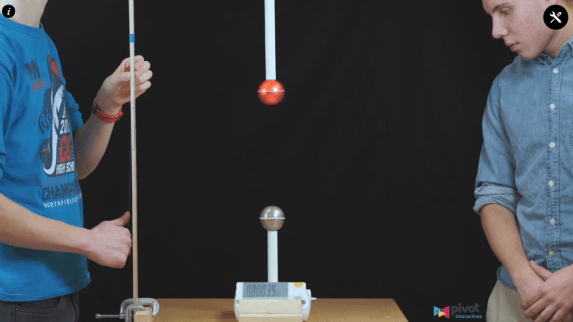
Students worked on a Pivot Interactives activity to find a relationship between the force between two charged spheres and the distance between them. A few students started wondering about the limits of the model since they recognized an infinite force doesn’t make sense, which lead to some good discussion about what it would take to make the distance zero.

pivot force dist.PNG

Physics: Bouncy Balls

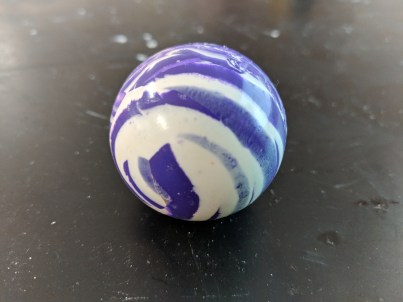
Students started working a lab to determine what interaction is dissipating energy for a bouncy ball (my article about this activity was published in the January issue of The Science Teacher). Today, students worked on sketching representations of the bouncy ball’s motion, including energy bar charts, free-body diagrams, and velocity vs. time graphs for each possible explanation in order to identify useful evidence they can get from video analysis of the bouncy ball. To scaffold this process, I had students sketch the representations on a worksheet today rather than going straight to whiteboards.

bouncy ball.jpg

Chemistry Essentials: Bohr Model

We talked about the results of last week’s simulation to find the links between the Bohr model and the periodic table, then students worked on a worksheet sketching Bohr models from the periodic table. I skipped over revisiting static electricity (which the Modeling Chemistry curriculum calls for) to help establish the concept of charge, but I think next time I’d like to make time for it.

Day 89: Superposition, Energy Practical, & Atomic Models

AP Physics: Superposition

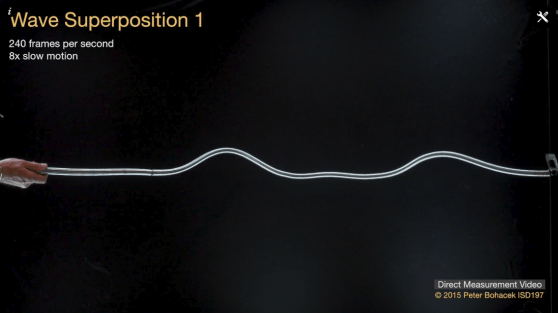
After a little playing with the snakey springs, students went to Pivot Interactives to explore wave superposition. There was a lot of great discussion about whether the wave pulses passed through each other or bounced off each other with students making some pretty detailed observations of the pulses.

pivot superposition.PNG

Physics: Energy Practical

Students worked on using conservation of energy to determine where to place a photogate on a ramp to get a cart moving at a certain velocity. A lot of groups had trouble interpreting their height measurements; I think a lot of them were not keeping track of where they placed the reference height. One group recognized this is pretty similar to the kinetic energy lab we did and used their lab results to confirm today’s calculation.

MVIMG_20180131_131952.jpg

Chemistry Essentials: Atomic Models

I still haven’t found a way I’m really happy with to address the state standard about the evolution of atomic models, but today was the day I tried. I used a POGIL activity where students read some summaries of the major steps in the atomic model and answered some questions. A few students felt overwhelmed by the length of the reading, so we talked about how to use the section headings to make it more manageable. I liked this better than last tri’s jigsaw since doing the full reading seemed to help more of them see the different models as part of the same story.

Day 87: Standing Waves, Whiteboards, & Elements Card Sort

AP Physics: Standing Waves

Between parent teacher conferences and a bad cold, I failed to actually assign the Pivot Interactives activity I’d planned for Friday to any classes, which made it a little tricky for them to complete. Today, I actually assigned it and they collected data to find a relationship between the wavelength and frequency of a standing wave. The upside is my students had a very self-directed activity while I was still not at 100%.

standing waves pivot.PNG

Physics: Whiteboarding

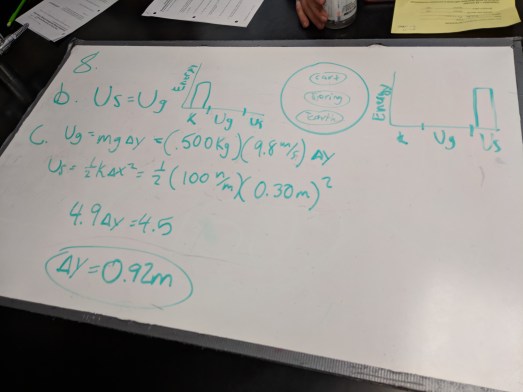
The majority of my students attempted the problems I left for them to do with Friday’s sub, which is a nice sign of progress. Today, we spent some time whiteboarding the problems, mostly using gallery walks. I gave each problem to at least two different groups so they could compare answers and approaches before the gallery walk, which helped build some confidence. In another sign of progress, in one group that is usually pretty quick to ask for help, one member insisted that today, they would discuss every question before they asked me and told me to wait several times when her groupmates called me over. In the end, they were able to reason their way through every question they had.

lol wb (1).jpg

Chemistry Essentials: Elements Card Sort

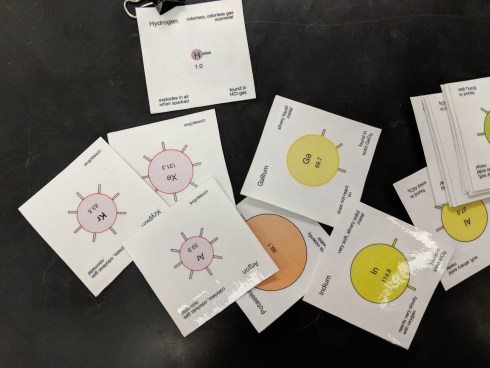
Students worked on a card sort activity loosely based on Mendeleev’s process for developing the periodic table. Each group picked two properties to sort by (one for columns and one for rows), and quickly noticed that other patterns started popping out. I also got a lot of students eager to know what some of the features of the cards represent, so it will be nice to tie some upcoming activities back to this one. Though, I need to brush up on my history a little bit to explain how Mendeleev knew some of these properties.

card sort (1).jpg


Day 84: SHM Trio, Kinetic Energy, & Lauric Acid Take 2

Yesterday was a snow day.

AP Physics: SHM Trio

Students analyzed a video from Pivot Interactives of a pendulum, a spring, and a rotating disk in synchronized simple harmonic motion. I overheard some really good conversations about differences between the x-position vs. time and y-position vs. time graphs for the pendulum; a few students relate it back to the projectile Pivot Interactive we’d done and tried to imagine a camera that just showed the vertical motion of the pendulum.

SHM Trio.PNG

Physics: Kinetic Energy

Students started collecting data to find a relationship between the change in height of a cart on a ramp and the velocity at the bottom. On the elastic potential energy lab, a lot of students just measured the height of the cart, rather than the change in height, so I spent some extra time on the pre-lab discussion to make sure students saw why the change is important.

ke.jpg

Chemistry Essentials: Lauric Acid Take 2

We took another shot at finding the freezing point of lauric acid since the weather on Monday cut us short. A few students who’d collected some data were frustrated that they had to start fresh, rather than picking up where they left off. It will probably be worth spending some time tomorrow on why they had to start fresh, especially since it connects to what the graph physically means.

Maker:S,Date:2017-10-21,Ver:6,Lens:Kan03,Act:Lar02,E-ve

Day 74: Projectiles, Energy Transfer, & Quantitative Gas Laws

AP Physics: Projectiles

Students worked on some problems for projectile motion. I overheard a lot of students talking about the labs and demos from last week (which Brian Frank’s post on labs had me listening for!). They could use some more practice justifying answers with physics principles, along with lab results, but that will come.

Physics: Energy Transfer

I used a lab I got from Twitter (I wish I could remember who; if its you, I’m happy to give you credit!). To introduce energy, I had students measure the force and displacement required to pull a cart up ramps with different angles. Then, they sketched force vs. displacement graphs and found the areas.

energy transfer.jpg

Chemistry Essentials: Quantitative Gas Laws

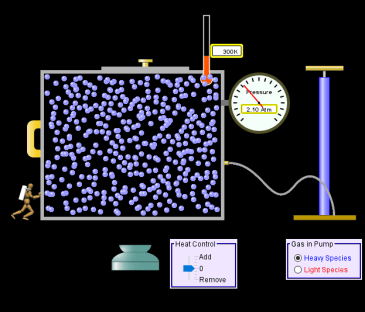
Students used PhET’s Gas Properties simulation to get quantitative relationships between temperature and pressure as well as volume and pressure. There were a lot of great observations about the movement of the particles and one student even pointed out the temperature skyrockets when you add gravity, which should feed nicely into tomorrows discussion.

Gas Laws Sim

Day 71: Board Meeting, Practical, & Density Again

AP Physics: Board Meeting

Students whiteboarded their graphs from yesterday’s video. Once I had my 2nd hour find a class average for the slopes of their vertical velocity vs. time graphs, everything fell beautifully into place and there were even gasps when one student sketched a free-body diagram. In my other hour, a lot of groups skipped the directions for making the v-t graph and tried to take shortcuts that didn’t work, so I had to step in a little more. This reinforces my thoughts yesterday that I should have spent some time discussing the midpoint method.

pm graphs.jpg

Physics: Unbalanced Forces Practical

Students started a practical to predict the time it will take a cart to roll down a ramp given the cart’s mass and the ramp angle. For the first time, I had several students ask if I could just do a diagram or calculation for them, so I left the pen I usually carry at my desk and kept my hands in my pockets to avoid encouraging that.

ramp prac.jpg

Chemistry Essentials: Density Misconceptions

Today, I have students blocks of the same material, but different volume, and asked them to determine whether volume affects density. A lot of groups had trouble funding the volume with a ruler, rather than later displacement, so I should have spent a little more time on a pre-lab discussion connecting yesterday’s volume measurements to today’s.

density (1).jpg

Day 70: Projectiles, Forces Reintroduction, & Density

AP Physics: Projectiles

Students did an activity on Pivot Interactives to watch the motion of a projectile from three different vantage points and produce position vs. time and velocity vs. time graphs. From what I saw, most groups got pretty good results. This was the first time students saw the midpoint method for finding slope of a curve, and I think I should have spent a little more time introducing that. We can have some discussion about it tomorrow.

projectile.PNG

Physics: Forces Reintroduction

Especially because a lot of students really struggled with the forces assessment right before break, we started this week getting back into the swing with some problems similar to what we worked on right before break. Before break, I was also seeing more and more students getting off-task during time with their groups, so I spent some time sharing my observations and having some discussion about how that fits with what it takes to be successful in a class like this.

Chemistry Essentials: Does shape affect density?

I had students determine whether the shape of a block affects its density using a set of aluminum blocks with different shapes, but the same volume. Last tri, I’d asked students to predict the shape of the mass vs. volume graph, but it was tricky to collect class data and the graph was kind of boring since I didn’t have much variety of volumes. This approach got the same misconceptions out on the table, but gave more meaningful results.

density.jpg

Day 60: Kinetic Energy, 3rd Law, & Melting Mass

AP Physics: Kinetic Energy

To introduce kinetic energy, I had students work through a Pivot Interactives activity to find a relationship between the starting height of a puck and its velocity at the bottom of a ramp. I ran out of time to have a pre-lab discussion yesterday, so tried to have one in the computer lab today. I had more students then usual struggling with what to measure or what to graph, and I think that was because a lot of them started the activity rather than fully engaging in the discussion. Once they got rolling however, students warmed up to the interface pretty quickly.

pivot ke.PNG

Physics: 3rd Law

We collided carts with force sensors to check the predictions students made yesterday. I spent more time than usual talking about why I asked them to make predictions I know are likely to be wrong since confidence has been such an issue for students this year.


\

Chem Essentials: Melting Mass

Students continued the Modeling Instruction mass and change labs. Today, they melted ice and mixed sodium carbonate with calcium nitrate; a lot of students really liked that reaction and were observing close enough to notice the precipitate causing the cloudiness. I added a mini-exploration of the zero button on the balance, which I was pretty happy with. A lot of the students in the course struggle with mathematical reasoning, and taking a few minutes to play with the zero button and the readings on the balance seemed to help make its purpose more concrete.

mass change.jpg

Day 49: Numberless Problems, Vector Addition Diagrams, & Bohr Model

AP Physics: Numberless Problems

Students have been feeling pretty good about the unbalanced force problems so far, so I gave them some problems without any numbers. It took some time to get through the first one, then things went very smoothly, even as the problems got tougher.

Physics: Vector Addition Diagrams

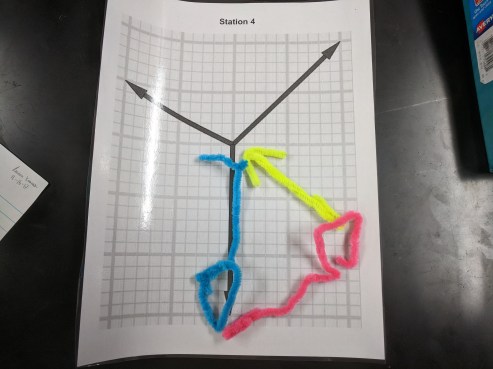
Students did an activity I got from Casey Rutherford using pipe cleaners to translate between free-body diagrams and vector addition diagrams. Students had some good conversations about the difference between balanced forces and equal forces.

vad.jpg

Chemistry Essentials: Bohr Model

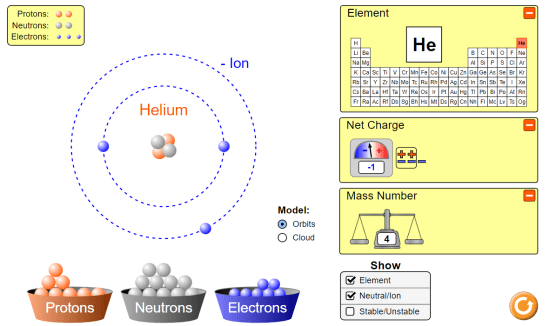
Students finished exploring PhET’s Build an Atom simulation. They were able to recognize all of the patterns I wanted them to and were very successful on the questions I had connecting the simulation to their periodic tables. I was also pleased by how quickly students picked up on the fact that the simulation only gave whole number masses, while their periodic table has lots of decimals.

phet atom