Day 17: Assessment Reflection & Movie Day

I’m spending the day at a district strategic planning session, so my students have a sub.

AP Physics: Quiz & Problems

Students took their quiz on constant acceleration. Our math teachers have been integrating reflection into their assessments and seeing some good things as a result, so I decided to steal the idea. On the first quiz, most students rated themselves lower than the score I gave, so it will be interesting to see what happens this time. After the quiz, students tackled some acceleration problems using graphical solutions, including a goal-less problem and what Etkina calls Equation Jeopardy, where students are given an equation, and have to come up with a scenario that fits.img_2249

Earth Science: Movie Day

The curriculum in my building calls for a video on Mt. Everest as part of the unit on the atmosphere, which is a perfect fit for a sub day.

Day 10: Assessment Day!

Both my classes took their first assessments today.

AP Physics

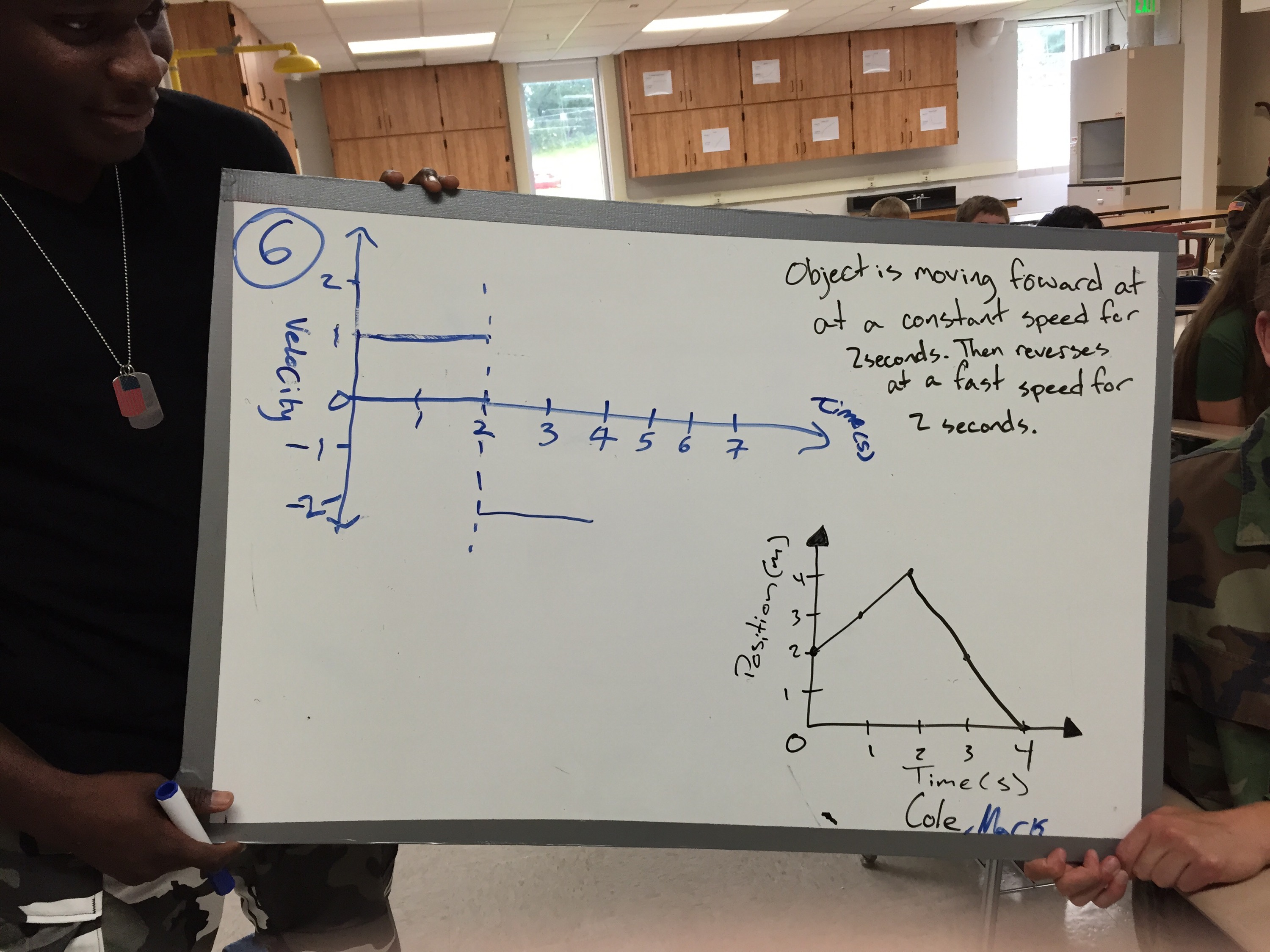
On a problem where students were asked to determine the change in position from a velocity vs. time graph, I had a lot of students describe the motion of the object, instead. We spent more time in class describing motion than calculating, which probably primed students to jump straight to describing. A recurring theme at my AP Summer Institute is that students should read back over the question to make sure they are answering what is being asked, so this will be a good opportunity to discuss that strategy.

Earth Science

After the quiz, we spent some time talking about what makes an effective lab group. I need to keep reminding myself that collaboration is a skill and time spent on those conversations does pay off.

Day 173: Year End Reflection

Its the last day of school, but I’ve got no students today, so its a good opportunity for me to look back at this year. Plus, after managing to keep up with this blog all year, I couldn’t miss the very last day of school!

Classroom Culture

I’ve written about this before, but this year I was much more intentional about building a classroom culture and getting students to see the value in a student-centered approach. Students were much more willing to take intellectual risks early in the school year and were very positive about the course. I also heard a lot more growth mindset talk from my students. The time I spent on class culture was time well spent.

I was a little worried about culture building in my sections of 9th grade physical science and Chemistry Essentials since I only got 12 weeks with each of those sections, but getting students to buy-in and take risks was much quicker and easier than in my honors-level physics classes. I think a lot of it has to do with each groups prior experiences with school. The students who take physics have typically been very successful in school, so I’m changing the rules of a game they’ve been winning. My chemistry students tend to struggle in school, so the game of school seems broken to them and it can be a relief when a teacher does something different. I had my 9th graders their first trimester of high school, so it seemed natural that my science class was different.

Next year, I want to work on explicitly teaching students how to work collaboratively and building in more individual accountability. I had some lab groups that didn’t really know how to approach a task collaboratively where one person would take the lead while others acted as sponges. Not surprisingly, the students in these groups tended to get lower grades and show less growth on the Classroom Test of Scientific Reasoning. This summer, I’m going to spend some time working on how I can help students build the skills to truly work collaboratively.

Grading

This year I made the switch to standards-based grading (SBG) in my physics class, and I’m very happy with the change. A lot of students talked about how this approach encouraged them to really learn the material and they liked that they were encouraged to go back to what they didn’t understand. I think SBG also helped build the positive, growth-oriented classroom culture I was after.

The big question when I talk to colleagues about SBG is always how to get students to do the daily work. In physics, students figured out pretty quickly that they needed the daily work to prepare for the assessments. In chemistry, I had a lot of students who I never got out of the mindset that not graded means not worth doing; the students who expressed this belief most strongly were also the ones most surprised by what appeared on assessments. While I don’t want to start putting everything students do in the gradebook, giving students more feedback on their daily work could add some value to the daily work in students’ eyes.

I think this is also part of a larger pattern I saw in the course where many students seemed to view individual lessons as completely separate from each other; if each day stands alone, then why should what students do in class on Thursday affect how they do on the assessment Friday? I did some having students write summaries of the lesson and complete a warm-up at the start of the next, but I didn’t do it consistently and I didn’t put the time or effort into making it truly meaningful. If I teach a course like this one again, I need to put in the work to make the summaries and warm-ups more valuable so that the course shifts in the students’ eyes from being a series of isolated lessons to a coherent whole.

Day 164: Senior Skip Day & Half Life Whiteboarding

Physics: Senior Skip Day

Today was the unofficial senior skip day, so I had less than a third of my students in class. I normally limit students to two reassessments per week, but gave students who were in class today an opportunity to do some additional reassessments. A few came to my class just to take advantage of that. A couple of students who were in school so they could play in a baseball game this weekend asked if they could work on the final review.

Chemistry: Half Life Whiteboarding

Only a few of my students in chemistry are seniors, so we continued as usual. Students finished the problems from yesterday and whiteboarded their solutions. I got some pushback from a few students who were very vocal about their opinion that if the seniors are gone, they shouldn’t have to work on chemistry. This may make the last week of school tough since seniors are dismissed a week early, so I need to start thinking about how I will keep my juniors motivated.

IMG_1905

Day 121: Pendulums & Quiz

Today was the last day of classes before spring break.

Physics: Pendulums

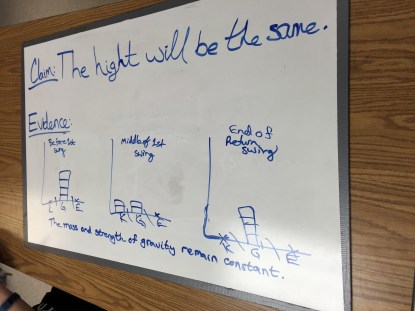
Before their quiz, I had students make predictions about a few different pendulums. First, they predicted how the maximum height on the return swing should compare to the starting height, then they made some predictions about a pendulum that uses a magnet to pick up a steel sphere at its lowest point, and finally we used a hover disc on a tilted table as a pendulum and students made predictions about what happens when the table’s angle changes.

IMG_1747

Chemistry: Quiz

Students took their first assessment of the course on representing reactions.

Day 29: Presentations & Problems

I spent the day at a college fair with a group of seniors, so my students were left with a sub today.

Physical Science: Presentations

Students worked on a “sales pitch” for their engineering projects. Next week, they’ll present them to the rest of the class.

Physics: Quiz & Problems

Students took a quiz today. On the last quiz, a lot of students knew what they were doing, but hadn’t shown their work as clearly as I’d like. One of the things I love about standards-based grading is there’s always another chance, so I can be a jerk. I docked students on the last quiz if they didn’t clearly show their work, but put another problem for the same standard on today’s quiz to make sure everyone gets another shot.

After the quiz, students worked on some problems. Tomorrow, we’ll whiteboard.

Day 9: Constant Velocity & First Quiz

Today was homecoming, so classes were shorter than usual and students were more energetic than usual, but we still got some science done!

Physical Science: Constant Velocity Graphs

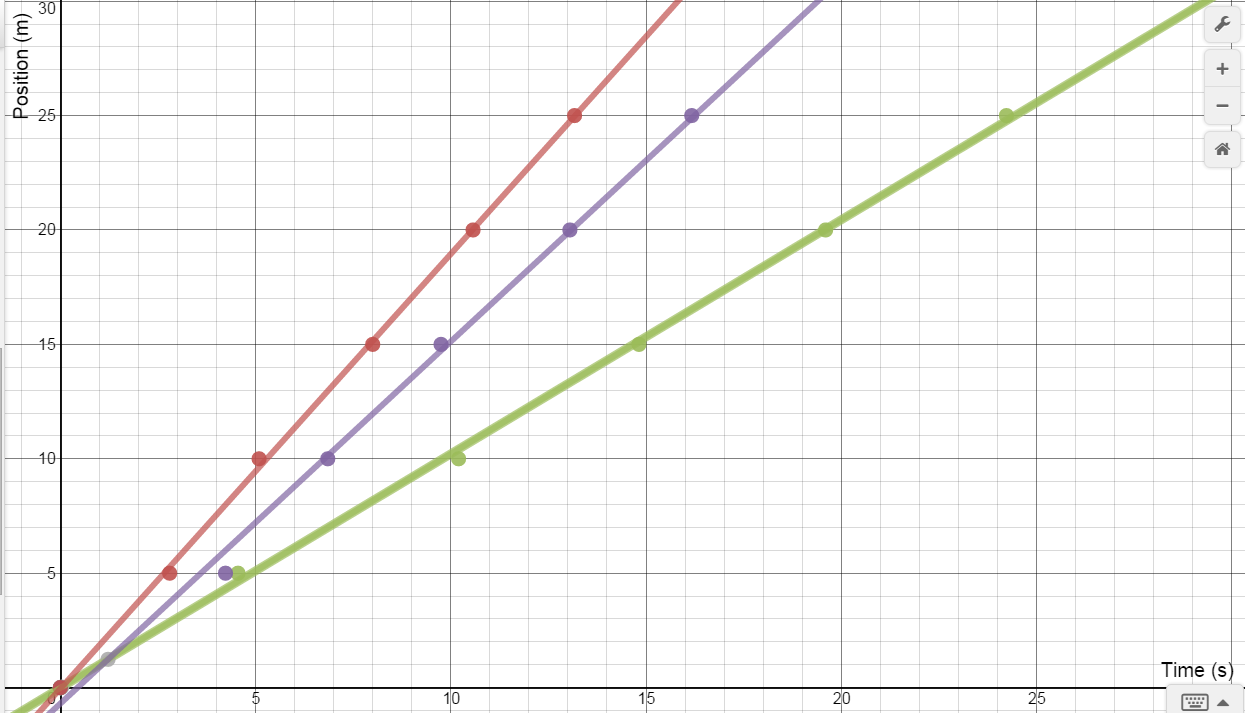
To introduce constant velocity, three students walked down the hall at different speeds while timers measured how long it took them to reach set points. Most students opted to make their graphs in Desmos. On Monday, we’ll find the equations for the lines to get the significance of the slope.

graph

Physics: First Quiz & Intro to CER

Students took their first quiz of the year. This is my first year using standards-based grading, and I was pleasantly surprised at how fast and easy it was to settle on a grade with only three possible scores, which meant I could focus on providing quality, growth-oriented feedback. After the quiz, students got into small groups to work through some TIPERs questions. I used the questions to introduce the Claim-Evidence-Reasoning framework, which I’m planning use quite a bit this year.

Day 8: First Quiz & Mistakes Game

Physical Science: First Quiz

Students took their first quiz today. I’ve decided to move away from big unit tests in favor of short, frequent assessments. We now have a school-wide policy requiring at least one retake opportunity on all assessments, so I tried to really focus on providing feedback, not grades on the quizzes. It made me feel really optimistic, and I hope my students can find some of the same optimism.

Physics: Mistakes Game

Students played Kelly O’Shea’s mistakes game using some representations of constant velocity. Students got into it and the mistakes they picked showed a lot of common errors. One group got creative with units; the problem didn’t specify, so they decided to use liters per second, explaining that the object was traveling over a body of water with a constant depth. There’s some room to improve on the questions students were asking, but I had a lot of students very willing to speak up and I’m sure they’ll rise to the challenge if I make it a priority.  

Day 4: Bar Charts & CTSR

My sister is getting married this weekend, so today was my first sub of the year.

Physical Science: Energy Bar Charts

Students used the textbook to define kinetic and potential energy. I included some questions to try and connect the definitions to yesterday’s observations in the PhET Conservation of Energy sim. On Monday, we’ll have some class discussion so I can see what connections they made. Students will also be doing a few energy bar charts.


 Physics: CTSR
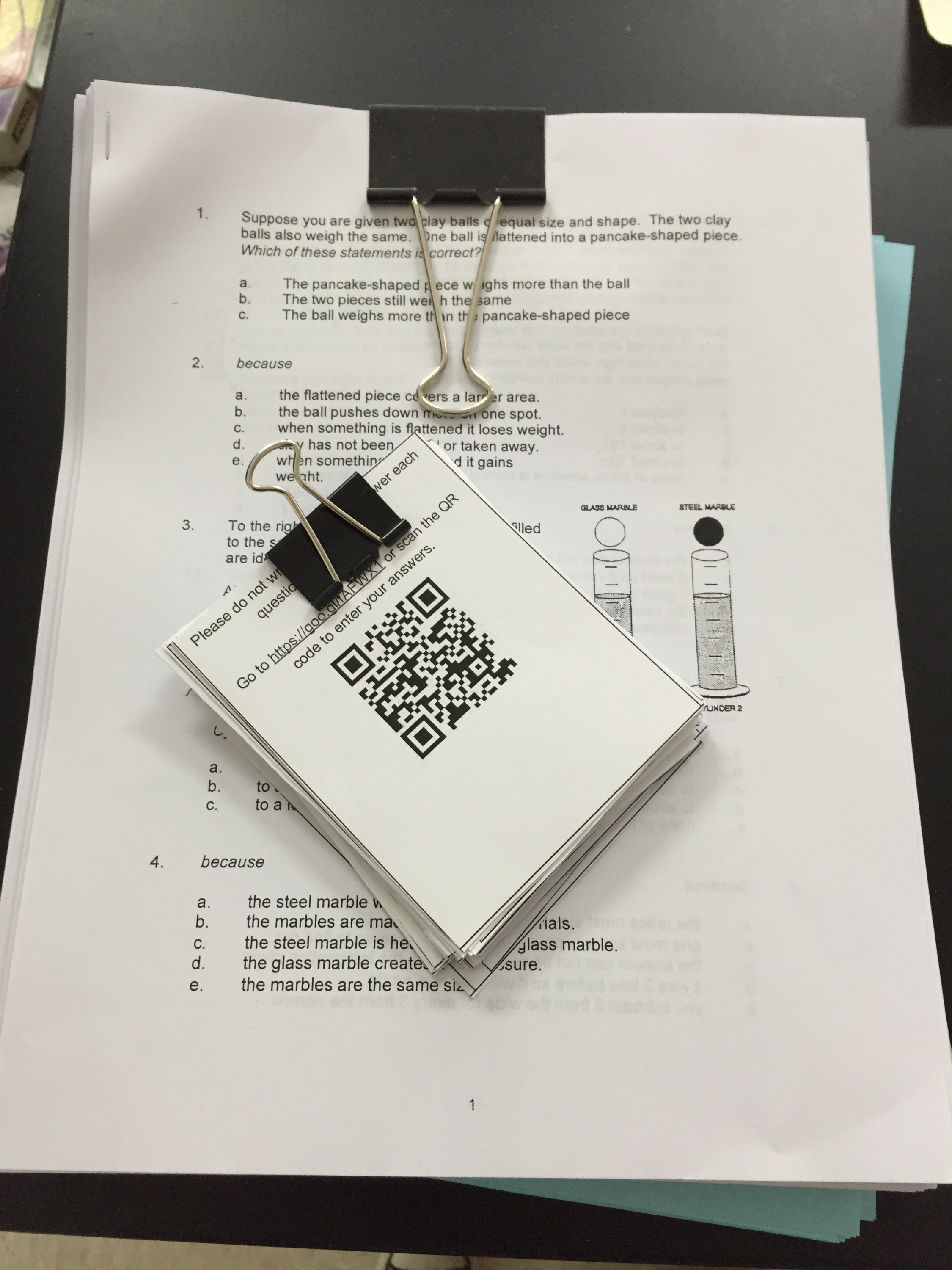
The 11th and 12th grade teachers in my department decided to base our PLC goal on Lawson’s Classroom Test of Scientific Reasoning so that we can focus on integrating more inquiry and critical thinking into our courses. My students are taking it as a pre-test today. Most of the questions are scored in pairs, so students are submitting answers in a Google Form that will automatically calculate scores. Once they finish, students will practice translating between position vs. time graphs, velocity vs. time graphs, and verbal representations by starting the Motion Detector Lab. On Monday, we’ll add in motion maps and get out the detectors.