Day 136: Toilet Paper, Snakey Springs, & Limiting Reactants

AP Physics: Toilet Paper

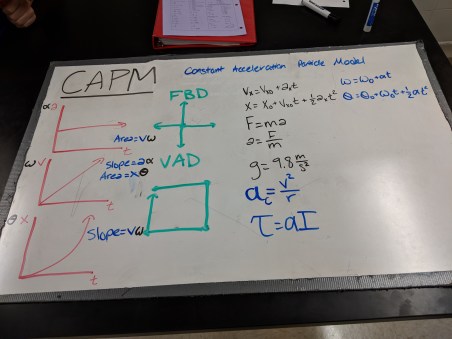
I started by having students whiteboard some model summaries. I started with linear motion, then asked students to add the angular version of each representation. This seemed to help students draw connections between linear and angular motion. Afterward, students started working on a lab practical to predict where to start an unrolling roll of toilet paper so it hits the ground at the same time as a toilet paper roll dropped from a given height.
Maker:S,Date:2017-10-21,Ver:6,Lens:Kan03,Act:Lar02,E-Y

Physics: Snakey Springs

To introduce waves, students played around with snakey springs to look for ways to change the behavior of the waves and get some data for a relationship between wavelength and frequency. Today was one of the first days it was 60 degrees all day and there wasn’t much snow on the ground, so I took the lab outside and a lot of students used sidewalk chalk to help with their measurements. There were also some good observations of the shadows; one group making cycloid waves noticed their shadow looked the same as the shadow for 2D waves.
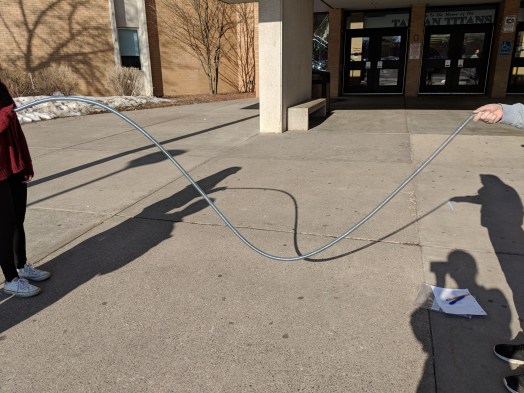
snakey.jpg

Chemistry Essentials: Limiting Reatants

Students used a PhET simulation to start building some ideas about limiting reactants. The class was much rowdier than usual; the class meets the last period of the day, and I think the nice weather was making a lot of them restless. The concrete visualizations did seem to help a lot of students start making sense of limiting reactants.
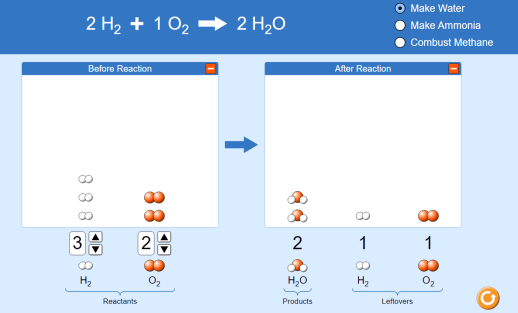
limiting ract.PNG

Day 135: Whiteboarding

AP Physics: Angular Momentum

Students whiteboarded yesterday’s problems. There was a lot of good discussion; I think rotation is starting to click for a lot of students. I also did a few demos, including one with an RC motorcycle inspired by a Evel Knievel statement prior to a jump over the Snake River Canyon that his biggest fear was accidentally letting go of the gas while in mid-air.


Physics: Oscillating Particle Whiteboarding

Students whiteboarded yesterday’s problems. The connections between the math and the big ideas seem to be clicking for a lot of students. One of the questions we discussed is whether the angle of a ramp should affect the period of a cart oscillating on a spring, so I set up the demonstration.

Chemistry Essentials: Percent Yield 

I kept the whiteboarding pretty short since a quiz on percent yield was also on deck for today and the para working with the class had let me know that students had done very well with the problems. We targeted a couple of trouble spots, like a problem where a lot of students dropped a decimal point yesterday, leading to over 800% yield. I was really pleased that students recognized why that was not a reasonable answer, even if they had trouble finding the error.

Day 134: Problems Galore

I had a sub today, so no pictures. All three of my classes worked on problems.

AP Physics: Angular Momentum

I gave students some angular momentum problems. Its been a while since we hit linear momentum hard, so I’ll be curious to see how it went shaking the dust off and translating to angular scenarios. I also threw in some torque problems; on the last quiz, a lot of students weren’t sure what an extended free-body diagram is, so that is something I needed to make sure to revisit.

Physics: Springs & Pendulums

Students did some problems using the equations for the period of a spring and period of a pendulum. Earlier this week, some students were having trouble distinguishing the two formulas, but I think the lab practicals helped. I’m hoping that shows up in how the problems went.

Chemistry Essentials: Percent Yield

Students did some percent yield problems. They look very similar to the stoichiometry problems we’ve been doing, with a step added at the end to calculate percent yield. When I got to school for parent-teacher conferences, I was able to connect with my sub and the para who supports the class, and both told me the problems went very well for the majority of students; they are seeing the connections between what we’ve done previously and the new material. The para also reminded me I need to crack down on students showing their work; a lot of students are frustrated because looking back at their old work isn’t helpful, but they don’t yet see that writing out their work would change that.

Day 133: Board Meeting, Pendulum Practical, & Percent Yield

AP Physics: Board Meeting

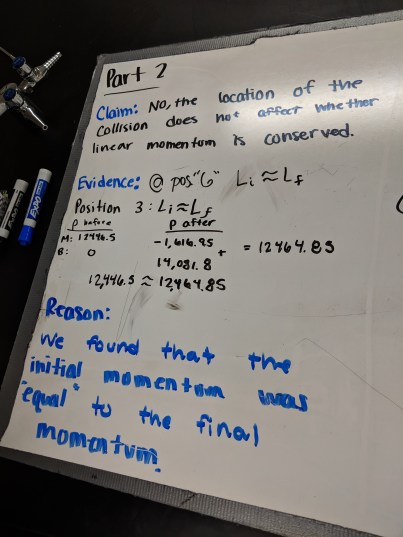
Students whiteboarded their results from yesterday’s Pivot Interactives activity. Students spent a lot of their time yesterday on whether the location of the collision affects whether linear momentum was conserved, but had a lot of interesting approaches and good discussion about that question. For the portions of the activity specific to angular momentum, I ended up much more teacher-directed than I like since I will be out tomorrow and am feeling the time crunch of the looming AP exam.

Maker:S,Date:2017-10-21,Ver:6,Lens:Kan03,Act:Lar02,E-Y

Physics: Pendulum Practical

Students finished yesterday’s practical, then were tasked with finding the period of a pendulum without using a ruler or meterstick. Not surprisingly, most students declared the pendulum practical was much easier than the spring one.

Maker:S,Date:2017-10-21,Ver:6,Lens:Kan03,Act:Lar02,E-Y

Chemistry Essentials: Percent Yield

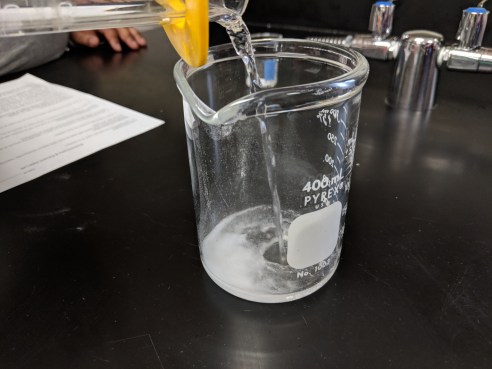
Students predicted how much carbon dioxide should be produced in a reaction between baking soda and hydrochloric acid, then found the percent yield by measuring how much mass was “lost” during their reaction. I like that this lab circles back to conservation of mass to measure the mass of gas produced, but a lot of students had trouble connecting the lab to the stoichiometry problems we’ve done, so I need to think about how the layout and wording of the lab may be making those connections more difficult.

chem yield lab.jpg

Day 132: Angular Momentum, Lab Practical, & Popcorn

We had a snow day yesterday. Students (and teachers!) are getting restless for spring; after seeing the grass and even a few dandelions sprout last week, it was tough to get another 18 inches of snow.

AP Physics: Angular Momentum

Students used Pivot Interactives to explore angular momentum using a collision between a marble and a block. I started by having students determine whether the location of the impact changed whether linear momentum was conserved, which lead to some great conversations. A few students needed some reminders about linear momentum, but that wasn’t surprising given I haven’t done a great job of spiraling back to earlier topics this term.

pivot ang momentum.PNG

Physics: Lab Practical

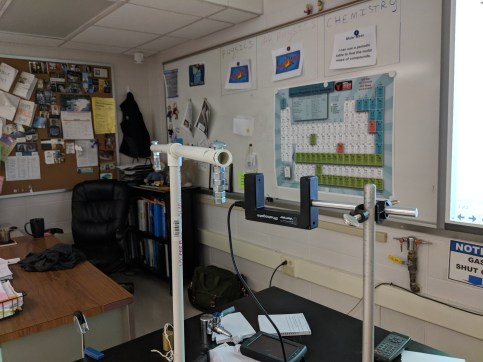
I gave students some springs we haven’t worked with yet and asked them to make a graph with period on one axis where the slope could be used to find the spring constant. This was the first time I’ve had students go backwards from an equation to picking a graph to make, so it was a little tricky, but students had some great conversations about the relationships they were working with. Next year, I’d like to try to get more lab practicals that focus on graphs rather than just calculations.

spring practical.jpg

Chemistry Essentials: Popcorn

Students determined the percent yield for a bag of popcorn by finding how many kernels remained unpopped. It was messy, but it gave students a nice, concrete foundation for what percent yield means. It also came up in the discussion why some of the popcorn kernels didn’t pop, which could make this lab something to come back to when students want to blame less than 100% yield on doing the lab wrong or (shudder) human error.

popcorn.jpg

Day 130: Rotational Inertia, Springs, & Whiteboarding

AP Physics: Rotational Inertia

Students worked on data collection for the rotational inertia lab we started yesterday. A lot of groups are setting up spreadsheets to streamline the calculations, which is great. However, this lab is time-consuming enough that I want to spend some time this summer looking at alternatives or trying to simplify it.

Maker:S,Date:2017-10-21,Ver:6,Lens:Kan03,Act:Lar02,E-Y

Physics: Springs

Students worked on connecting models from earlier in the year to the motion of springs. A few students struggled to get started with the free-body diagrams, but most were able to work through and make the connections I was after.

On a side note, I talked to one lab group about their pre-calc homework. They had some problems involving free-body diagrams for blocks on a ramp, but were thrown off by some differences in language and notation. I should find a time to connect with the pre-calc teachers to see if there are ways we could do a better job of building on each others’ classes.

Chemistry Essentials: Whiteboarding

Students whiteboarded yesterday’s problems. Since the problems are on the long side, I decided to do a gallery walk today. Stoichiometry seems to be clicking for a lot of students.

Maker:S,Date:2017-10-21,Ver:6,Lens:Kan03,Act:Lar02,E-Y

Day 129: Rotational Inertia, Board Meeting, & Stoichiometry

AP Physics: Rotational Inertia

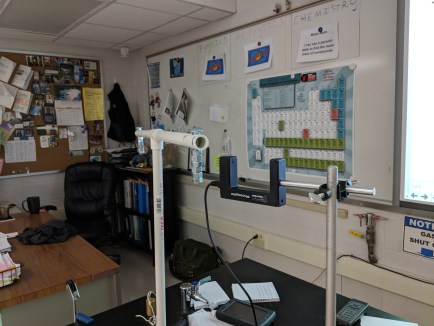
Students started a lab to find what affects the rotational inertia of a T made out of PVC. The number crunching on this lab gets hairy enough that I want to reevaluate this lab for next year. One option would be to have students apply a force by pulling with a spring scale or force sensor rather than dropping a hanging mass.

rot i.jpg

Physics: Board Meeting

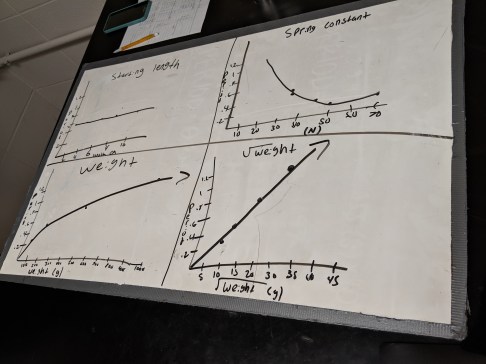
Students whiteboarded their graphs for the spring period lab. The results for spring constant didn’t come out as nicely as I hoped; a lot of groups struggled to find that value accurately. We ended up using units to reason through how spring constant plays in.

spring wb.jpg

Chemistry Essentials: Stoichiometry

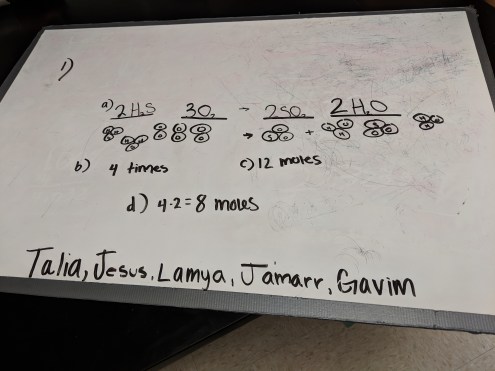
Students did some written stoichiometry problems. Many of them needed more coaching than I’d hoped, but they were able to connect to yesterday’s lab and use particle diagrams to start putting the pieces together.

Day 128: Whiteboarding, Springs, & Stoich

AP Physics: Whiteboarding

Students whiteboarded some torque problems. I can tell the last week or so has been a little disjointed; I had a lot of students trying to use Universal Gravitation to find the force of gravity in the torque problems and some were having trouble with what we meant by the radius. I spent some time talking with those groups how to decide when to use each version of the force of gravity equation, and that helped resolve things.

Physics: Springs

Students wrapped up collecting data for the period of a spring. I overheard a great conversation in a lab group; one student was griping a little about collecting data for the mass since he was convinced it shouldn’t matter based on the pendulum lab. Once they had a few data points, though, there was a moment when he lit up and made a beautiful connection to energy transformations to explain why mass mattered.

Maker:S,Date:2017-10-21,Ver:6,Lens:Kan03,Act:Lar02,E-Y

Chemistry Essentials: Stoich

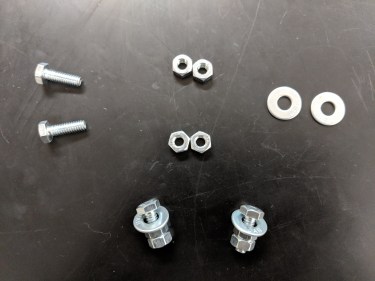
We got the hardware out again to start stoichiometry. Students assembled nuts, bolts, and washers into “molecules” and predicted how many grams of each molecule they should have after a chemical reaction. The manipulatives seemed to help a lot of students wrap their heads around what is going on in a stoichiometry problem, which I’m hoping will translate into success with the paper and pencil problems tomorrow.

stoich.jpg

Day 127: Levers, Springs, & Balancing

AP Physics: Levers

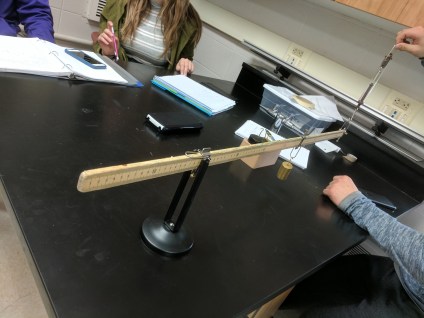
I showed students 2nd and 3rd class levers, then asked them to determine whether the rules for a balanced lever we found last week still work. There was a lot of variety in the type of graphs students opted to make to answer this question, but by the end there was a good consensus that these other types of levers still had balanced torques.lever

Physics: Springs

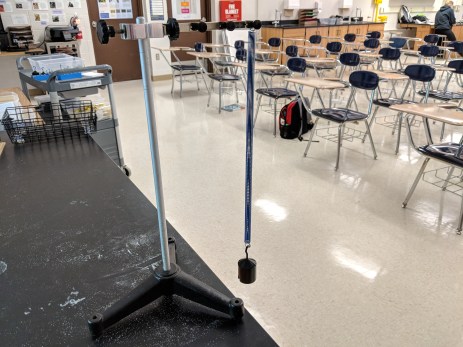
Students started collecting data to find what affects the period of a spring. I made sure to emphasize the parallels to last week’s pendulum lab, which seemed to help a lot of groups with the experimental design. There were also some great conversations as students tried to predict how certain variables would affect the period.

spring.jpg

Chemistry Essentials: Balancing

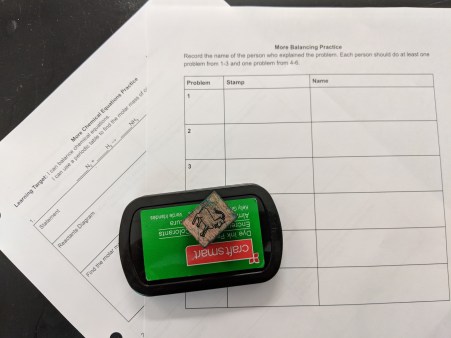
Friday’s quiz on balancing and molar mass was one that students either nailed or tanked, with very few in between, so today students got some more practice. A lot of students seem to be approaching groupwork with the idea that if someone at the table has the right answer, they are covered. I pushed back against that today by giving each table a stamp sheet they had to fill by having different members of the group explain to me how they got their answer. Students talked a lot more within their groups than usual, which is exactly what I was going for.

stamp.jpg

Day 125: Board Meetings & Molar Mass

AP Physics: Lever Board Meeting

We had the board meeting to discuss the results of the lever lab. A few groups were quick to notice the slope slope on the force graph was the ratio of the distances to the pivot, while the slope on the distance graph was the ratio of the masses they used, which lead nicely into a definition of torque.

lever wb.jpg

Physics: Pendulum Board Meeting

In my first hour, the board meeting was pretty rough with a lot of very long silences. I forgot this was the first board meeting of the trimester and about half of my students had the other physics teacher last tri, so I should have taken more time to set up the board meeting. My other hour is a little more talkative to begin with, but I also spent more time prepping for them discussion and things went much better.

Chemistry Essentials: Molar Mass

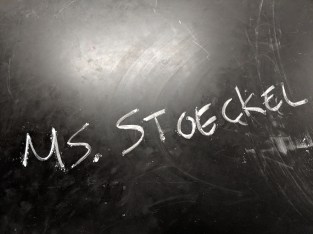
Students applied molar mass to some real-world problems, such as finding how many moles of chalk it took to write their name. Students are approaching the calculations for number of moles very algorithmically without much sense of why they divide the numbers they do. I need to think about how to make the why more apparent; I’ve discussed some analogies, such as bank tellers counting pennies by weight, but I wonder if it would be helpful to actually carry an analogy out in the lab.

chalk.jpg