Day 44: Introducing Sound & Video Analysis

I was out for a field trip today, so no photos.

Physical Science: Introducing Sound

Students did some reading on sound waves today and started connecting it to what they’ve learned so far about waves in general.

Physics: Projectile Video Analysis

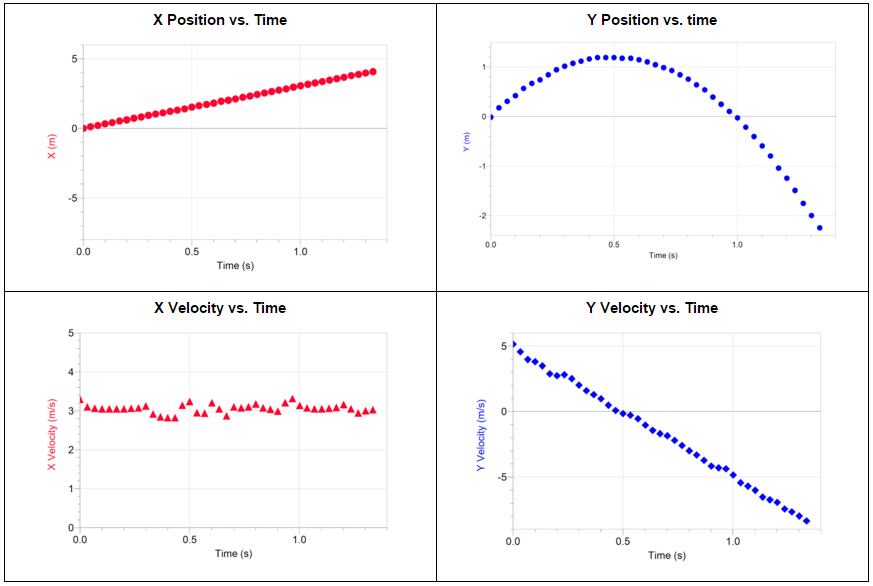
Students recorded videos of projectiles being thrown at different angles, then did some video analysis to see how that affects how high and how far the projectile travels.

Day 43: Snakey Springs & Video Analysis

Physical Science: Snakey Springs

After getting a few vocabulary terms for waves, students got out the snakey springs to start looking for qualitative relationships between wavelength, frequency, and amplitude. I was surprised at how impressed students were when they realized a wave reflects off the end of the snakey spring; as I make the course more inquiry based, I’m reminded how easy it is to assume students have certain experiences or background knowledge they just don’t have.

IMG_1350

Physics: Video Analysis

Our awesome tech guy got Logger Pro working on the netbook cart, so today I introduced students to doing video analysis. As a class, we walked through analyzing a video of a tennis ball tossed straight up in the air so students would have some idea of what the results should look like. Tomorrow, they’ll record and analyze their own videos.

Day 42: Energy Position Project & Projectile Motion

Physical Science: Energy Position Project

Students started a research project on different energy sources. As part of the project, students have to develop a support an opinion on their energy source. At the end of next week, students will give a presentation to the rest of the class on their energy source.

Physics: Projectile Motion

We finally got Logger Pro installed on a netbook cart for students to use, so I had grand plans of teaching my students to use Logger Pro’s video analysis so they could generate position vs. time and velocity vs. time graphs of videos they’d recorded. But I made the mistake of not testing the netbooks before class and found out the hard way that, while everything works just fine on the school’s desktop computers, our netbooks use an old version of Quicktime, which means no viewing videos in Logger Pro.

In my second hour, I had students record some video tossing softballs and tennis balls at different angles. For my fourth hour, I used my prep to do some analysis of one of Vernier’s sample videos and gave my students the graphs and some conceptual questions. Our tech guy spent the afternoon updating Quicktime on the netbook cart, so I’ll probably have my students do some video analysis tomorrow.

Projectile Graphs

Day 41: Motors & Forces Practical

Physical Science: Motors

Students built very simple electric motors, then did some playing around with them to start figuring out some of the underlying principles. This will set up some discussion for Monday on how most electricity is generated.

Physics: Forces Practical

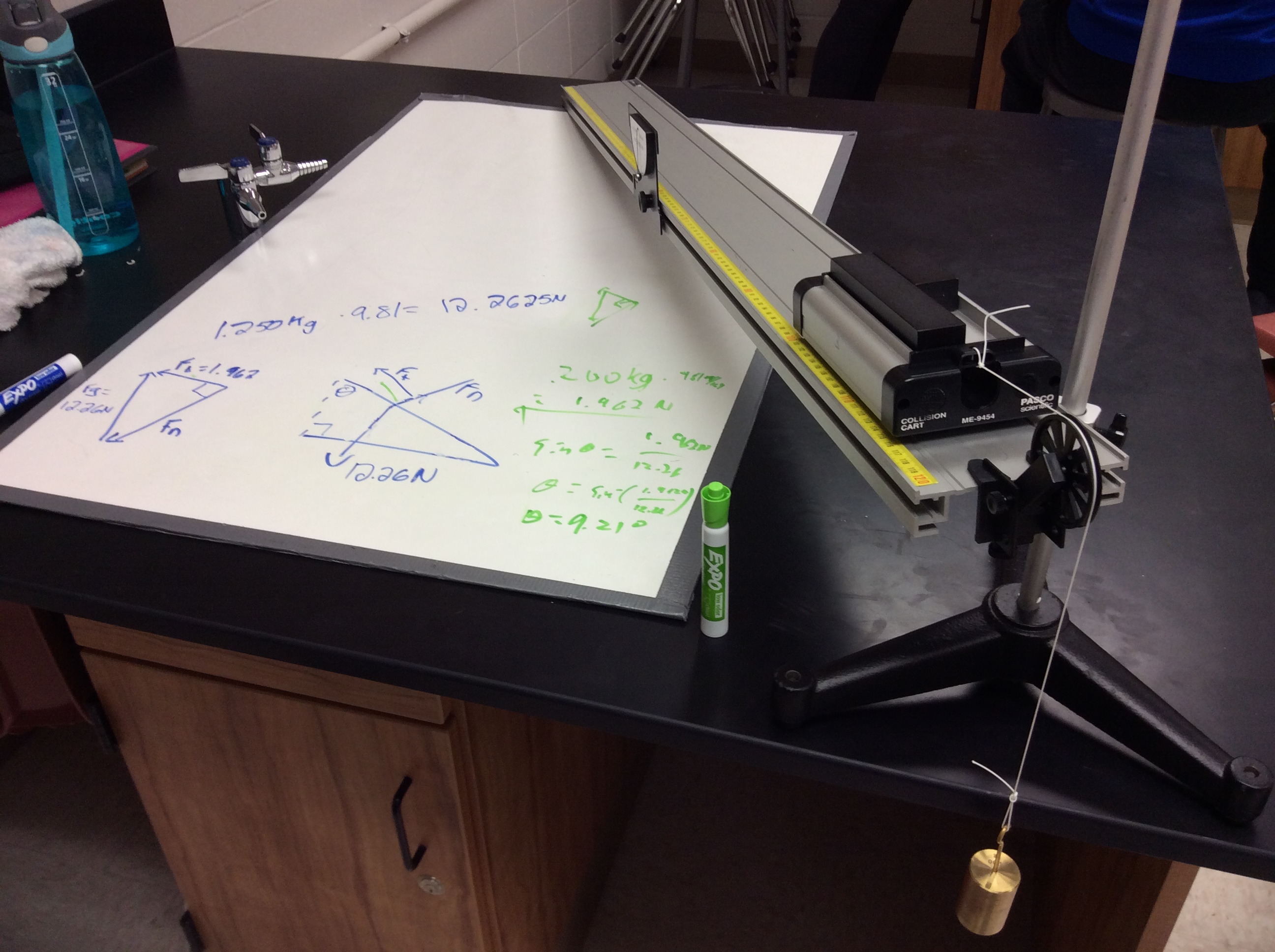
Each lab group got a cart mass and a hanging mass, then had to figure out what angle they should set their ramp to in order to balance the forces. I wasn’t sure how into it students would get since the goal was, pretty literally, to make nothing happen, but there were still cheers when they let go and everything stayed put. My students are now convinced they can do these problems in a way that just getting the right answer doesn’t accomplish. In one period, several groups finished quickly, so I had those groups keep the same angle and cart mass, but add to their hanging mass and calculate how much time it should take for the cart to make it up the ramp. I didn’t set up the photogates, since I wasn’t sure how many groups would get through this part, but students were able to get within 0.2 seconds of their prediction using a stopwatch.

practical 2

Day 40: Electromagnets & Mistakes Game

Physical Science: Electromagnets

Students built electromagnets and designed experiments to test the effect changing the number of coils has on the strength of the magnet. I also pulled out my homemade speaker for students to try out.

Physics: Mistakes Game

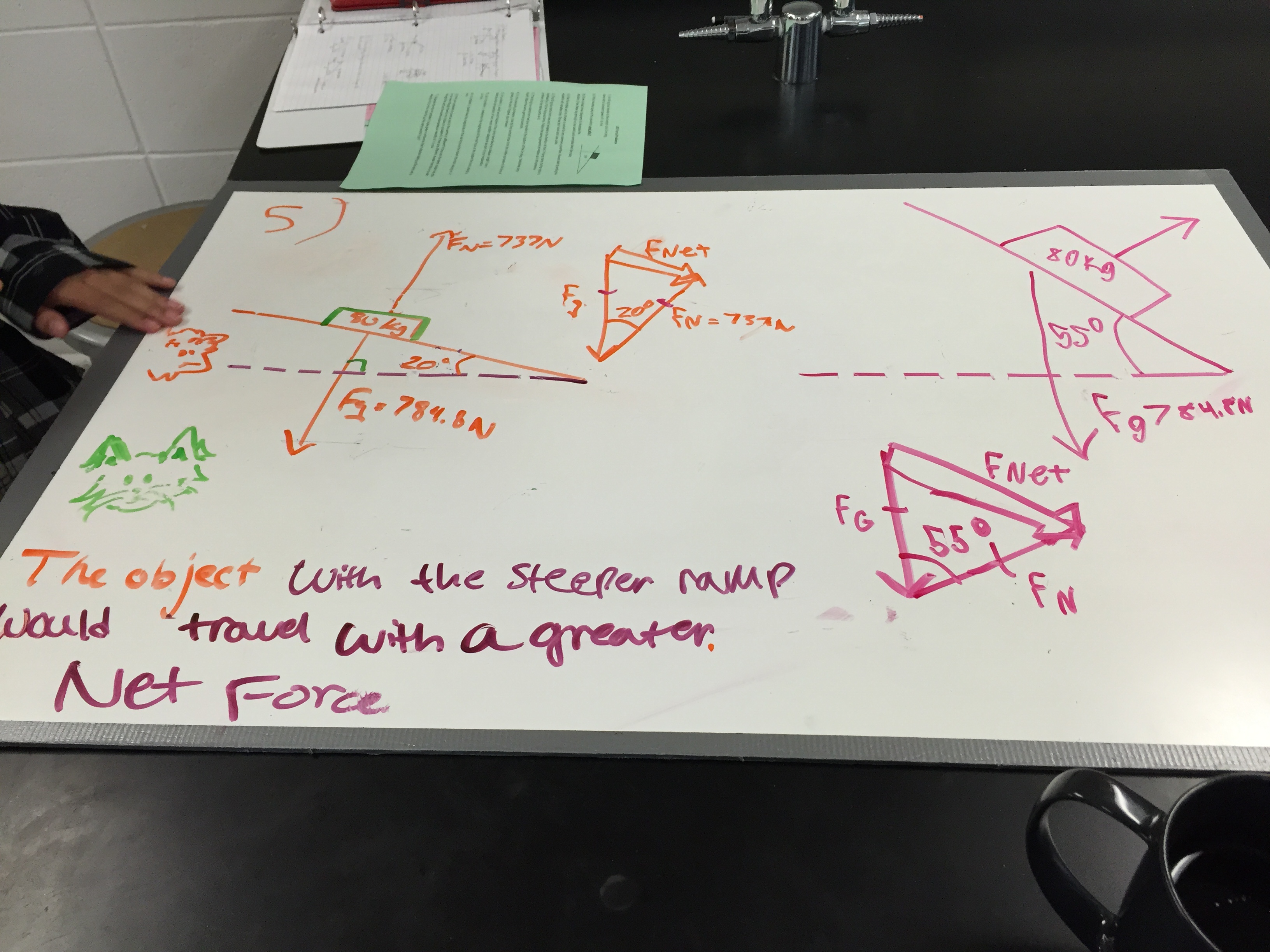
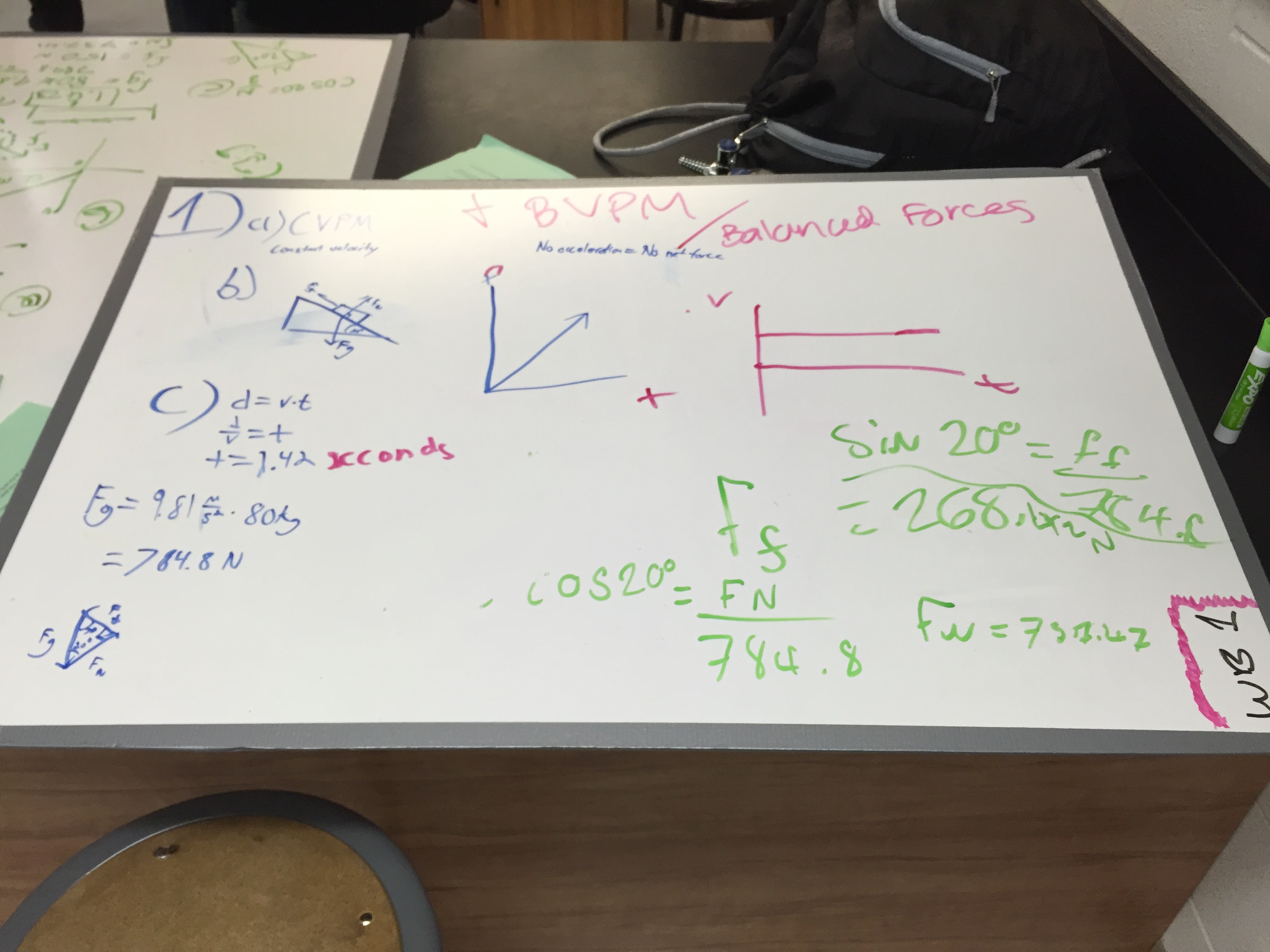
Students played the mistakes game with the diagrams for solving force problems. Once my students have their diagrams, they can get through the problems pretty easily, so I wanted them to focus on drawing and interpreting those diagrams.

IMG_1342

Day 39: Magnetic Fields & 2D Forces

Physical Science: Magnetic Fields

My students have gotten really good at looking at new content in terms of energy, so I put together an assignment to compare topographic maps as a measure of gravitational potential to magnetic field lines as a measure of magnetic potential. The assignment needs some revisions, but I like the basic premise and my students definitely understand magnetic field lines much better than my students have in the past.

Physics: 2D Forces

A lot of students were on a field trip yesterday, so we used whiteboard speed dating to go over yesterday’s problems. Based on what I saw and heard, students have these problems down better than they give themselves credit for. I’m thinking about how I can adjust my plans tomorrow to help students feel more confident with the material without resorting to me doing an example at the board.

IMG_1340 (1)

Day 38: Magnetic Fields & Vector Addition

Physical Science: Magnetic Fields

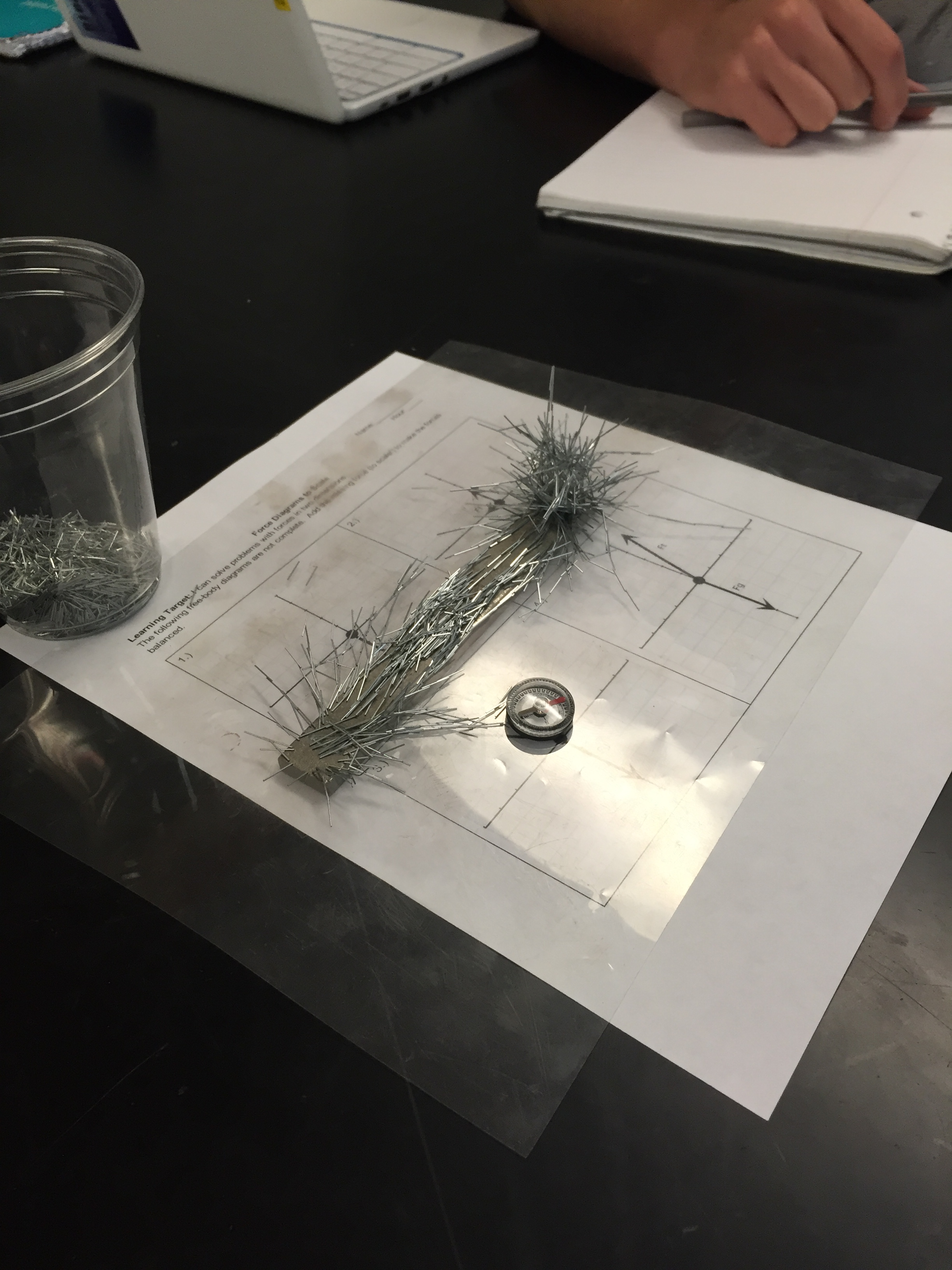
To introduce magnetic fields, I had students play around with a bar magnet, some filings, and a compass. Several groups were really fascinated by the compass, and there was a lot of discussion about why the north indicator on the compass go would to the south pole of the magnet. I also decided we need to revisit forces tomorrow. A group noticed that the magnet made some of the filings stand straight up and was trying to figure out why, which was great! The problem is the best why they could come up with is “magnets break gravity.” I’m pretty sure students just don’t have the idea of balanced forces well enough to come up with the idea that the magnet must exert a force to balance gravity.

IMG_1339

“Magnets break gravity”

Physics: Vector Addition

After yesterday’s practice drawing vector addition diagrams, students combined the diagrams with calculations to solve more traditional word problems. I gave them a few goal-less problems, which simply describe a situation without asking for anything in particular. My students don’t have a lot of experience with these (at least not yet!), but I like the way they encourage students to play with models to see what they can come up with, rather than getting fixated on the right answer. They really reinforce physics as a creative, sometimes playful, process.

Day 37: Kirchoff’s Rules & Vector Addition Diagrams

Physical Science: Kirchoff’s Rules

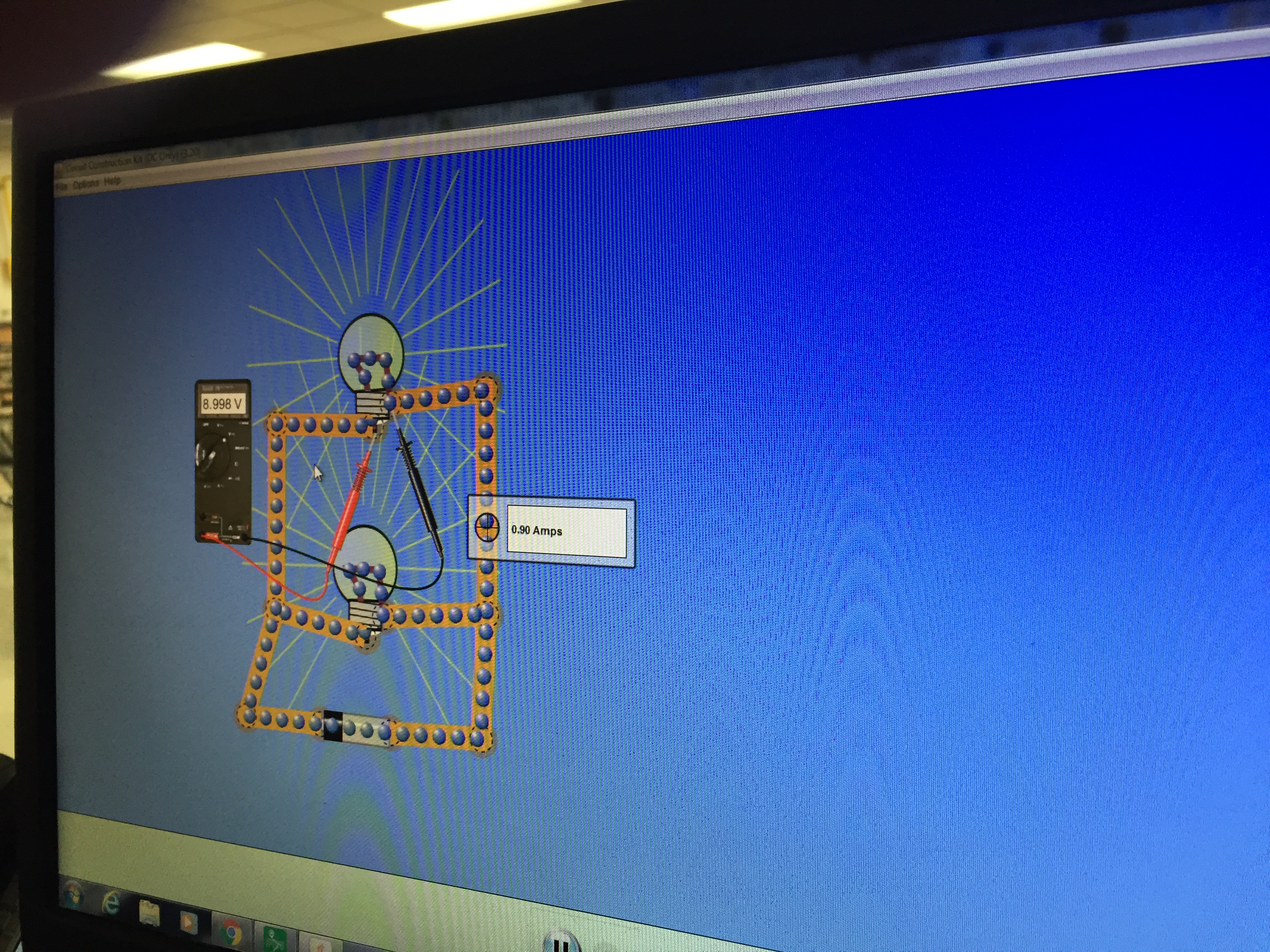
With my 9th graders, I’ve always done series and parallel circuits pretty superficially where they try a few things in the lab, then memorize a couple of key behaviors. This year, my students have been thinking about the energy in circuits in some interesting ways that seem useful for getting at Kirchoff’s Rules, so I decided to give it a go. Today, students used PhET’s circuit kit to compare the voltage and current in different parts of each type of circuit. Students were able to articulate very nicely their own versions of Kirchoff’s Rules based on the energy in the circuit.

IMG_1337

Physics: Vector Addition Diagrams

Today, students took their first look at forces in 2D and drew some vector addition diagrams to scale. The problems, lifted from Kelly O’Shea, were all on a grid to keep things straightforward. This gave students the opportunity to practice drawing vector addition diagrams and start thinking about what they mean without getting bogged down in the math. Tomorrow, we’ll start crunching numbers with the diagrams.

Day 36: Electric Power & Unbalanced Force Problems

Physical Science: Electric Power

Students plugged several different light bulbs into Kill A Watt meters to find the power used by each, then calculated how much you’d pay for the electricity to use each one for a year. This is the first year I’ve done energy before electricity with my 9th graders, so I decided to have them sketch energy bar charts for each light bulb, using thermal energy and light as the energy types. For the first time, my students had an easy time articulating in a meaningful way why the low wattage LED was just as bright as the high wattage incandescent.

IMG_1334

Physics: Unbalanced Force Problems

Students worked on some problems that combined Newton’s 2nd Law with constant acceleration calculations. I was a little nervous, because they just got Fnet = ma yesterday and many are still mastering net force, so I wasn’t sure how they’d do with using multiple models on a single problem. However, a lot of pieces seemed to really click today. By the end of the hour, several students who’ve been struggling with constant acceleration declared today’s problems easy, including the portions where they had to do constant acceleration calculations.

Day 35: Series vs. Parallel Circuits & Board Meeting

Physical Science: Series vs. Parallel Circuits

Students used PhET’s circuit construction kit to explore the differences between series and parallel circuits. When I’ve used batteries and bulbs, students really struggle to see (let alone articulate) what’s going on with the current, so the visible “electrons” in the simulation were a huge help in getting students to understand why certain changes happened.

Physics: Board Meeting

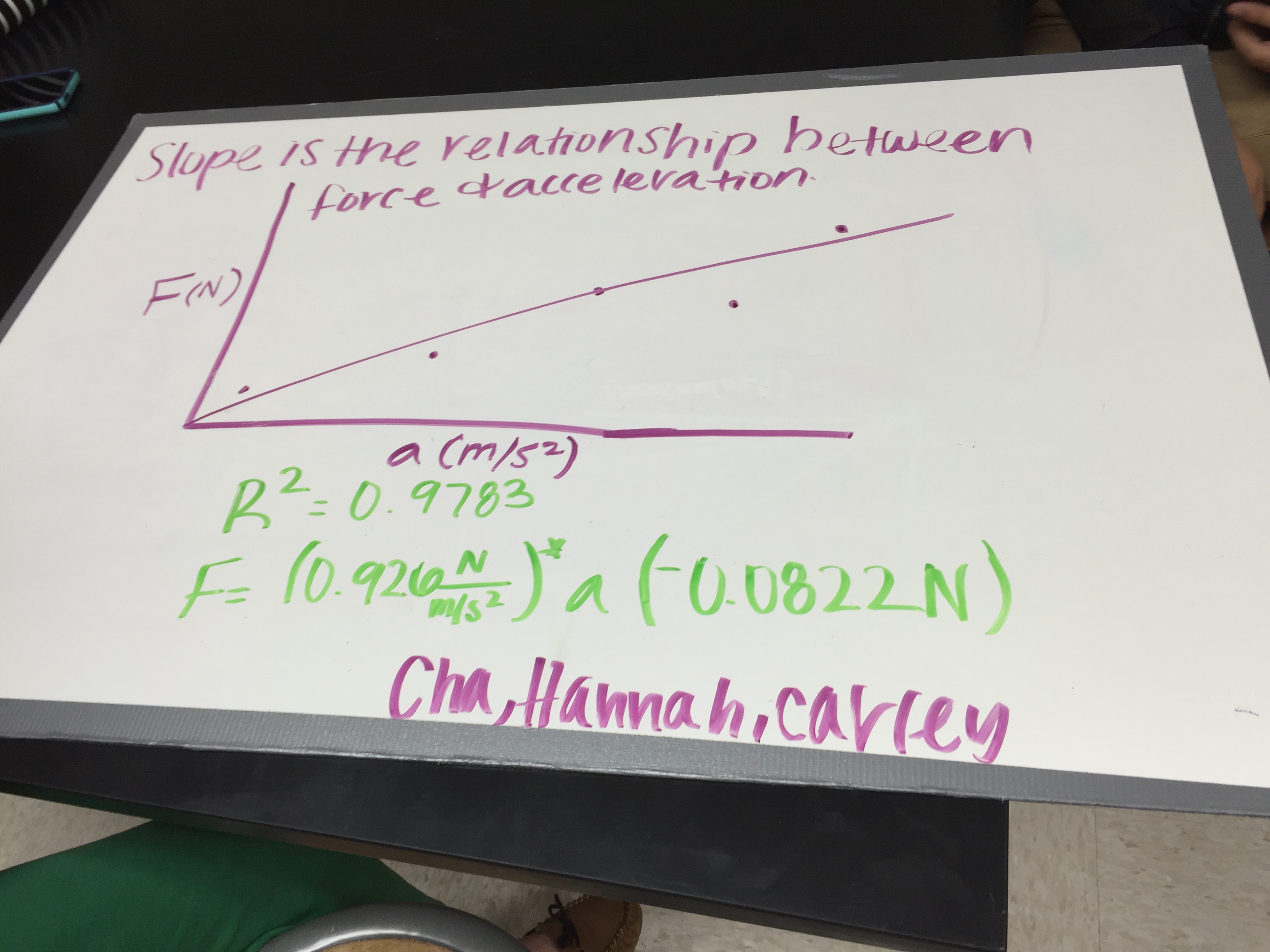
We discussed as a class the results of the Newton’s 2nd Law lab. I need to have students practice talking about the slope more; they were able to get to “The force needed to accelerate 1 m/s2“, but it took some pushing on my part; I think the issue is just lack of practice. I was pleased by the discussion; students are doing more articulating of the big ideas. I was really excited by the discussion students had about the intercept. I’d planned to declare the intercept zero and move on, but in both sections students seemed interested in talking about it. They decided it would be reasonable to have a non-zero intercept on this experiment and it would be equal to the amount of friction you have to overcome to start the cart moving.

IMG_1333