Day 30: Static Electricity & Mistakes Game

Physical Science: Static Electricity

Students did a lab with pith balls and charged rods to begin exploring static electricity. The lab is much more directed than I’d like, but my students have gotten so used to more open-ended labs that they were quick to latch onto interesting observations and were eager to go beyond the directions to try to make sense of their observations. My students are awesome.

IMG_1314

Physics: Mistakes Game

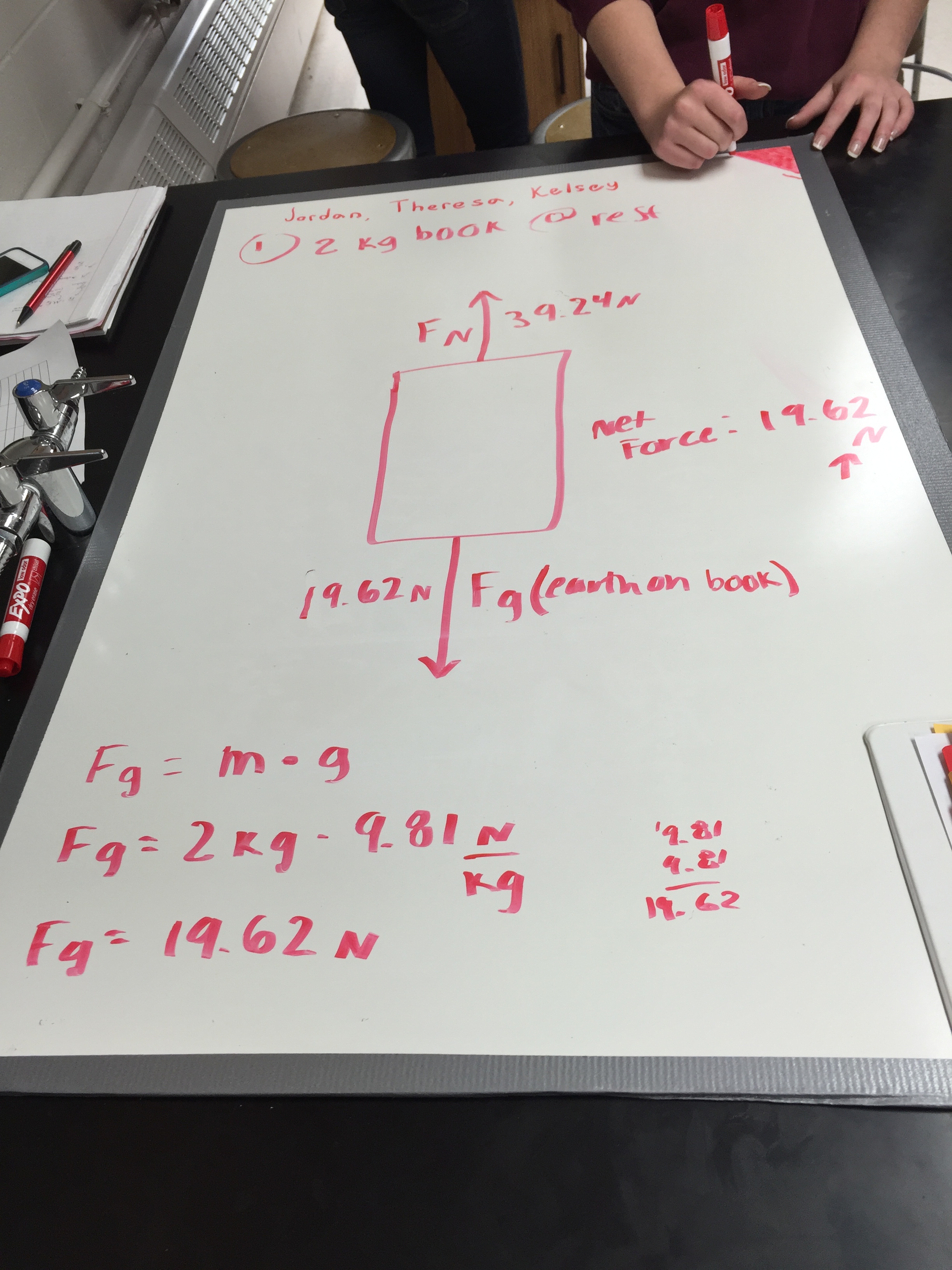
We played the Mistakes Game with some problems students worked on yesterday. Students have been embracing this approach to whiteboarding problems and are good about using their own actual mistakes when they make the whiteboards. My favorite moments, however, are when someone points out an unintentional mistake. The group presenting will usually admit it was unintentional and the rest of the class will happily discuss it without judgement. They’ve really embraced mistakes as an important and valuable part of the learning process. Its worth saying again that my students are awesome.
IMG_1315

Day 29: Presentations & Problems

I spent the day at a college fair with a group of seniors, so my students were left with a sub today.

Physical Science: Presentations

Students worked on a “sales pitch” for their engineering projects. Next week, they’ll present them to the rest of the class.

Physics: Quiz & Problems

Students took a quiz today. On the last quiz, a lot of students knew what they were doing, but hadn’t shown their work as clearly as I’d like. One of the things I love about standards-based grading is there’s always another chance, so I can be a jerk. I docked students on the last quiz if they didn’t clearly show their work, but put another problem for the same standard on today’s quiz to make sure everyone gets another shot.

After the quiz, students worked on some problems. Tomorrow, we’ll whiteboard.

Day 28: Finishing Testing & Spring Force

Physical Science: Final Day of Testing

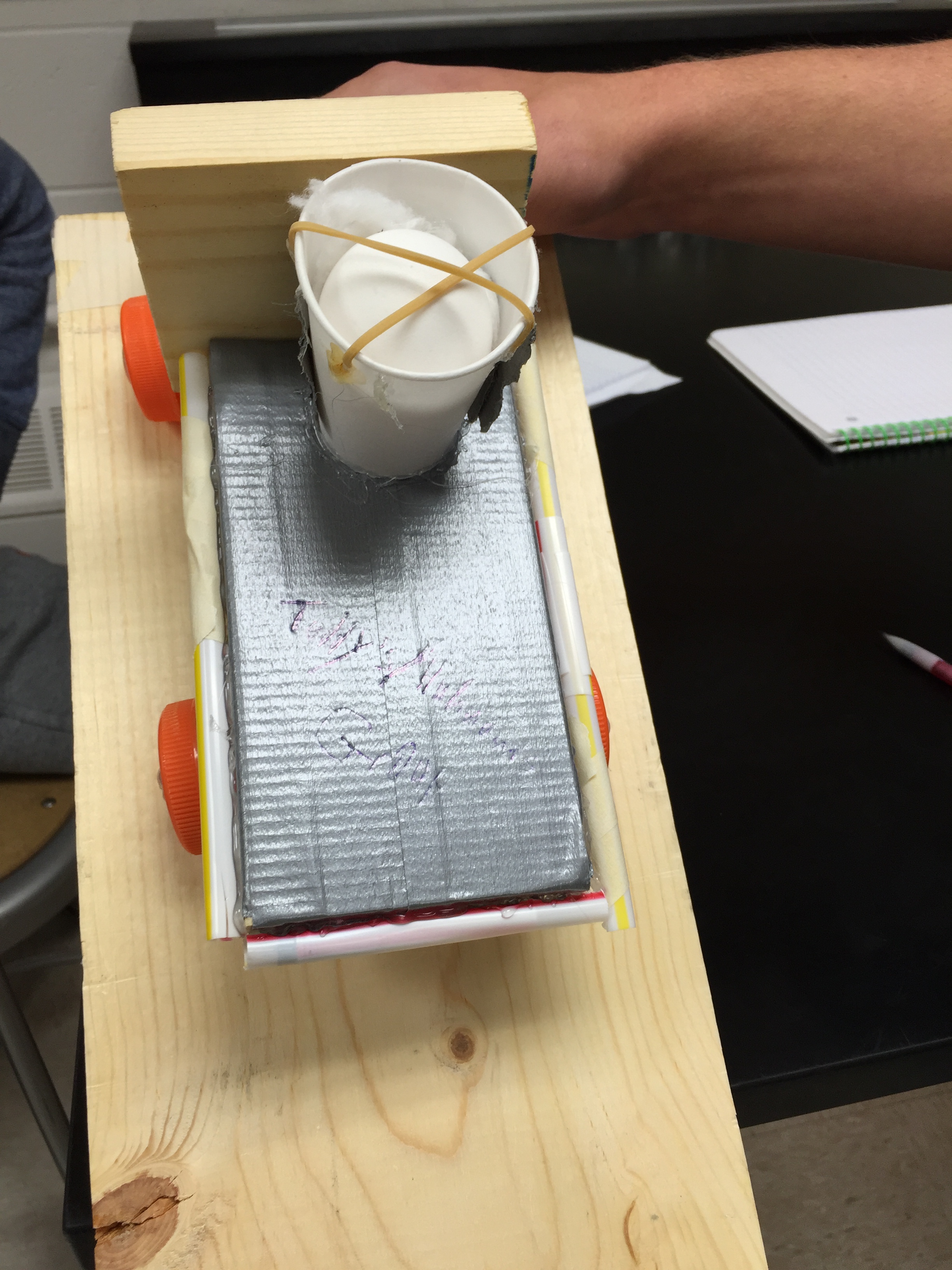
Students wrapped up testing their designs and started to work on a sales pitch to convince the project’s (imaginary) customer that their design should be scaled up into the real thing. One group’s duct tape came loose, which meant the cup holding their egg fell off in most of the collisions. I was very pleased when they suggested that might reduce the force the egg experienced and managed to use Newton’s 2nd Law to explain why that would be.

Testing a t-bone collision

Testing a t-bone collision

Physics: Spring Force Lab

Students collected data to find a relationship between the force a spring exerts and how much it is stretched. I had the spring scales still out from another lab, and many students used them as a handy hook to hang their springs from. Several students commented that the reading on the spring scale consistently matched the force exerted on the bottom of the spring. I’m looking forward to revisiting that when we get to Newton’s 3rd Law later this week.

IMG_1310

Day 27: Testing Again & Friction

Physical Science: Testing Again

Students tested the second iteration of their designs. This time around, groups had to plan three of their own tests, rather than doing the ramp test I’d devised for the first round. During the testing, each group also had to serve as an evaluator for another group’s tests. They were tasked with providing feedback on the validity of the tests and making their own assessment of whether the design passed each test.

Using dry ice to simulate skidding on a slippery road

Using dry ice to simulate skidding on a slippery road

Straw bumpers that went all the way around the car to protect against a range of collisions

Straw bumpers that went all the way around the car to protect against a range of collisions

Physics: Friciton

This week is about looking at some specific forces, and we started with friction. Students brainstormed what variables might affect how large the force of friction is, then came up with simple experiments to test a few of those variables. Groups measured the force of friction by pulling blocks along with spring scales, which opened the door for some good discussion on uncertainty. Every group did several trials for a given condition, then took an average. Several groups initially said that certain variables, such as surface area, had an impact because their average force was different for each condition. I got one of these groups to share their surface area data with the rest of the class for a closer look. While we haven’t covered uncertainty in this course, students were able to see that the range of forces measured for a given surface area was greater than the difference between the two averages. This lead students to conclude that the difference was probably not meaningful. Its a shift for students to think about the physical meaning of the numbers they are working with, whether in the lab or in a problem set, and I was pleased to see some evidence of that shift in the discussion of this data.

Day 26: Building Again & Net Force

Physical Science: Building Again

Students spent today building the second version of their projects based on yesterday’s design. While students worked, I visited each group to grill them on how they’d used Newton’s Laws to decide on an effective design as well as the specific ways the prototype had influenced their new design.

IMG_1296

Physics: Net Force

Students practiced some more free-body diagrams, this time also finding the net force. This included some problems finding the normal force exerted on a person in an elevator. Since my students finished quicker than I expected, I pulled up a force vs. time graph I’d saved after bringing a force sensor for a ride on our elevator, then asked my students to decide whether the elevator was moving up or down. I got really excited when I asked for a vote, and the class was pretty evenly split, thinking there may be some good debate. The first student to volunteer their explanation, however, gave such an eloquent and complete justification that no one wanted to argue with her. Fortunately, she was right 🙂

Did I take the elevator up or down?

Did I take the elevator up or down?

Day 25: Redesign & Free-Body Diagrams

Physical Science: Redesign

Now that groups have a plan for how they will test the second iteration of their design, they worked on actually planning that design. Compared the first time around, there was a lot more conversation about the different ways designs could fail. There was also a lot of talk about what had and hadn’t worked in the first iteration. At the end of the hour, each group paired up with another to share their testing plan, their design, and a justification for their design.

IMG_1295

Physics: Free-Body Diagrams

After a quiz, students took their first shot at drawing free body diagrams. A lot of conversations went back to yesterday’s bowling ball lab to try and decide what kinds motion did or did not require a force.

Day 24: Planning Tests & Bowling Ball Lab

Physical Science: Planning Tests

We did some debrief on last week’s testing of the engineering design challenge. Students agreed that the single ramp test was pretty limited, so, after getting new groups, students began planning new tests that would simulate a wider variety of real-world situations. The main constraints are that the tests must be reasonable to conduct in the classroom and they will need to provide evidence on the effectiveness of the design.

Physics: Bowling Ball Lab

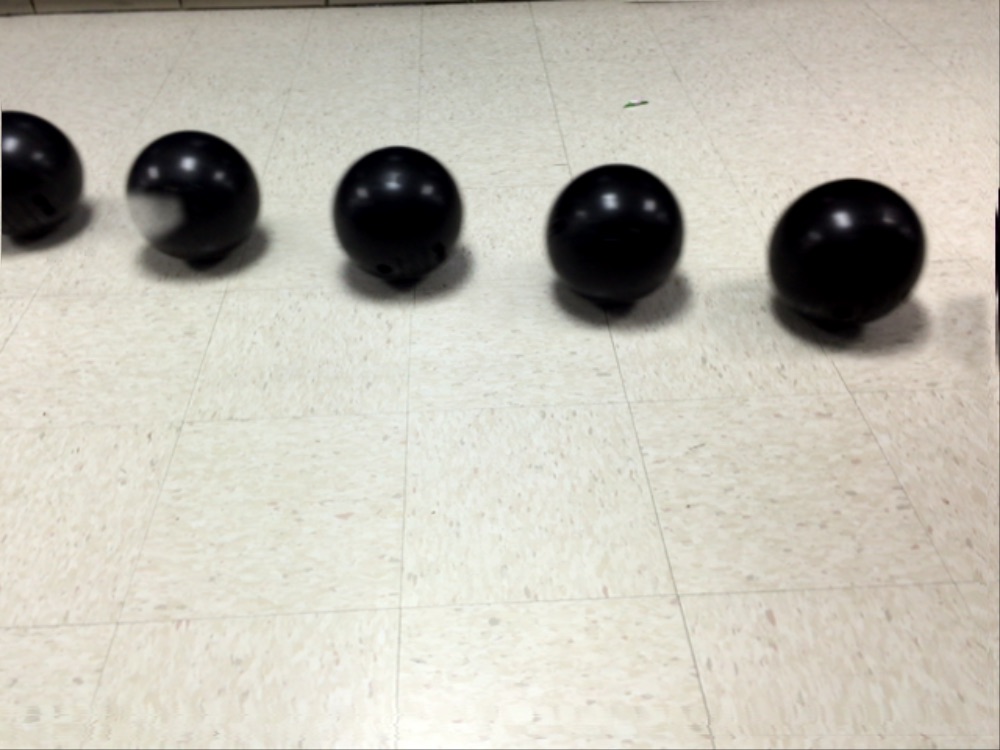
We began building the balanced force model today. Students hit bowling balls with rubber mallets in a lab based on Frank Noschese’s 180 blog. Some groups were debating whether the bowling ball rolled at a constant speed when it wasn’t being tapped, so we fired up Motion Shot to check.

Bowling ball in Motion Shot

Bowling ball in Motion Shot

Students looked for a pattern in their motion maps and put a statement of that pattern onto whiteboards. The statements most groups started with had some exceptions or ambiguities, but by discussing these, we were able to generate a single statement the whole class could agree on.

One group's statement of the pattern

One group’s statement of the pattern

Day 23: Design Testing & Free Fall Practical

Physical Science: Design Testing

Today, all of my students were early and anxious for class to start. They knew that we’d be loading up their designs with eggs, then sending them down ramps to see how they did. At the end of the hour, we had a brief, but good, discussion about what it could mean to have the “best” design and the limits of the single test we used. This discussion will provide some good groundwork for our second round of designing and building.

Physics: Free Fall Practical

Students had two tasks today. For both tasks, I assigned students roles from the University of Minnesota’s cooperative group problem-solving process. First, they did a practical on free fall. Each group was given a time, and had to place tape on a strip of acrylic so that a photogate would measure the time they drew when they dropped their acrylic.

One group's solution to the practical

One group’s solution to the practical

Once groups had tested their result, they worked on XKCD’s Substitute Problem. While most groups decided to chug through the algebra, there was one that used Desmos to find the intersection of the position vs. time graphs.

One group's solution to the sub problem

One group’s solution to the sub problem

Day 22: Building & Speed Dating

Physical Science: Building

Students worked on constructing their prototypes for the design challenge. As they worked, I visited each group to ask a random student to explain their design, especially the reasoning in their decisions. Students did a nice job of connecting their decisions to their knowledge of Newton’s Laws and energy. They also did a nice job of trying to anticipate the needs of our imaginary customer.


Physics: Speed Dating

I gave students use Kelly O’Shea’s whiteboard speed dating to tackle a goalless free fall problem. My PLC is working on how to develop our students’ mathematical communication, so I was thrilled to see the strides my students made once they knew a peer would have to follow their work. Students were also very positive and left class much more confident.

Day 21: Designing & Free Fall

Physical Science: Initial Designs

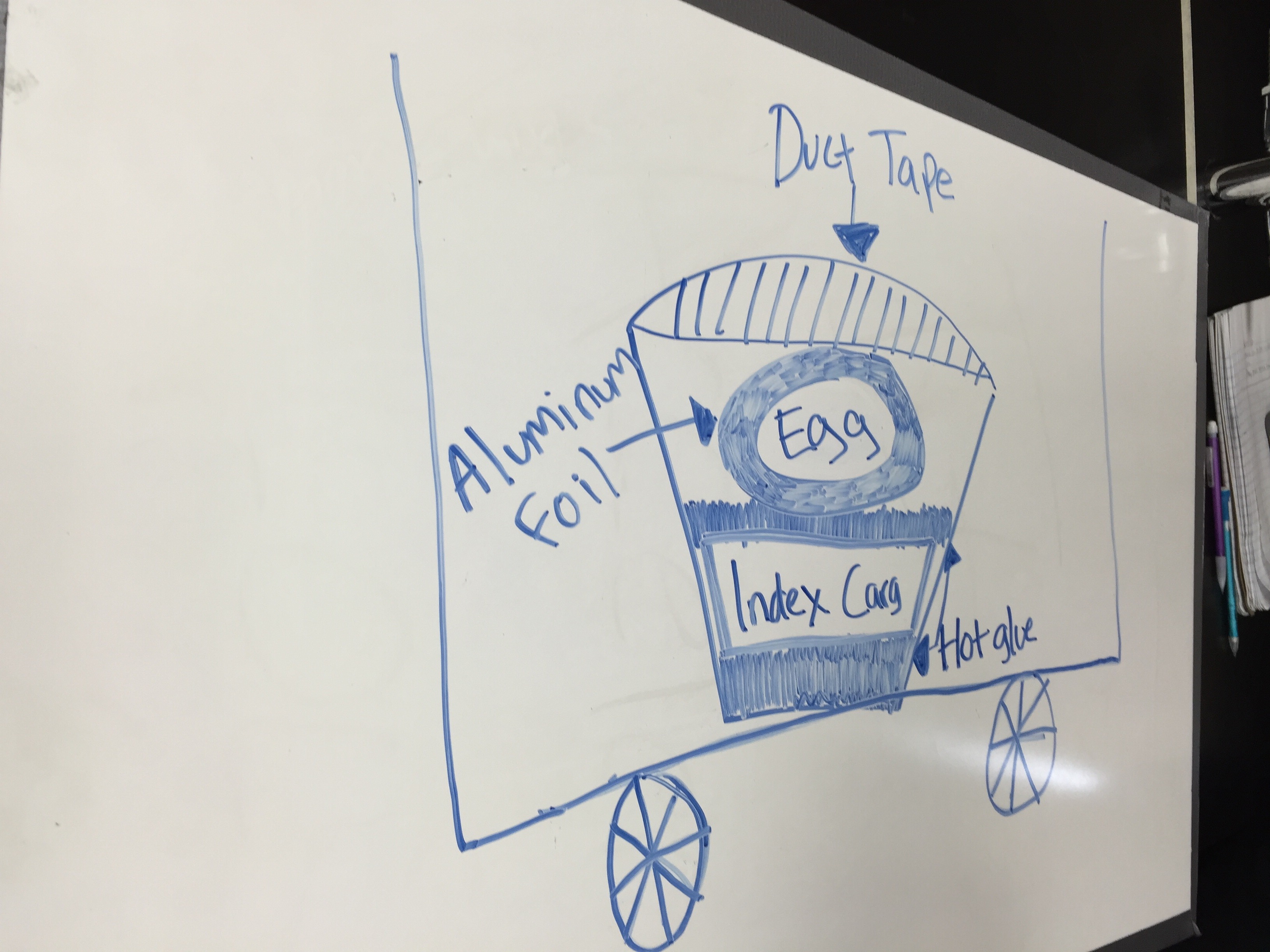
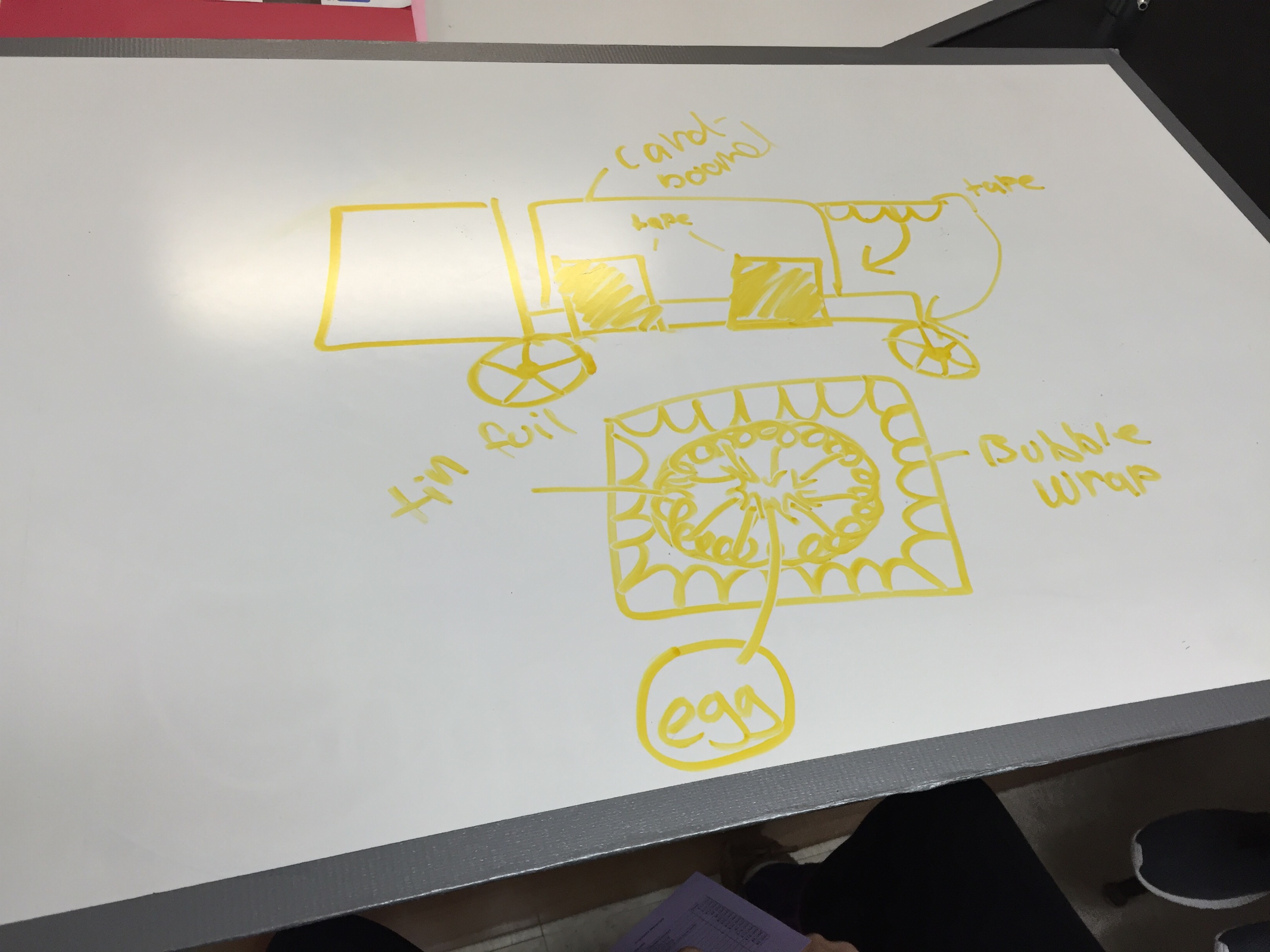
Now that students have a basic knowledge of Newton’s 1st and 2nd Laws, they went to the drawing board to develop ideas for a design challenge where they’ll need to keep an egg safe in a head-on collision. Students had to include a justification, based on Newton’s Laws, for why they think their design will work, which lead to some good debate and physics talk within groups.


Physics: Free Fall

Students worked on some free fall calculations in groups. They are gradually getting better at using velocity vs. time graphs as problem solving tools. One of my favorite moments was when a student, who had just spent around 30 minutes working through the first problem, read the second and declared it exactly the same, in spite of some superficial differences that usually confuse students.  When I asked what she meant, the student explained how she knew the same model would apply and proceeded to point out all the underlying physics that stayed the same as a result. She was thinking like a scientist and didn’t even realize it!