Days 24-28: Force Formulas & CAPM Diagrams

AP Physics 1: Balanced Forces

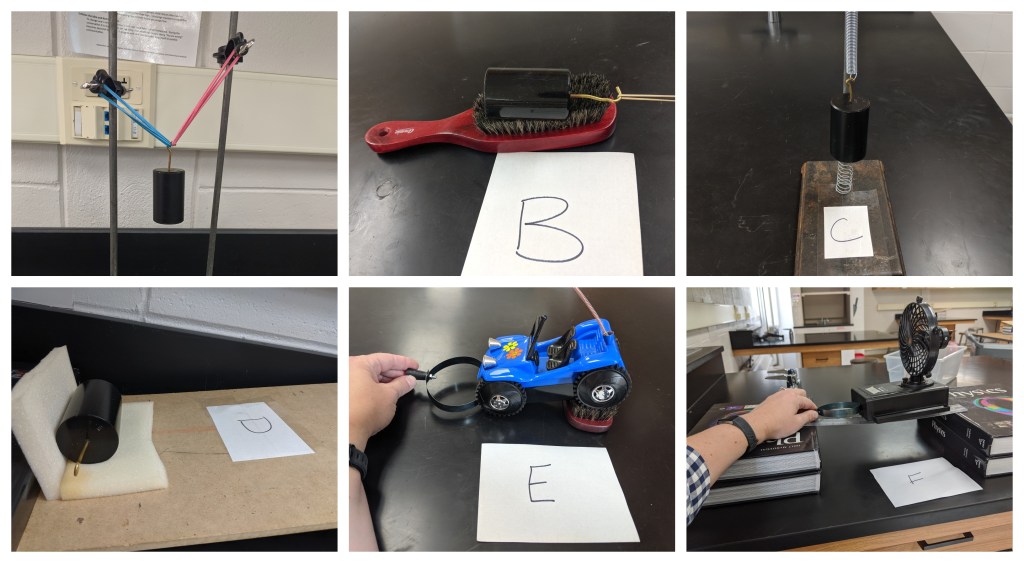
This week was all about figuring out the formulas for gravitational force, spring force, and friction force, then practicing combining them with free-body diagrams. After doing some fairly standard labs to develop the formulas, students did a version Kelly O’Shea’s problem solving stations. I’d like to add a station using the force of friction, but need to make sure there’s a good way for students to check their answer.

This year, I’ve been working on keeping my pace on track, and most students are keeping up. I always have some students who start out goofing off during the daily work because its not graded, but the majority of them are figuring out they need to stay engaged, which is great because students are deciding for themselves that the daily work is valuable and my retake policy means they aren’t stuck with a grade based on choices they made early in the term! The problem is I’ve also got a few students who I see starting a cycle where they are missing pieces because of goofing off, then struggle with what comes next, and disengage more out of frustration. Before students become stuck in that cycle, I need to give some thought to how to help those students feel a greater sense of control over their learning. I think on Monday I might spend some time talking as a whole class about strategies for when students are feeling stuck or frustrated. I’m also trying to be conscious of how I approach those students, trying to keep my focus on communicating I’m available to help rather than chiding them for being off-task.

Physics: Constant Acceleration Representations

Students practiced using constant acceleration representations. A lot of them are having trouble connecting what we’re doing now to constant velocity representations, which happened last year, as well. I need to put some thought into how we structure this unit to help students see how we are extending their skills, rather than starting something completely new.

In whole-class discussions, students are still pretty quiet, though I’m seeing signs of progress. I’m hearing a lot from students how much they like mistakes whiteboarding, even if just a few students are responsible for most of the questions during those activities. There was a great moment where a group presenting said they didn’t want any questions from a peer who’d been very vocal during the other presentations, and he responded “That’s a great idea!” When no one raised their hands, a member of the group started calling on some of the other people she knew had a good grasp of the problems, but rarely speak up. It was a pretty awesome moment.
Days 20-23: Newton’s 1st LAw & Constant Acceleration Model Building

This week was a little goofy. Students were off Friday for a staff development day and it was homecoming week, so classes were shortened on Monday and Thursday for festivities.

AP Physics 1: Free-Body Diagrams

This week was all about Newton’s 1st law. We started with the bowling ball lab to come up with a formulation of N1L, then worked on representing forces with free-body diagrams and system schema. Both sections had mistakes whiteboarding sessions that were overall really good. There was a debate about whether a projectile should experience air resistance that had a lot of good thinking. We ended up grabbing a softball out of the storeroom and capturing an image of it rolling in Motion Shot to see if it had a constant velocity. There was a much more intense debate about air resistance than I’ve seen before and I think the group presenting felt like it became a “gotcha” moment. I need to think about how I could have intervened differently in that discussion to shift the tone it took on.

Made in Motion Shot; photo with multiple, evenly spaced images of a softball as it rolls across a table

Physics: Constant Acceleration Model Building

Students used video analysis to produce graphs of the motion for an object on a ramp. I was ornery about making students attempt to follow a reference guide I made before I’d help with the technology, which made it a lot easier for me to spend time with students who needed help troubleshooting. The results were better than when I’ve used photogates, but still fairly messy. I think part of the problem is, regardless of the approach, students rush on key pieces and get sloppy data as a result. I need to think about how to slow my students down at key steps. It was also tough to get students to speak up during the board meeting, even with doing a gallery walk and jotting down some observations with their group beforehand. I’ve got more students than usual who underestimate how much they know and are wary of jumping in as a result. I have some work to do on increasing the social safety in my classroom and helping students recognize their contributions.

Students also did Kelly O’Shea’s CAPM card sort. Interestingly, even though this fell on the day of our homecoming pep fest, students were overall very engaged in the activity. I saw a lot of the same students I struggled to get to speak up during the board meeting asking great questions and sharing ideas during the card sort. I think the small group setting was a factor. I need to give some thought to what else made students comfortable speaking up so much in their small groups and how I can bring that to whole class discussions.

This group used chalk to turn their card sort in to a Venn diagram

Days 15-19: Interaction Stations & Constant Velocity Problems

AP Physics 1: AP Workbook

To wrap up constant acceleration calculations, we worked on some problems out of the College Board’s workbook. There was a lot of great discussion as students worked through the relatively complex problems. Students have been nervous about the early registration date for the exam this year, and working the problems seemed to help alleviate some of their fears.

Students also worked through an activity based on Brian Frank’s interaction stations to start building their model of a force. I had a sub that day, so afterward had students use a reading to define the major types of forces we’ll be using in class and connect them to the stations. We’ll be discussing the stations early next week and I’m thinking about how I want to approach the discussion. This week, I happened to read a chapter from Bryan Brown’s Science in the City where he talks about how teachers often miss how accurate students’ preconceptions are because students aren’t ready to express those ideas in scientific terms. I’m wondering how I might change the way I usually approach this discussion (and many others) to do a better job of recognizing and building on what students knowledge, regardless of the language they use to express it.

Physics: Constant Velocity Problems

Students worked problems, including the dueling buggies practical, using the constant velocity of a particle model. On their weekly reflection, a lot of students wrote about navigating different ideas within their groups about how to complete the lab practical. I was really excited to see that multiple approaches were suggested in most groups and that students were thoughtful about how to balance making everyone heard with moving forward as a group.

We also did some mistakes whiteboarding. In both my courses, I’ve been pleasantly surprised by how quickly students are buying in to this activity. My Physics students have been pretty quiet during the whole-class discussions, but they are consistently referencing it in reflections as something they find helpful for learning and where they feel proud of their work in class.

Days 10-14: Constant Acceleration Representations & Constant Velocity Calculations

AP Physics 1: Constant Acceleration Representations

We spent this week working on getting representations for constant acceleration down. I made quite a bit of use of Brian Frank’s magnetic vector manipulatives during class discussions of motion maps. I think it would be worthwhile to make a set for each lab group; I don’t have magnetic surfaces at my lab stations, but I think the laminated arrows would still be useful to students while they’re working.

I’ve been doing more work on collaboration so far this year, and I’m seeing it pay off with students seeking out input from a greater variety of people when they’re stuck and with ideas jumping between groups much more than in the past. I especially love when students start working problems with one group, then whiteboard with different people and begin by comparing approaches.

motion map.jpg

Physics: Constant Velocity Calculations

Students worked on applying the constant velocity of a particle model to calculations, including predicting where two buggies will collide. One challenge, which has come up the past few years, is a lot of students are having trouble connecting the calculations to the representations we’ve been using. I think there’s a couple of things going on. In a lot of classes, once students have taken an assessment, they no longer need to use those skills, so I think some students feel like they are done with constant velocity representations after last week’s quiz. I think the other hurdle is some students, especially those less confident in math, are looking for things they can memorize to bypass the sense-making involved in sketching the diagrams. I haven’t figured out good strategies to help students work through these hurdles aside from coaching individuals and small groups on doing the sense-making and sketching the diagrams when they are stuck. I also need to keep reminding myself that as the year goes on, more will get on board with continuing to use skills we’ve assessed and working through the sense-making steps.

Days 5-9: Board Meetings & Problems

This week’s big theme was using precise, specific language in physics.

Physics: Buggy Lab & Problems

Students did the buggy lab, then worked on some problems with constant velocity representations. We went over the problems using Kelly O’Shea’s mistakes whiteboarding. Both during the buggy board meeting and during the mistakes whiteboarding, students used a lot of phrasing like “the slope is increasing” to indicate a positive slope or even just saying “the buggy was decreasing”, rather than specifying what about the buggy is decreasing, which made for some good opportunities to pick apart that wording and try to find ways to make it clearer what they meant. A few students seemed like they were frustrated by these conversations, especially during mistakes whiteboarding when a group didn’t consider that one of their mistakes, which tells me I need to keep working on emphasizing growth.

buggies

AP Physics 1: Problems & Acceleration Model-Building

AP also had their first round of mistakes whiteboarding this week. While we had some similar conversations about language, I noticed fewer students who seemed frustrated by those conversations. I don’t think I approached getting nitpicky about wording differently than I did in Physics, so I’m not sure if the AP students were doing more hiding their frustration or if they are bringing something to the class that leaves them less bothered by me getting picky about language.

After the problems, we started a model-building lab for constant acceleration where we used photogates to produce a position vs. time graph for a cart on a ramp. This lab is fairly teacher-directed since its the first time students are using any LabQuest probes, and it takes a while to get through. I’ve thought about switching to motion detectors or video analysis, but with the limited computer access I usually have, I like that photogates produce data that students can linearize. My building added a lot more laptop carts this year, so I might try one of the other options when Physics gets to acceleration.

Days 1-4: Dowels & Buggies

School started on Tuesday! This week was all about setting the culture for my classes.

AP Physics 1: Buggy Lab

We dove right in and started the buggy lab on day 1 to start building the constant velocity model. Once again, I used Frank Noschese’s take that “Any lab worth doing is worth doing twice.” On day 1, I just told students to make a graph on a whiteboard that represented their buggy’s motion. There was a lot of variation and other messiness in the whitebaords, which lead the post-lab discussion naturally into how we could prepare whiteboards in a way that set us up for a better discussion. On Day 2 and 3, we repeated the lab, but with some agreements in place to make the whiteboards easier to discuss.

Last year, this approach felt like I was doing some “expose and shame”, but I really liked that it gave an authentic reason to agree on certain details as a class before data collection. This year, I tried to address that by starting the discussion on day 1 by explicitly addressing the fact that every group met the standard set in the directions I gave and talking about the benefits of the different representations we saw. When we switched to talking about changes to the lab, I emphasized that we would be approaching the second round with a focus on being able to communicate and compare results. I also kept the focus on what students needed from me, rather than what students needed to do differently, if we were going to focus on communicating and comparing. This framing of the discussion felt much better to me.

buggies.jpg

Physics: Dowels

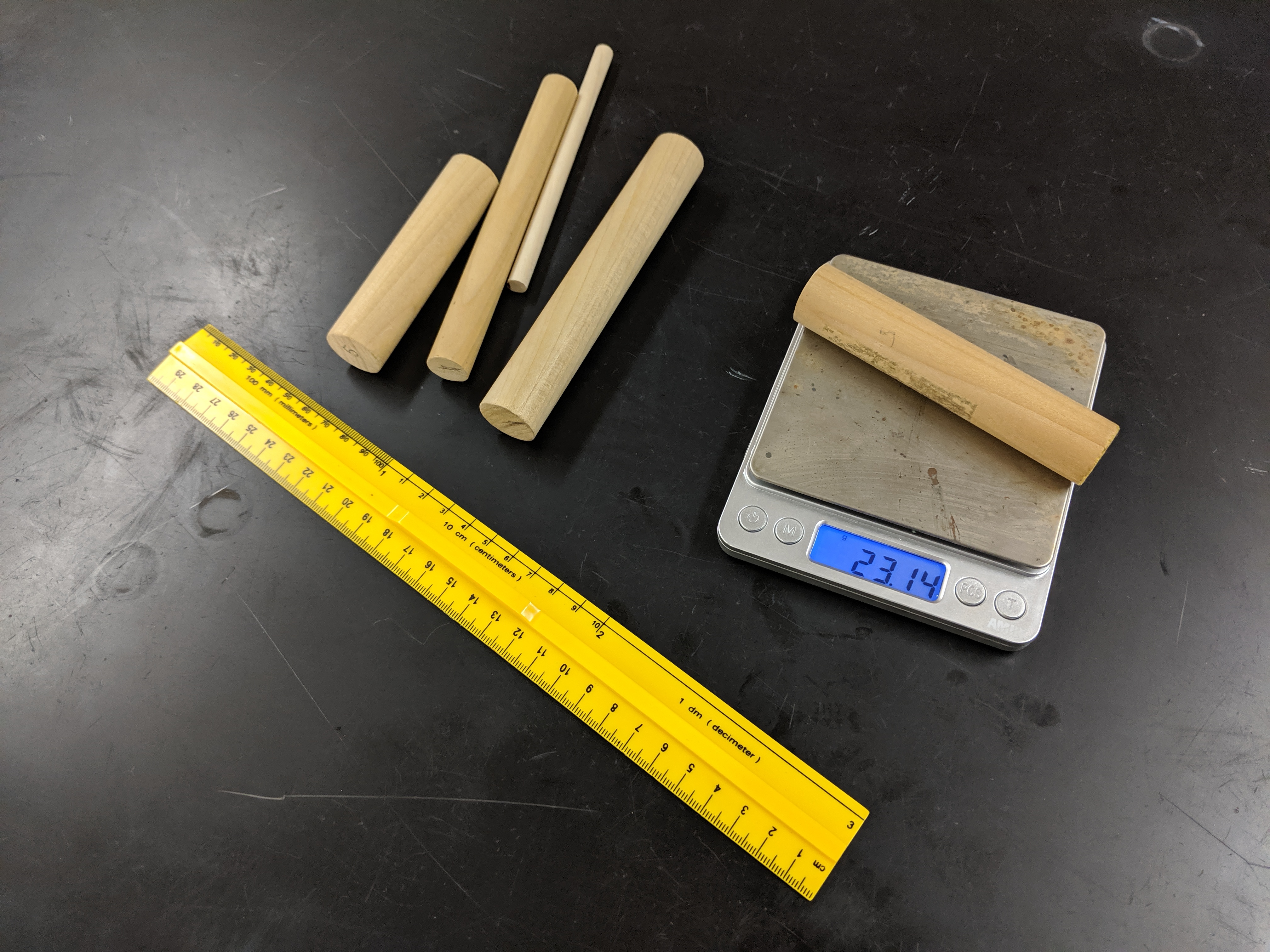
Partly to avoid sharing equipment and partly to limit how much students have to retain from the first lab, we started by asking students to predict the mass of a large dowel by finding a relationship between the mass and volume of smaller dowels. Similar to AP, we did the lab twice. On the first day, I just asked students to predict the mass of the large dowel, and many ended up using measurements from a single smaller dowel. That lead to some nice discussion on how measuring more small dowels would reduce uncertainty. It also lead nicely into graphs as an easy way to look at the ratio between mass and volume of several dowels simultaneously. For the second round of the lab, students used the lab template I put together for the course.

dowels.jpg


Day 161: Final Project Presentations, Lab Final, & Nuke Whiteboarding

This will probably be my last post of the year. Today was the last day for seniors, so my Physics and AP Physics 1 classes wrapped up today. My Chemistry Essentials class is mostly juniors, which means they will continue through the end of next week, but I’ll miss out since I’m going to the AP Physics reading.

This year, I’ve been doing a lot of work to try and build a strong whole-class culture and, compared to previous years, I had a lot more students talk about how they’ll missing being in their specific hour of physics, suggesting there was a strong sense of community. That was a really exciting element of my last day for the year.

AP Physics 1: Final Project Presentations

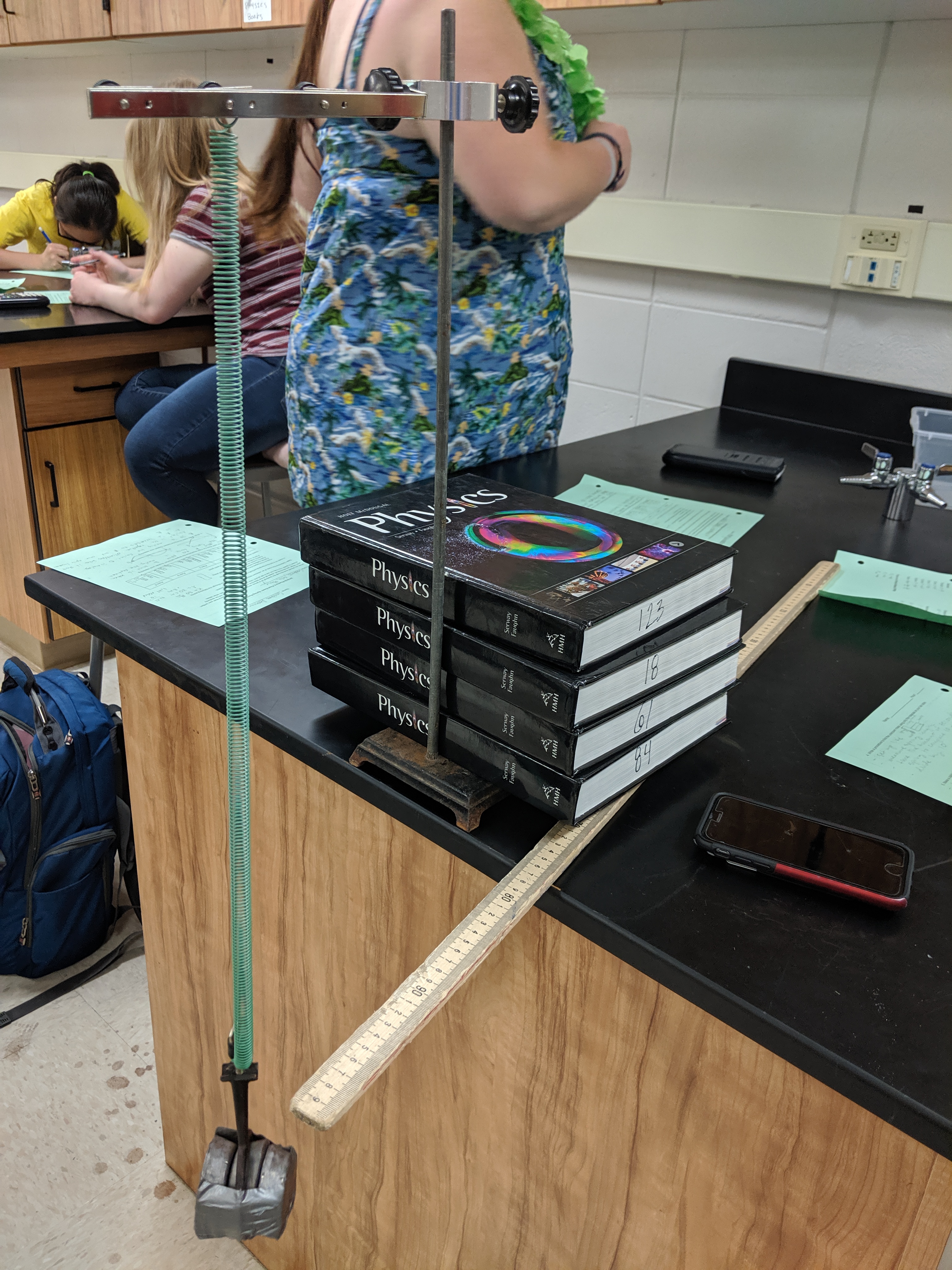
We finished up final project presentations. There was one group that designed and built a rig to reliably launch a hockey puck to measure the stopping distance along various surfaces in order to determine toe coefficient of friction. For the final, students were given a spring with a known spring constant and tasked with finding the mass of a mystery object.

phys lab final

Physics: Lab Final

Students did a lab practical for the second half of their final exam. There was lots of great conversation as students worked through the problem and it was a lot of fun for me to see students using so many of the skills we’ve been working on this year.

Chemistry Essentials: Nuke Whiteboarding

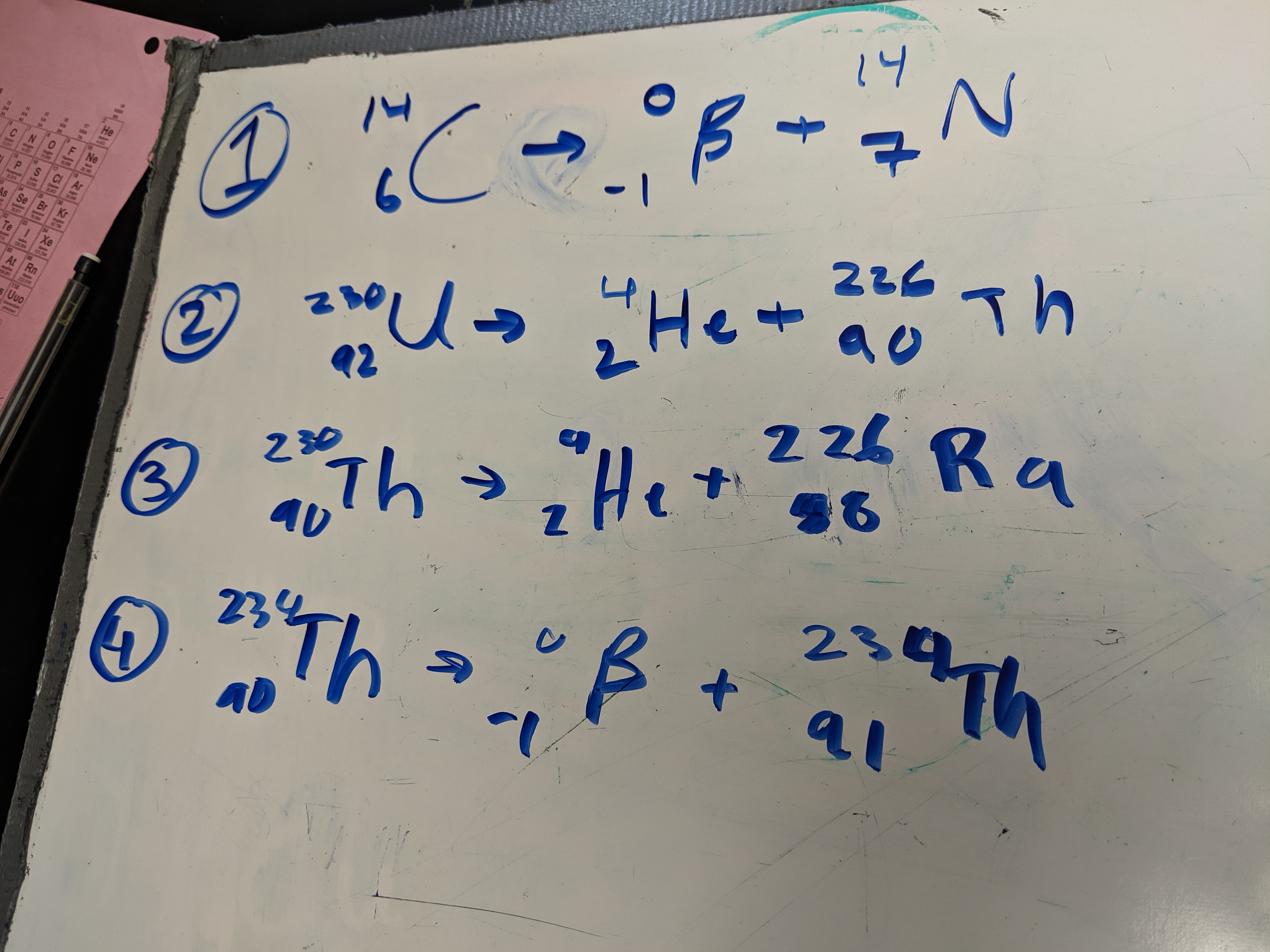
We did a quick refresher on nuclear decay using the whiteboards before taking the quiz on nuclear chemistry.

chem wb.jpg

Day 160: Final Project Presentations, Final Exam Part 1, & Mistakes Whiteboarding

AP Physics 1: Final Project Presentations

We started presenting final projects. I have each group prepare a presentation, but am pretty lenient on length. I have a couple of students on the trap shooting team that presented today on their examination of the recoil on a shotgun. I hadn’t realized the shotgun barrel is above the center of mass, so there is an upward recoil in addition to the backward recoil.

Physics: Final Exam Part 1

Seniors are done tomorrow, but we’re on a standard schedule both today and tomorrow. To accommodate that, we split the physics final exam into two parts. Today, students took a pretty standard written final.

Chemistry Essentials: Mistakes Whiteboarding

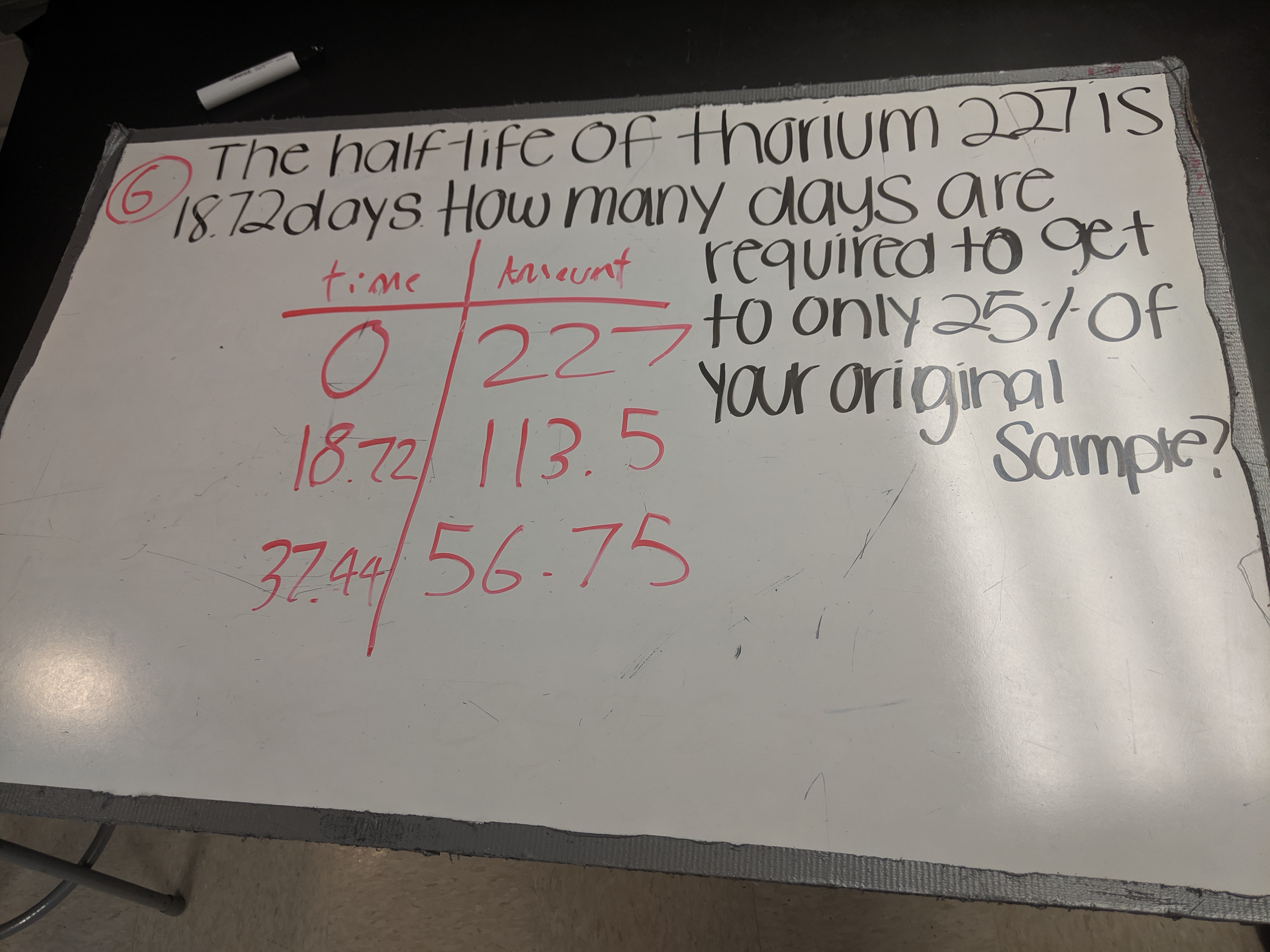
I showed students a table to organize their work on half life calculations, then we did some mistakes whiteboarding on yesterday’s problems. The table made the problems much easier for a lot of students, which was great.

chem mistake (1).jpg

Day 159: Final Project Work, Review Whiteboarding, & Half Life Problems

AP Physics 1: Final Project Work

Students worked on polishing their final projects. One student needed to measure some angles in a video clip on Netflix, and had the brilliantly simple idea to just hold a protractor against her screen.

Physics: Review Whiteboarding

Students whiteboarded problems off the final review. A few students asked to chose their own groups since this would be our final round of whiteboarding, but I’m glad I stuck with shuffling them since there was some great conversation during the first few minutes when students were comparing answers on their problems.

Chemistry Essentials: Half Life Problems

We had a board meeting with the results of yesterday’s lab, then students worked on some half life problems. I don’t think I do a great job of linking the lab to the calculations, and I could see it in the ways students were struggling with the calculations.

half life graph.jpg

Day 158: Final Project Work, Final Review, & Half-Life Lab

AP Physics 1: Final Project Work

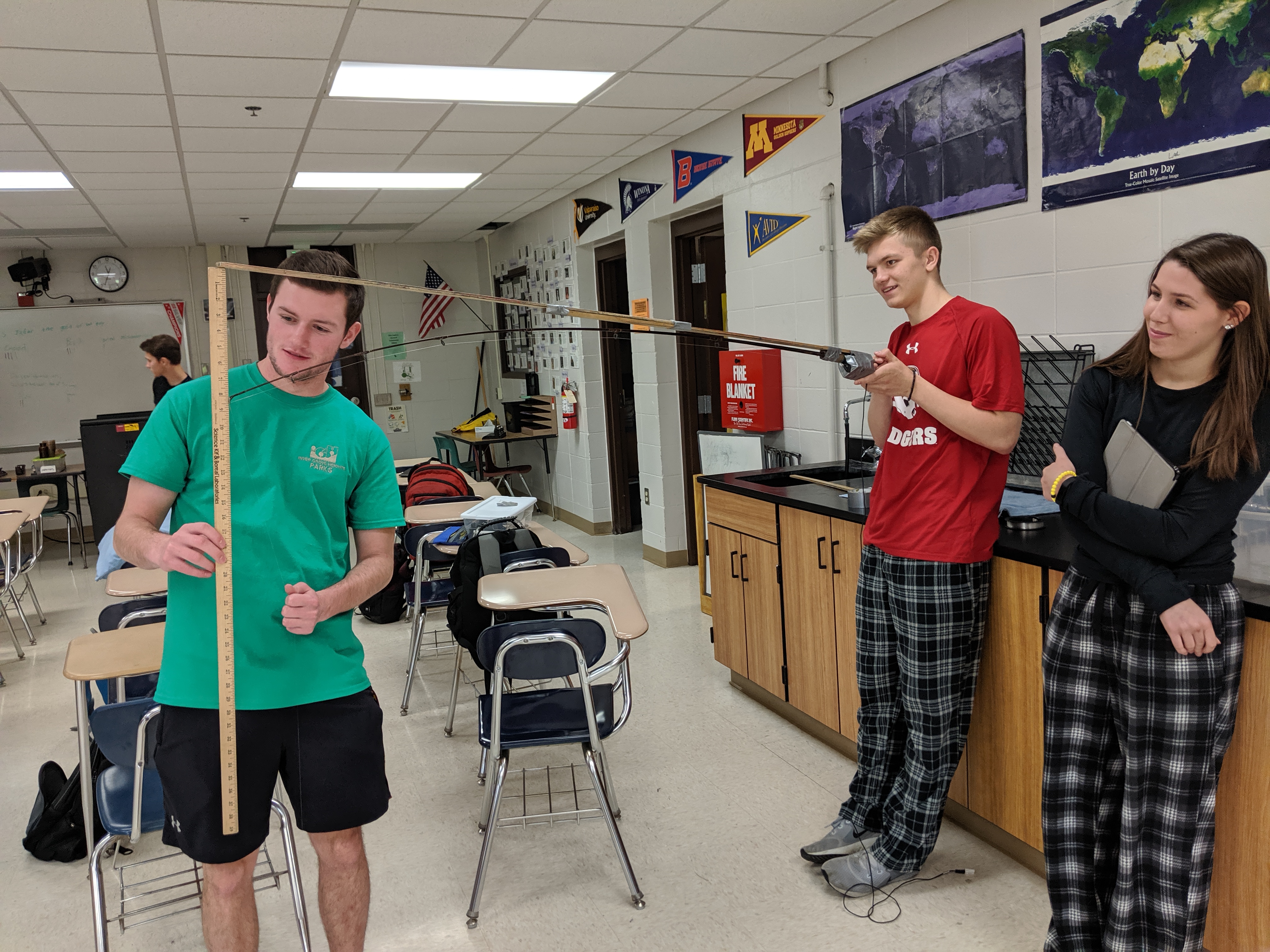
Students worked on finalizing data collection for their final projects. One group engineered a clever rig to measure how much a fishing rod bent when there was a load.

final project.jpg

It was also PJ day for seniors

Physics: Final Review

Students started working on their final review. We didn’t do anything too exciting, just a selection of problems from each topic, but there was a lot of great discussion as students sought out peers who could help with topics they were rusty on.

Chemistry Essentials: Half Life Lab

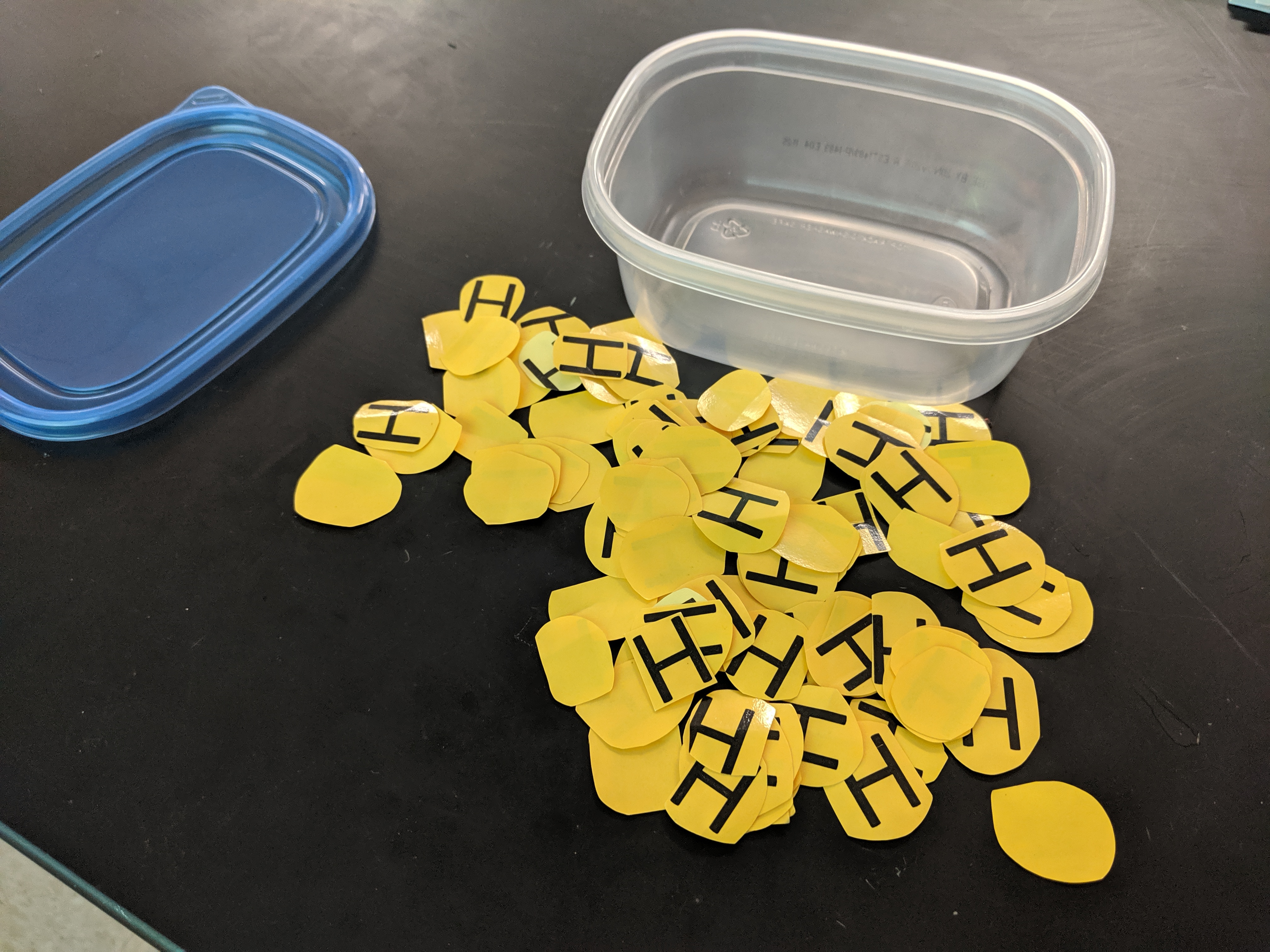
Students used paper “pennies” for the classic half-life lab. I have student submit their group’s results in a Google form I’ve been using for a few years; it currently has data from 54 groups, which will be nice for tomorrow’s discussion.

half life.jpg