Day 40: Ramp Graphs, FBDs, & Card Sort

I ended up home sick today.

AP Physics: Ramp Graphs

Students took a longish quiz, then started working on some problems to sketch graphs and motion maps for objects on a ramp. Since we haven’t actually discussed the ramp lab yet, I’m expecting these problems to be a little tricky. There are enough students currently in calculus that I’m hoping they can help their classmates make sense of the graphs. Regardless, I’ll need to make sure I allow time after the ramp lab discussion to make sense of those problems.

Physics: FBDs

I left students a worksheet of interaction diagrams and free-body diagrams. On my last sub day, very few students attempted the problems, I asked my sub to remind students that I’m after an attempt, not right answers. I also asked the sub to collect papers at the end of the hour so I can see where students are at before class on Monday.

Chemistry Essentials: Card Sort

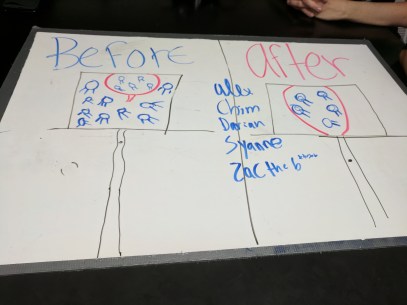
Since we are starting to talk about elements, I left a card sort activity for students to build a version of the periodic table using cards that represent some of the properties of each element. I asked students to snap a photo of their final sort and upload it to Google Classroom so I can see what they came up with.

card sort.jpg

Day 39: Ramp Whiteboards, FBDs, & Electrolysis

AP Physics: Ramp Whiteboards

Since a recent quiz used a free-response problem from the AP Physics exam, I gave students part of the hour to use the scoring guide to review their work. Students seemed to like seeing the level of detail the College Board is after.

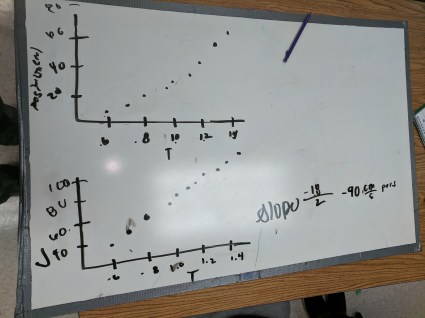
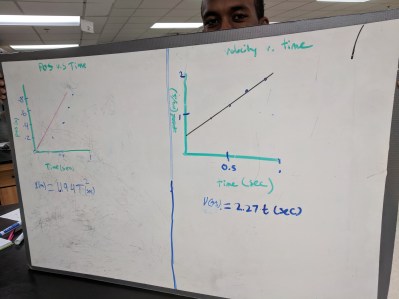
Afterward, students prepared whiteboards for the ramp lab we’ve been working on. I made some changes to my approach and can tell I need to do a little more work on helping students interpret the graphs and data tables from the photogates. Overall, results are looking pretty good.

ramp wb

Physics: Free-Body Diagrams

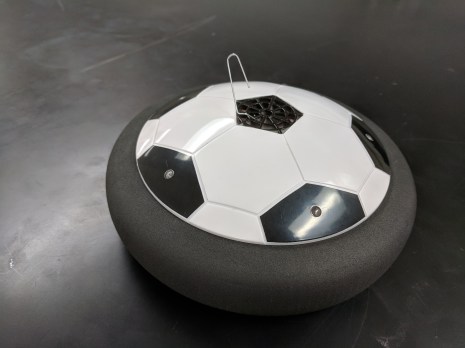
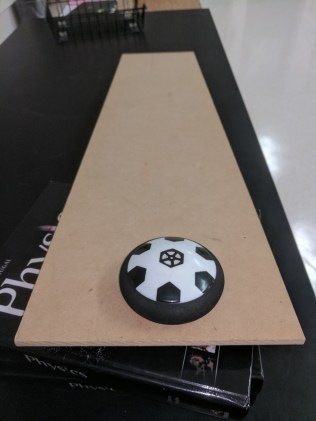
We discussed some of the interaction stations to get to the point of defining a few key types of forces. Afterward, I introduced them to interaction diagrams and free-body diagrams using the hover puck in an activity adapted from Kelly O’Shea. For the puck traveling at a constant velocity, one of my hours had some really good small group discussion about whether there is a forward force on the puck, though neither class got to a whole group discussion today.IMG_20171102_144515

Chemistry Essentials: Electrolysis

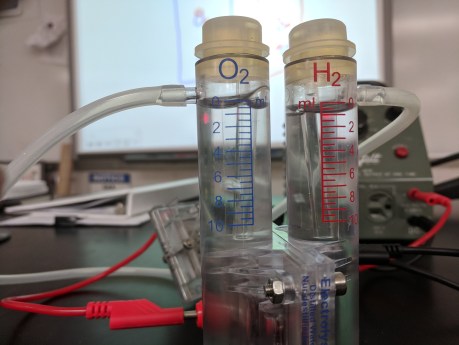
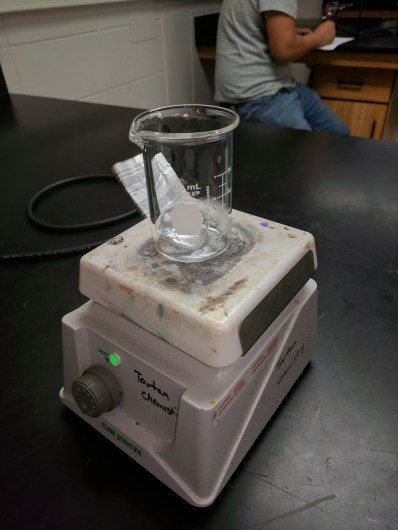
We did a gallery walk to go over yesterday’s problems. I also showed students an electrolysis apparatus to have some conversation about how we know water is two hydrogens and an oxygen.

IMG_20171102_144642

Day 38: Ramps, Interaction Stations, & Pure Substances

AP Physics: Ramps

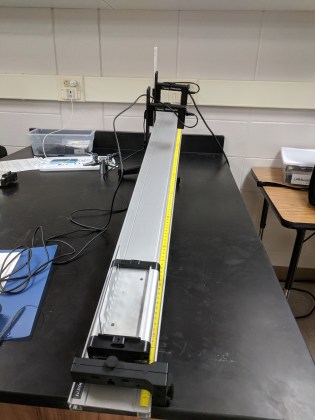
Students worked on collecting position vs. time and velocity vs. time data for a cart on a ramp. Based on the questions I was getting during the lab, a lot of groups would have benefited from more discussion about what the photogates were measuring and how that translated into the graph and data table on the LabQuest. I should talk to our tech guy about installing the LabQuest emulator to help facilitate those conversations.

ramp.jpg

Physics: Interaction Stations

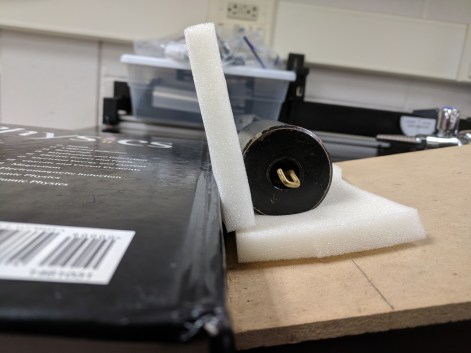
To keep building up the idea of forces, students worked through a series of interaction stations Brian Frank wrote about using a worksheet from Kelly O’Shea. Students got tripped up identifying where the interaction was taking place, mostly because they were overthinking it. Some were bothered that they could see more than one interaction, but only needed to talk about one on their worksheet. Next time, I might make it more open to encourage students to discuss multiple interactions.

station d.jpg

Chemistry Essentials: Pure Substances

Students worked on a Modeling Instruction worksheet differentiating between pure substances, mixtures, compounds, and elements. I like pure substance, mixture, and compound were all motivated by the labs with iron and sulfur, but students had trouble connecting the idea of an element. We haven’t done hydrolysis yet, and I wonder if that might have helped motivate elements.

Day 37: Dueling Buggies, Dueling Fan Carts, & Chemical Change

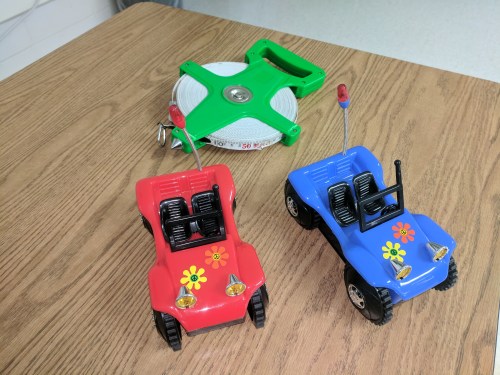
AP Physics: Dueling Buggies

Students wrapped up the dueling buggies lab practical with very satisfying results. Usually, most of my students look for the intersection of the position vs. time graphs, but this year I had a lot of groups decide to solve the system of equations. I think that is just an artifact of doing the lab later than usual, when students are in the routine of connecting math and physics, and of moving pretty quickly through the CVPM worksheets.


Physics: Dueling Fan Carts

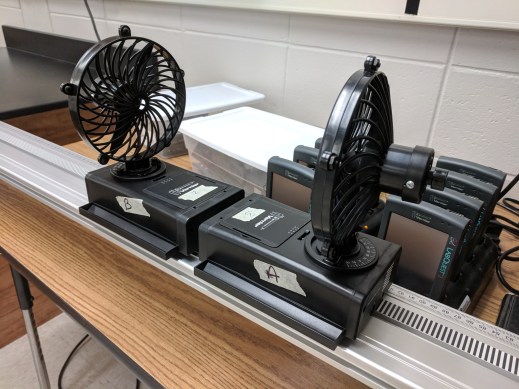
We talked about the rules students had for tapping and motion after yesterday’s bowling ball lab, then moved into a version Frank Noschese’s dueling fan carts. Frank’s activity calls for high vs. off, but I added in off vs. high as a separate scenario to help with the idea of directionality. This is the first time I had groups revise their rule after the fan carts, and I was really pleased with how that went. I think that approach also helped cement the connections between the bowling ball lab and the fan carts, and the connections are something I’ve seen missing so far.

fan carts,

Chemistry Essentials: Chemical Change

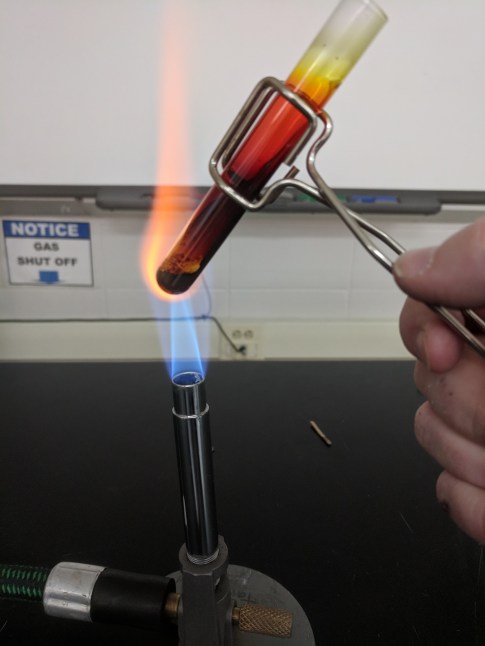
Students heated yesterday’s mixture of iron and sulfur to see if the properties changed. Just about everyone was very excited about using fire, but it was tough to keep them focused on making and interpreting their observations. Since I only had a few questions, I projected them, rather than making a handout, but something about a handout seems to give my students more sense of individual accountability. I think the handout serves as a physical reminder of the questions they need to answer, so I will try to stick with making handouts.

chem change

Day 36: Dueling Buggies, Bowling Balls, & Properties of Mixtures

AP Physics: Dueling Buggies

We did an abbreviated whiteboard session on Thursday’s problems since students had correct answers and were feeling pretty confident on the material. Afterward, we started working on the dueling buggies lab practical. I had several groups decide to have different people try different approaches, then compare answers as a way to check their work. Tomorrow, we’ll actually crash the buggies.

buggies.jpg

Physics: Bowling Balls

I started class today by talking a little about why I use Modeling Instruction and the kinds of actions that make a student successful in this type of classroom. Students seemed receptive and the atmosphere in the room was much more positive than it has been in a while. I think moving on to forces was a good call.

Students worked on the bowling ball and mallets lab to start building ideas about forces. I also gave students roles within their groups and explained this was to help them learn how to be a productive member of the group, even when they don’t know the answers. Students were much more consistently engaged than I’ve seen this year and a lot of great conversations were happening in groups.

bowling

Chemistry Essentials: Properties of Mixtures

As a demo, I asked students to observe properties of water and ethanol before and after mixing. The whole class discussion got a little rocky because a lot of students had great questions and great observations, but it was tough to keep them from talking over each other (or me). That’s something I need to keep working on with this class, but its a good problem to have.

Afterward, students did something very similar with solid sulfur and iron. Again, there were a lot of great observations. Students seem pretty clear on the idea that a mixture has a combination of properties from both materials.

fe s.jpg

Day 23: Elevators, Board Meeting, & Pressure

AP Physics: Elevators

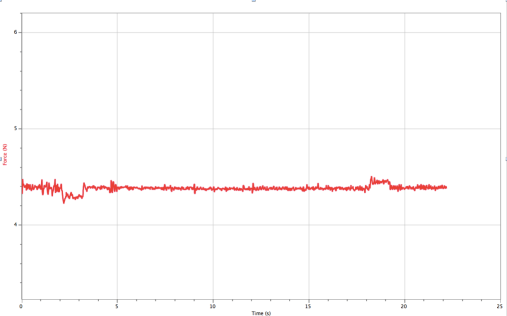
I took some time today to introduce students to the CER framework. I showed them a force vs. time graph I made by riding the elevator with a mass hanging on a force sensor, then asked them to determine whether I was riding the elevator up or down. We haven’t done much with unbalanced forces yet, but they were pretty successful determining which direction I rode it.

Elevator Ride Down.png

Physics: Board Meeting

Students whiteboarded sketches of their graphs from yesterday. Its been taking longer and longer for groups to prepare whiteboards, so I think I will try setting a time on the SMARTBoard to try and speed things up. I also found a lot of groups were missing information we’d discussed recording prior to the lab yesterday, so I think we need to revisit lab notebook practices. The discussion was very abbreviated, so we only got a chance to discuss a little about the position vs. time graphs, but students were able to recognize the key ideas. On Monday, we’ll talk about the v-t graphs and look at some variations.

vid wb

Chemistry Essentials: Pressure

To introduce pressure, students watched a balloon in a vacuum chamber, then whiteboarded what they thought was happening. Students were pretty successful at coming up with useful ideas to explain what they saw and inventing the idea of pressure.

chem wb (1)

Afterward, we boiled water in the vacuum chamber. We ran out of time to whiteboard it, but, on a whim, I got out my thermal camera and recorded a video to show the water stays cool.


Day 22: 3rd Law, Video Physics, & Thermal Expansion

AP Physics: 3rd Law

Students predicted which cart would experience a larger force for several different collisions, then we got out the force sensors and hoop springs to find out. In one of my classes, the computer was acting up, so we relied on the hoop springs and slow motion video. Fortunately, students found the video very convincing and even described watching the hoop springs compress as satisfying.

collision lab f-t graph

Physics: Video Physics

We started constant acceleration today. Students used photogates with a cart on a ramp during the first unit, so I decided to have students analyze hover disks on a ramp using Video Physics.  I’m hoping that some of the features, like seeing the points in the video, will help students connect the representations we’re using to their physical meaning.

hover

Chemistry Essentials: Thermal Expansion

I did a few demos of thermal expansion, and had students complete particle diagrams of each one. Students seem to be getting the big ideas, and I’m seeing students naturally improving how they represent key elements of their particle diagrams as time goes on. One student called me on falling into pretty teacher-centered habits during the whiteboard discussions; I have a tendency to talk to much the first time I teach a lesson, and this is my first time through Chemistry Essentials A, so that’s happening a lot. I need to spend a little more time during my lesson planning making sure I clarify the goal of each discussion and planning out some open-ended questions so I can give students more of the reigns.

chem wb

Day 21: Lab Practical, More Problems, & States of Matter

AP Physics: Lab Practical

Students worked on a balanced forces lab practical to determine an unknown mass given the tensions supporting it. I just made one set-up, and it was interesting to see that in one class, each group wanted to take their own measurements, while the other class wanted to just have one person take the measurements and record them on the whiteboard. The hour that took measurements as a whole class actually took longer to get everyone the data, but had a lot more conversation about what they needed.

static prac

Physics: More Problems

I’ve got enough students struggling with constant velocity that we took a day to do a Modeling worksheet that I usually skip. Talking to students, there were several groups who thought the area of the velocity vs. time graph only gave displacement in special cases. I’m also seeing a lot of evidence that students are losing track of the physical meaning of the graphs and their connections with the math. For example, when writing an expression based on a graph, a lot of students are using units and variables from the dowel lab, which tells me they know a procedure to turn y=mx+b into “physics”, but don’t have a conceptual understanding of what they are doing. These challenges have been a recurring theme in physics this year; we’re starting constant acceleration tomorrow, and I think I want to revamp the lab a bit to try and prevent some of these issues.

Chemistry Essentials: States of Matter

Students melted ice into steam and made observations and drew particle diagrams along the way. This led nicely into the idea that as the temperature increases, the particles are moving more. Students also made some nice connections to yesterdays’ demo with food coloring in water.

boil ice

Day 20: Force Diagrams, v-t Graphs, & Diffusion

AP Physics: Force Diagrams

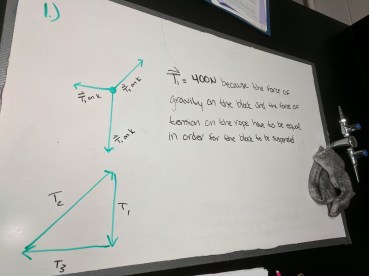
We went over the force problems from last week. I skipped having them whiteboard all of the trig and algebra, and just had students whiteboard the diagrams and some selected reasoning. There was some good debate on whether the normal force should equal gravity on some of the problems, and the vector addition diagrams were a great tool for reasoning that through.

vad wb

Physics: v-t Graphs

Students whiteboarded their solutions to Friday’s constant velocity problems. The problems were a lot more challenging than I expected. One big struggle for a lot of groups was making sense of what the problem was asking. The other big struggle was connecting strategies and ideas from one problem to the next one. For example, after using the area of a velocity vs. time graph to find displacement on the first problem, many students struggled to find the displacement from a v-t graph on the second problem. This tells me students were following a procedure without understanding why, so I need to think about how to step back and get that idea across.

vt wb

Chemistry Essentials: Diffusion

Students whiteboarded particle diagrams for perfume dispersing through the classroom and food coloring dispersing through water. In both cases, students made a lot of great observations prior to whiteboarding and had a lot of good foundation on their whiteboards.

diffusion.jpg

Day 18: Trig It Out, Dueling Buggies, & Density Problems

AP Physics: Force Problems

Students worked on using vector addition diagrams to solve balanced force problems (one of many things I learned from Kelly O’Shea). I really like that while many of my students still ended up using a version of components, they see where the components come from. Once students set up their vector addition diagrams, the slogan for the day was “Trig it out!”, a line from last year’s students.

Physics: Dueling Buggies

Students worked on the Modeling Instruction lab practical to predict where two buggies will collide. I didn’t give quite enough instruction to my 1st hour, but once I suggested they try drawing some representations and play with them, they started making some progress.

One of my goals this year is to help students value ways of being successful in class besides knowing the answer quickly, so as part of the lab practical I gave them a list of skills based on similar lists from Kelly O’Shea and Ilana Horn, then asked them to identify at least one example for each group member where they demonstrated one of those skills. I’m looking forward to reading their responses.

dueling buggy.jpg

Chemistry Essentials: Density Problems

Students worked on some density calculations. Some students really struggled with the algebra, so I’m trying to decide whether that really needs to be in the course. Most are getting to a point where they are successful with the graph, and I think that is more valuable in the long term than using the equation.

I also handed back the first quiz; most students performed about how I expected, but I was surprised at how many students had underestimated how they did and were genuinely excited about their score. Several confirmed with me (multiple times, in one case) that they got to keep their quiz so they could show their parents. I need to work on reinforcing the connections between our day-to-day work and the assessments so that more students will see that kind of success.