Days 10-14: Constant Acceleration Representations & Constant Velocity Calculations

AP Physics 1: Constant Acceleration Representations

We spent this week working on getting representations for constant acceleration down. I made quite a bit of use of Brian Frank’s magnetic vector manipulatives during class discussions of motion maps. I think it would be worthwhile to make a set for each lab group; I don’t have magnetic surfaces at my lab stations, but I think the laminated arrows would still be useful to students while they’re working.

I’ve been doing more work on collaboration so far this year, and I’m seeing it pay off with students seeking out input from a greater variety of people when they’re stuck and with ideas jumping between groups much more than in the past. I especially love when students start working problems with one group, then whiteboard with different people and begin by comparing approaches.

motion map.jpg

Physics: Constant Velocity Calculations

Students worked on applying the constant velocity of a particle model to calculations, including predicting where two buggies will collide. One challenge, which has come up the past few years, is a lot of students are having trouble connecting the calculations to the representations we’ve been using. I think there’s a couple of things going on. In a lot of classes, once students have taken an assessment, they no longer need to use those skills, so I think some students feel like they are done with constant velocity representations after last week’s quiz. I think the other hurdle is some students, especially those less confident in math, are looking for things they can memorize to bypass the sense-making involved in sketching the diagrams. I haven’t figured out good strategies to help students work through these hurdles aside from coaching individuals and small groups on doing the sense-making and sketching the diagrams when they are stuck. I also need to keep reminding myself that as the year goes on, more will get on board with continuing to use skills we’ve assessed and working through the sense-making steps.

Days 5-9: Board Meetings & Problems

This week’s big theme was using precise, specific language in physics.

Physics: Buggy Lab & Problems

Students did the buggy lab, then worked on some problems with constant velocity representations. We went over the problems using Kelly O’Shea’s mistakes whiteboarding. Both during the buggy board meeting and during the mistakes whiteboarding, students used a lot of phrasing like “the slope is increasing” to indicate a positive slope or even just saying “the buggy was decreasing”, rather than specifying what about the buggy is decreasing, which made for some good opportunities to pick apart that wording and try to find ways to make it clearer what they meant. A few students seemed like they were frustrated by these conversations, especially during mistakes whiteboarding when a group didn’t consider that one of their mistakes, which tells me I need to keep working on emphasizing growth.

buggies

AP Physics 1: Problems & Acceleration Model-Building

AP also had their first round of mistakes whiteboarding this week. While we had some similar conversations about language, I noticed fewer students who seemed frustrated by those conversations. I don’t think I approached getting nitpicky about wording differently than I did in Physics, so I’m not sure if the AP students were doing more hiding their frustration or if they are bringing something to the class that leaves them less bothered by me getting picky about language.

After the problems, we started a model-building lab for constant acceleration where we used photogates to produce a position vs. time graph for a cart on a ramp. This lab is fairly teacher-directed since its the first time students are using any LabQuest probes, and it takes a while to get through. I’ve thought about switching to motion detectors or video analysis, but with the limited computer access I usually have, I like that photogates produce data that students can linearize. My building added a lot more laptop carts this year, so I might try one of the other options when Physics gets to acceleration.

Days 1-4: Dowels & Buggies

School started on Tuesday! This week was all about setting the culture for my classes.

AP Physics 1: Buggy Lab

We dove right in and started the buggy lab on day 1 to start building the constant velocity model. Once again, I used Frank Noschese’s take that “Any lab worth doing is worth doing twice.” On day 1, I just told students to make a graph on a whiteboard that represented their buggy’s motion. There was a lot of variation and other messiness in the whitebaords, which lead the post-lab discussion naturally into how we could prepare whiteboards in a way that set us up for a better discussion. On Day 2 and 3, we repeated the lab, but with some agreements in place to make the whiteboards easier to discuss.

Last year, this approach felt like I was doing some “expose and shame”, but I really liked that it gave an authentic reason to agree on certain details as a class before data collection. This year, I tried to address that by starting the discussion on day 1 by explicitly addressing the fact that every group met the standard set in the directions I gave and talking about the benefits of the different representations we saw. When we switched to talking about changes to the lab, I emphasized that we would be approaching the second round with a focus on being able to communicate and compare results. I also kept the focus on what students needed from me, rather than what students needed to do differently, if we were going to focus on communicating and comparing. This framing of the discussion felt much better to me.

buggies.jpg

Physics: Dowels

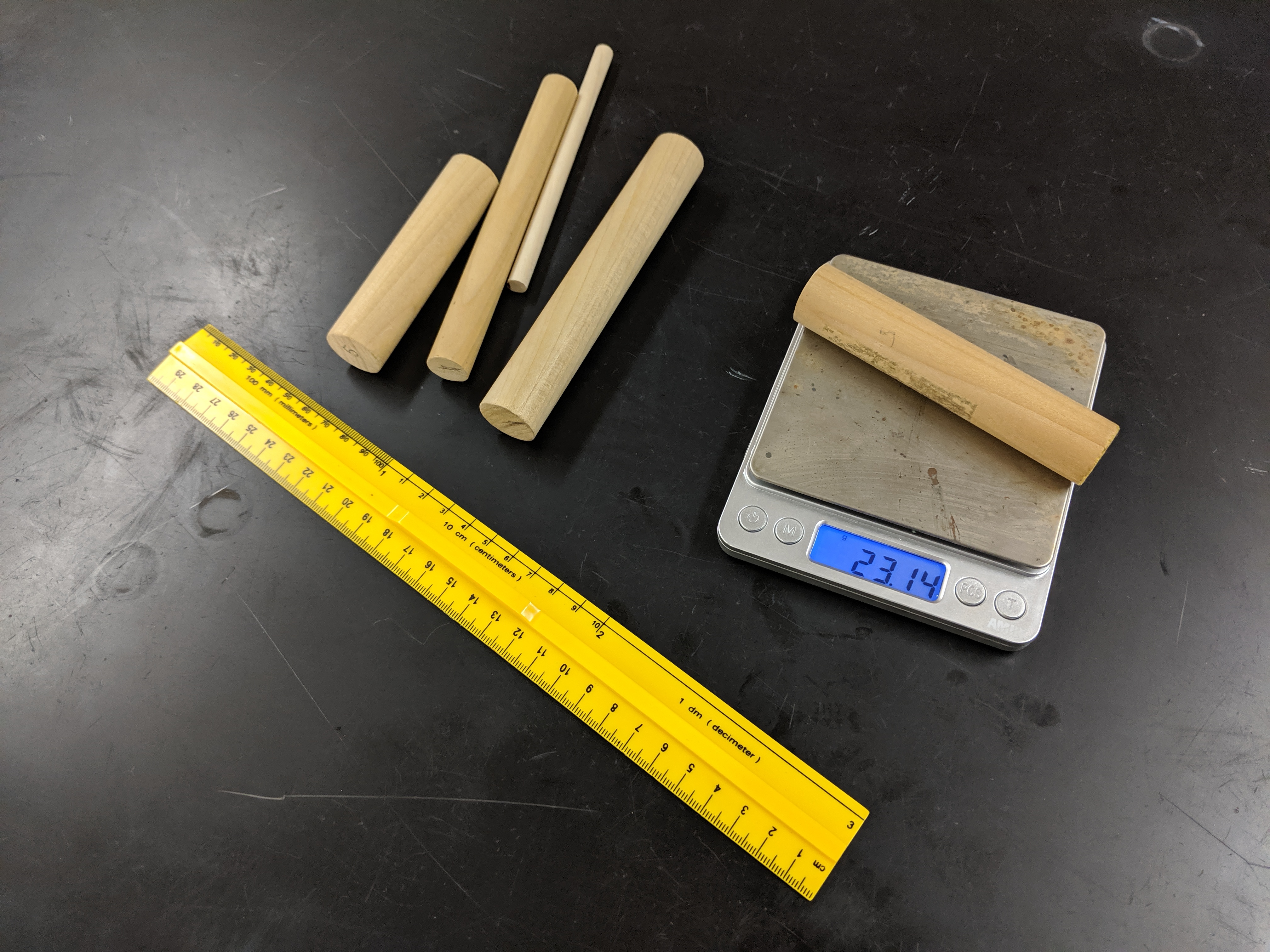
Partly to avoid sharing equipment and partly to limit how much students have to retain from the first lab, we started by asking students to predict the mass of a large dowel by finding a relationship between the mass and volume of smaller dowels. Similar to AP, we did the lab twice. On the first day, I just asked students to predict the mass of the large dowel, and many ended up using measurements from a single smaller dowel. That lead to some nice discussion on how measuring more small dowels would reduce uncertainty. It also lead nicely into graphs as an easy way to look at the ratio between mass and volume of several dowels simultaneously. For the second round of the lab, students used the lab template I put together for the course.

dowels.jpg


Day 161: Final Project Presentations, Lab Final, & Nuke Whiteboarding

This will probably be my last post of the year. Today was the last day for seniors, so my Physics and AP Physics 1 classes wrapped up today. My Chemistry Essentials class is mostly juniors, which means they will continue through the end of next week, but I’ll miss out since I’m going to the AP Physics reading.

This year, I’ve been doing a lot of work to try and build a strong whole-class culture and, compared to previous years, I had a lot more students talk about how they’ll missing being in their specific hour of physics, suggesting there was a strong sense of community. That was a really exciting element of my last day for the year.

AP Physics 1: Final Project Presentations

We finished up final project presentations. There was one group that designed and built a rig to reliably launch a hockey puck to measure the stopping distance along various surfaces in order to determine toe coefficient of friction. For the final, students were given a spring with a known spring constant and tasked with finding the mass of a mystery object.

phys lab final

Physics: Lab Final

Students did a lab practical for the second half of their final exam. There was lots of great conversation as students worked through the problem and it was a lot of fun for me to see students using so many of the skills we’ve been working on this year.

Chemistry Essentials: Nuke Whiteboarding

We did a quick refresher on nuclear decay using the whiteboards before taking the quiz on nuclear chemistry.

chem wb.jpg

Day 160: Final Project Presentations, Final Exam Part 1, & Mistakes Whiteboarding

AP Physics 1: Final Project Presentations

We started presenting final projects. I have each group prepare a presentation, but am pretty lenient on length. I have a couple of students on the trap shooting team that presented today on their examination of the recoil on a shotgun. I hadn’t realized the shotgun barrel is above the center of mass, so there is an upward recoil in addition to the backward recoil.

Physics: Final Exam Part 1

Seniors are done tomorrow, but we’re on a standard schedule both today and tomorrow. To accommodate that, we split the physics final exam into two parts. Today, students took a pretty standard written final.

Chemistry Essentials: Mistakes Whiteboarding

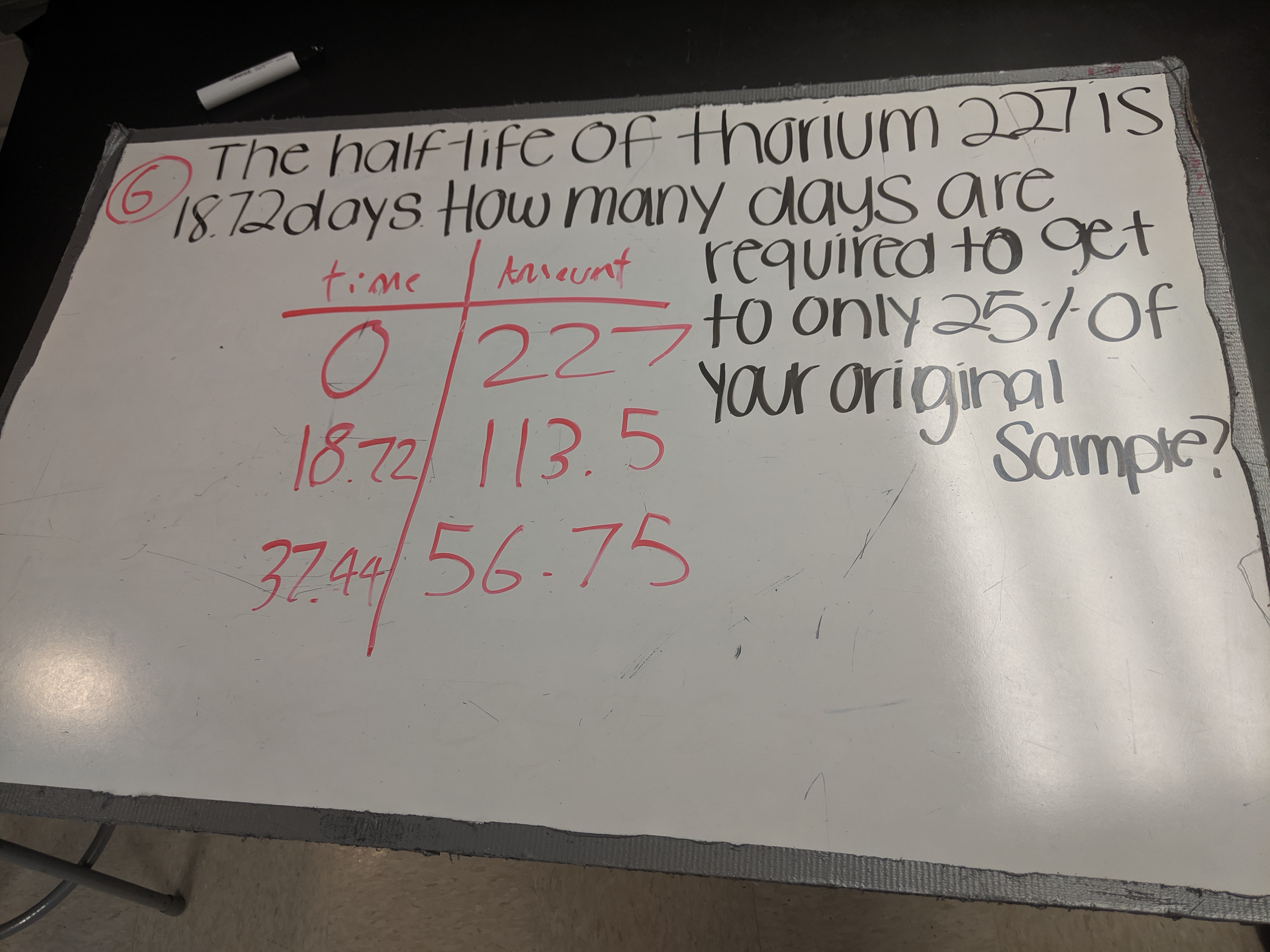
I showed students a table to organize their work on half life calculations, then we did some mistakes whiteboarding on yesterday’s problems. The table made the problems much easier for a lot of students, which was great.

chem mistake (1).jpg

Day 159: Final Project Work, Review Whiteboarding, & Half Life Problems

AP Physics 1: Final Project Work

Students worked on polishing their final projects. One student needed to measure some angles in a video clip on Netflix, and had the brilliantly simple idea to just hold a protractor against her screen.

Physics: Review Whiteboarding

Students whiteboarded problems off the final review. A few students asked to chose their own groups since this would be our final round of whiteboarding, but I’m glad I stuck with shuffling them since there was some great conversation during the first few minutes when students were comparing answers on their problems.

Chemistry Essentials: Half Life Problems

We had a board meeting with the results of yesterday’s lab, then students worked on some half life problems. I don’t think I do a great job of linking the lab to the calculations, and I could see it in the ways students were struggling with the calculations.

half life graph.jpg

Day 158: Final Project Work, Final Review, & Half-Life Lab

AP Physics 1: Final Project Work

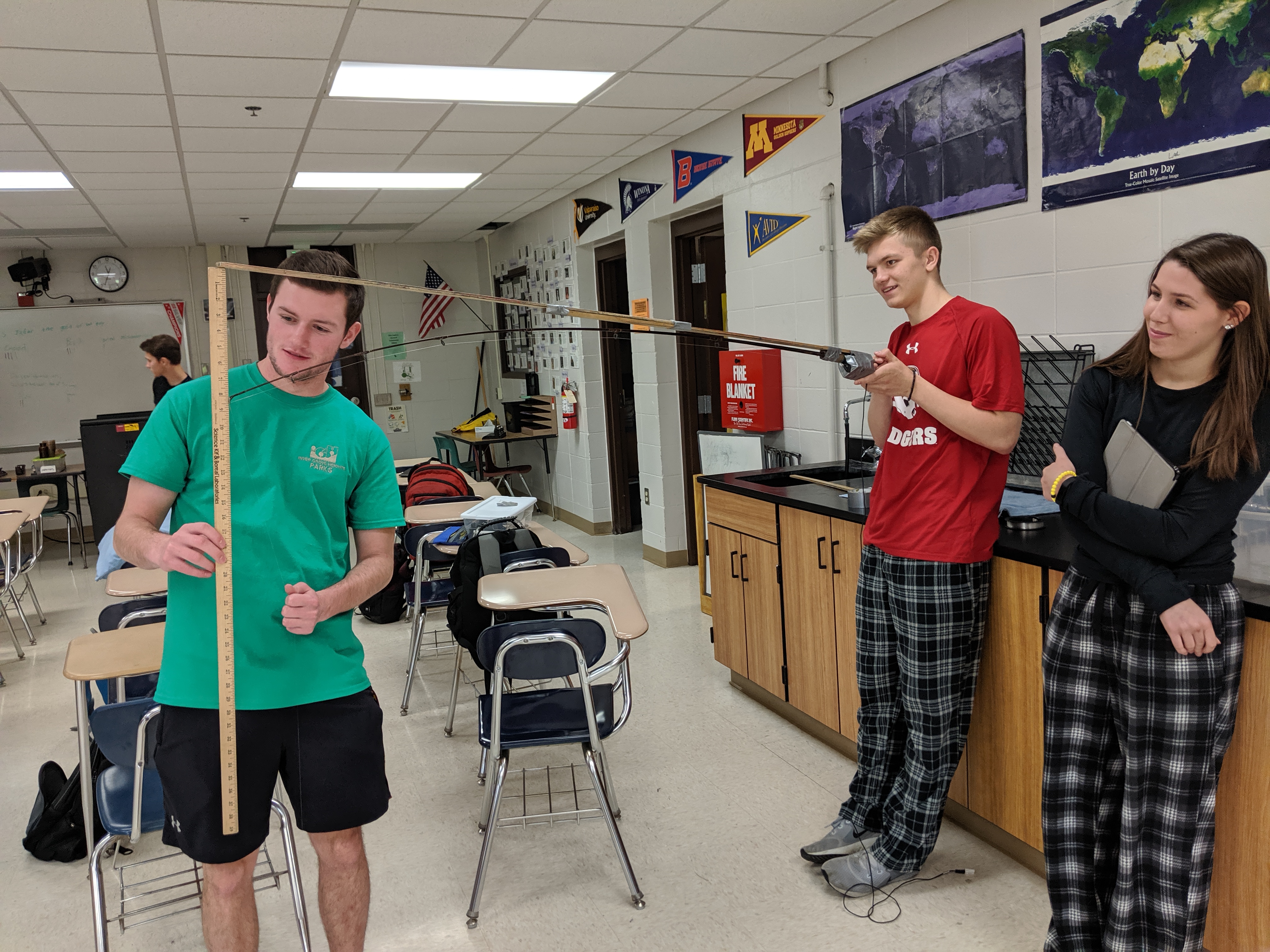
Students worked on finalizing data collection for their final projects. One group engineered a clever rig to measure how much a fishing rod bent when there was a load.

final project.jpg

It was also PJ day for seniors

Physics: Final Review

Students started working on their final review. We didn’t do anything too exciting, just a selection of problems from each topic, but there was a lot of great discussion as students sought out peers who could help with topics they were rusty on.

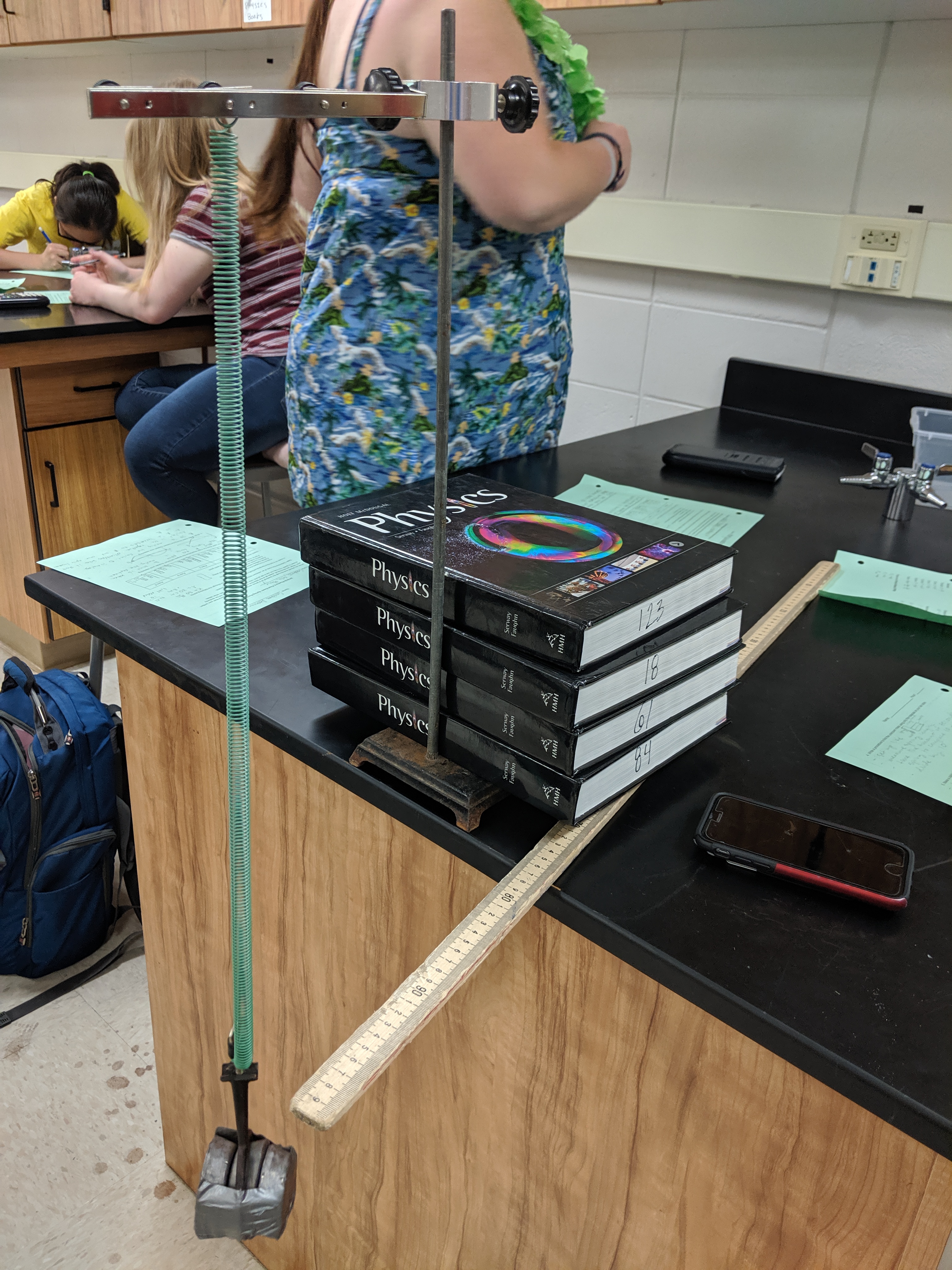
Chemistry Essentials: Half Life Lab

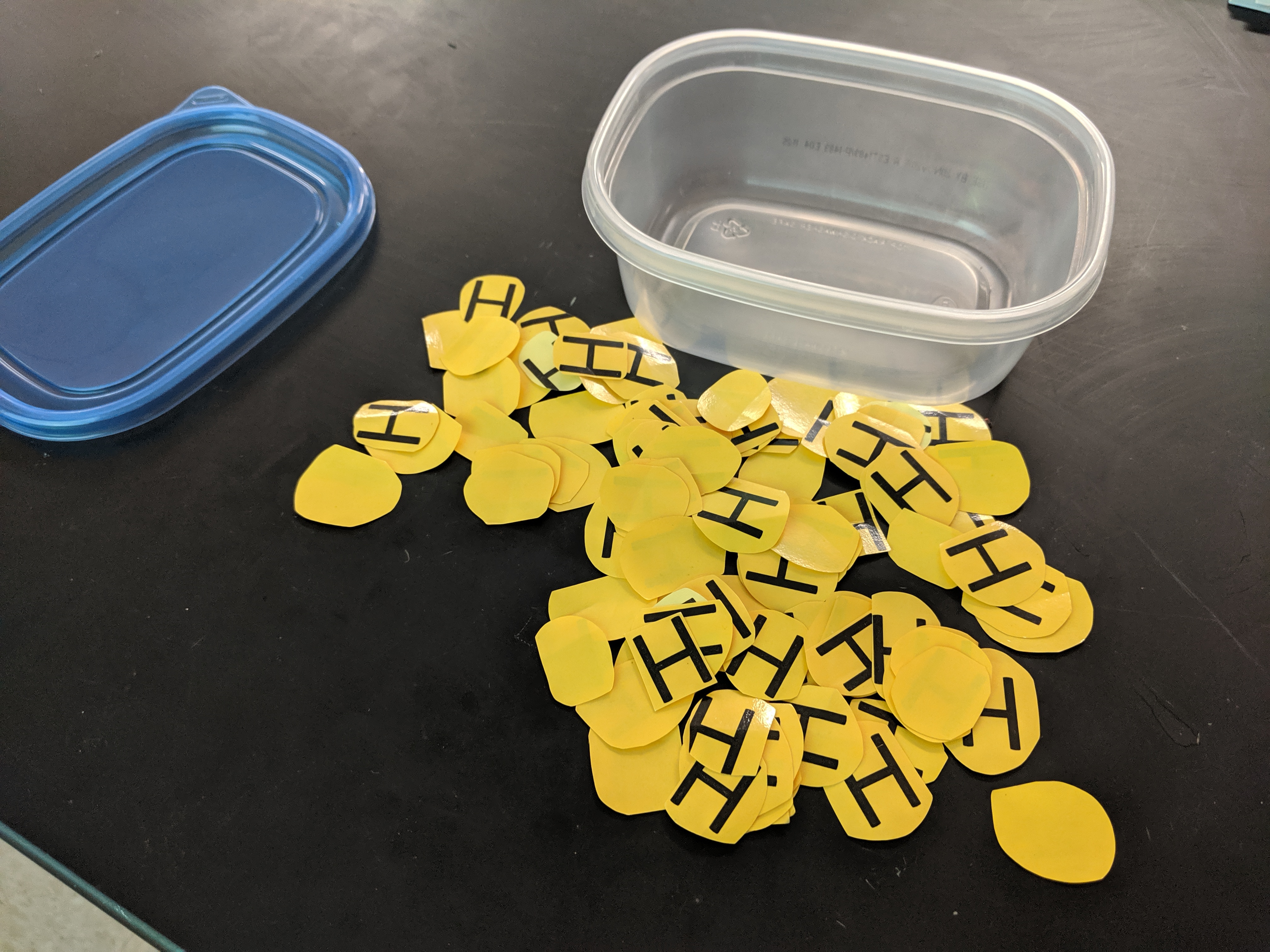
Students used paper “pennies” for the classic half-life lab. I have student submit their group’s results in a Google form I’ve been using for a few years; it currently has data from 54 groups, which will be nice for tomorrow’s discussion.

half life.jpg

Day 157: Senior Skip Day & Mistakes Whiteboarding

AP Physics 1 & Physics: Senior Skip Day

Today was senior skip day, so only a few of my students were in class. Most of the AP students opted to work on their final project and some of the Physics students started reviewing for the final.

Chemistry Essentials: Mistakes Whiteboarding

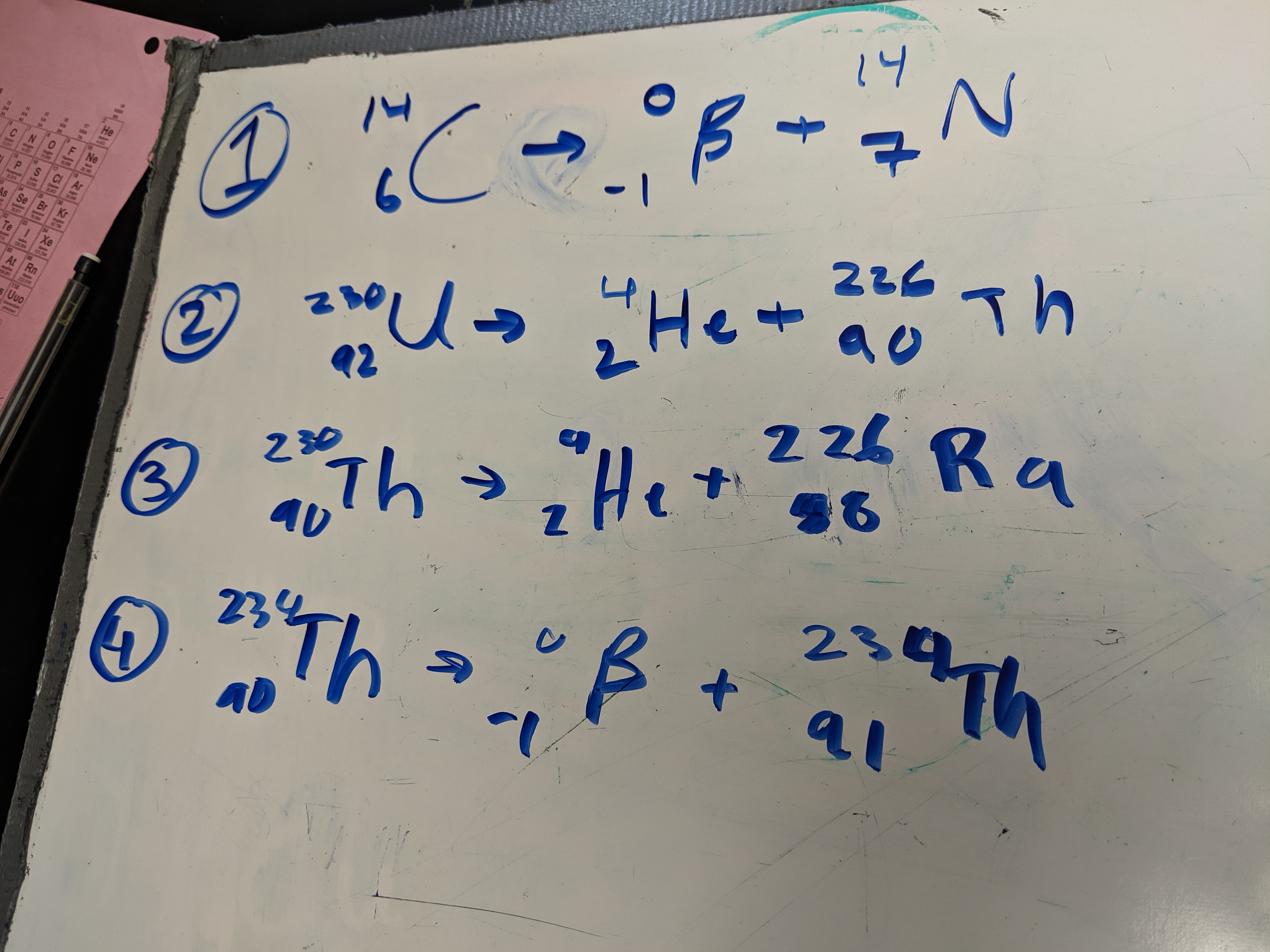
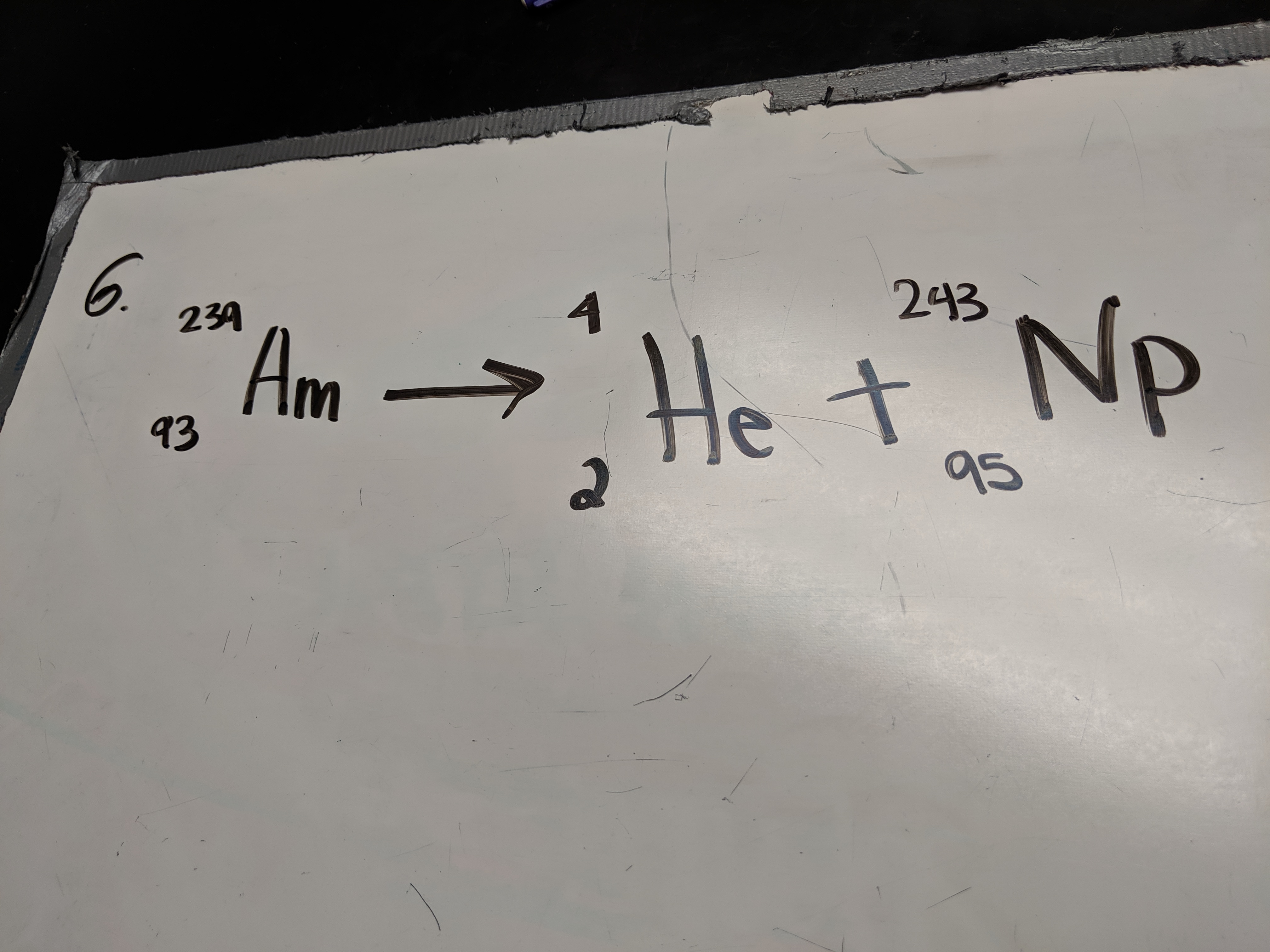
We did some mistakes whiteboarding with problems for nuclear decay. I had a few students ask how we know alpha particles are always helium-4, which got me wondering if there’s a better way I could introduce the types of nuclear decay we study than just giving some notes on the types of decay we’ll be using.

nuke decay.jpg


Day 156: Final Project Work & Whiteboarding

AP Physics 1: Final Project Work

Students continued working on their final projects. One group is working on how the speed of a basketball affects the rebound of a backboard. They were working on some energy bar charts today and came up with some interesting notation; they labeled their kinetic energy blocks with “H” and “V” to keep track of how the components of the velocity were changing and how that fit with the energy.

Physics: Mirror Calculations Gallery Walk

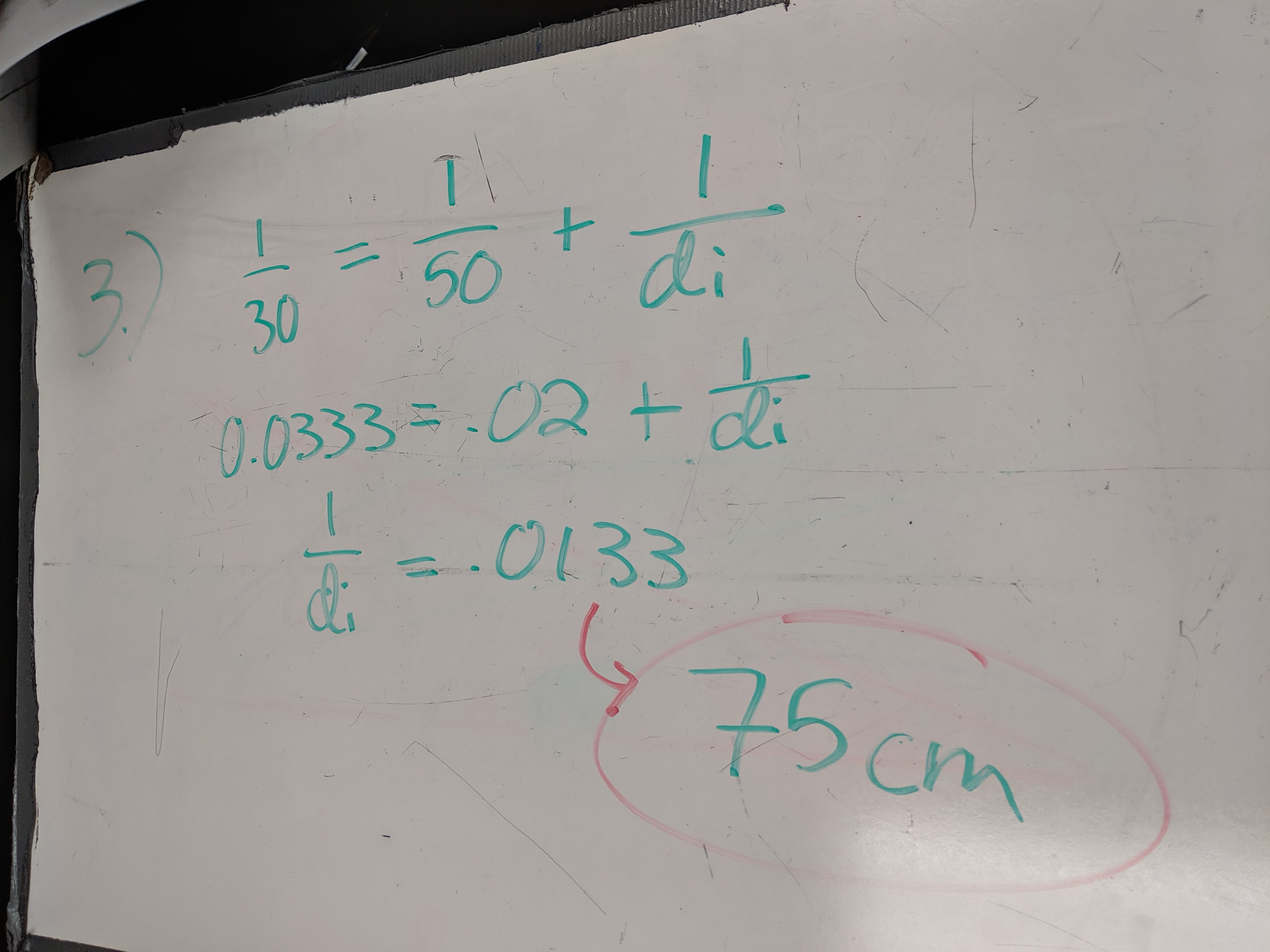
Students did a gallery walk of yesterday’s problems. My sub from yesterday commented on how well they’d collaborated on the problems, so I was surprised that my students felt very lost on the problems. Once we started whiteboarding, it was clear they knew how to do the problems, but just weren’t confident yet.

I’ve also been randomly assigning groups almost every day, and I’ve come to enjoy the first few minutes of whiteboarding. Students immediately start comparing answers and approaches with the other people in their group and have lots of great conversation about similarities and differences in their work.

phys calc.jpg

Chemistry Essentials: Nuclear Notation Gallery Walk

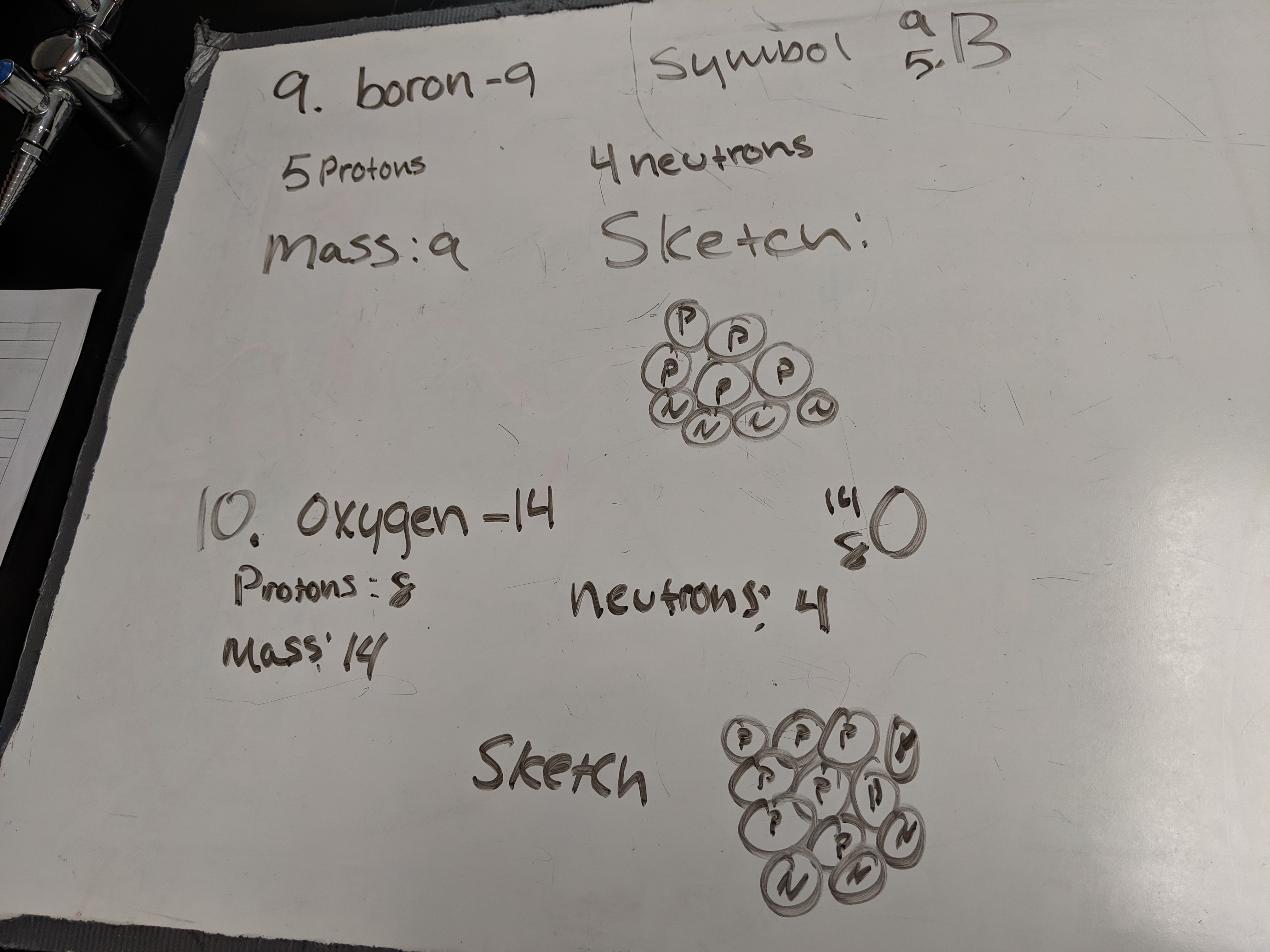
Students whiteboarded yesterday’s problems translating between different representations of an isotope for a gallery walk. Afterward, we started working on some problems writing out nuclear reactions for alpha and beta decay. I wish the decay problems started with some where the nucleus is reasonable to draw to help make identifying the products of the decay more concrete.

chem nuke.jpg

Day 154: Final Projects, Mistakes Whiteboarding, & Nuclear Structure PhET

AP Physics 1: Final Projects

Students continued to work on their final projects. I have one group that’s interested in finding a way to measure the rate my Van de Graaff generator builds up charge. They spent some time today experimenting with ways to indirectly measure the charge.

Physics: Ray Diagram Mistake Whiteboarding

Students did some mistakes whiteboarding with ray diagrams for curved mirrors. Several students commented on mistakes they thought were especially helpful or interesting, which made me feel really good about the culture I try to build in my class. Students were also sad when they realized this will be their last round of mistakes whiteboarding in high school.

ray mistake.jpg

Chemistry Essentials: PhET Nuclear Structure

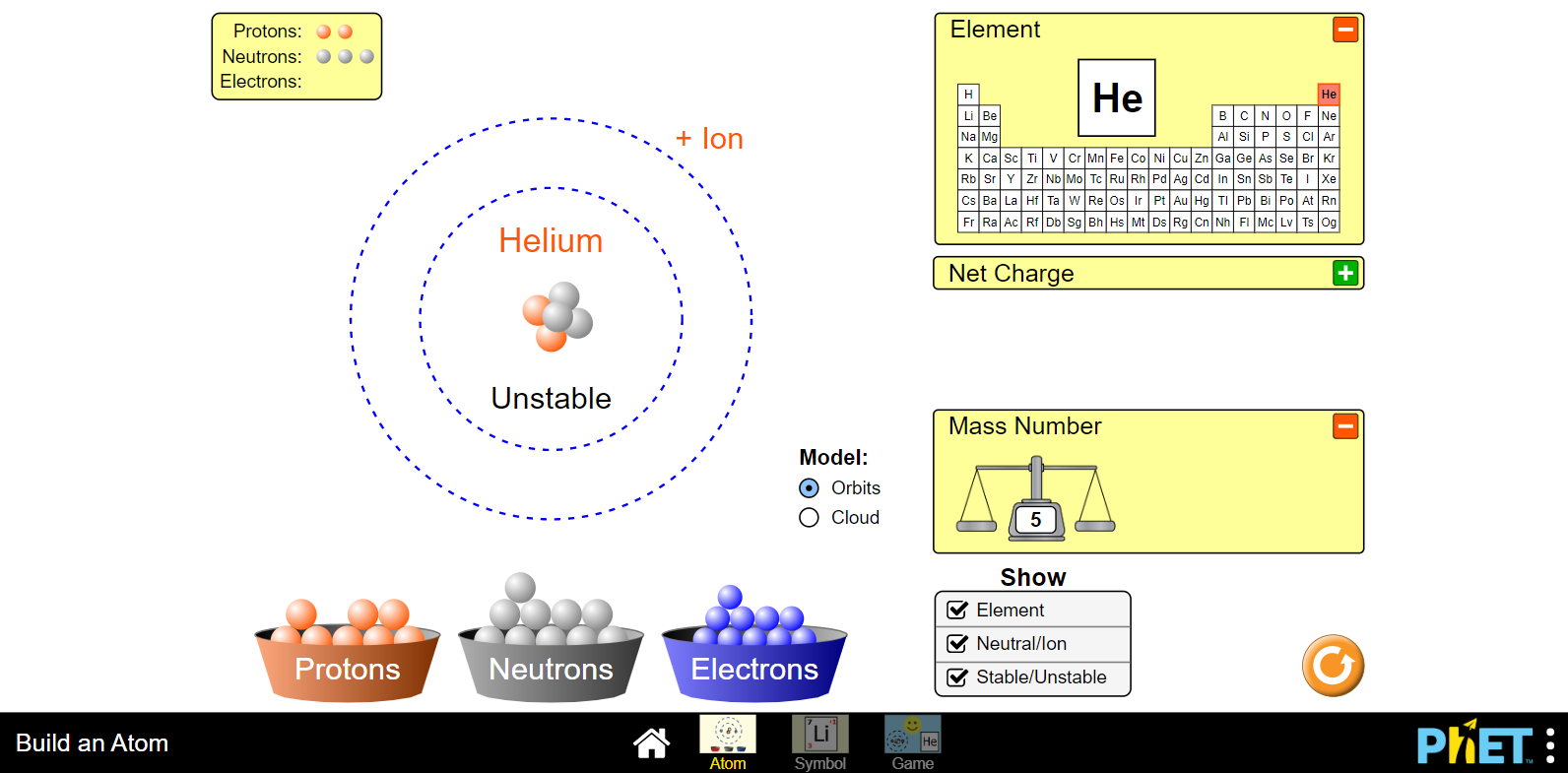
Students used PhET’s Build an Atom simulation to experiment with nuclear structure to kick of our nuclear chemistry unit. A lot of the information was a review from the first half of the course, but most needed a refresher.

phet atom.PNG