Day 147: Project Work & Plate Tectonics

AP Physics: Project Work

Students continued working on their final projects for physics. I had a fun conversation with a student who plays baseball and is planning to analyze hitting a baseball. I’m extremely ignorant about sports, so wanted to make sure there would be enough meat for him to dig into and, as he talked about everything that goes into an effective swing, it quickly became clear he will need to pick some aspects of the swing to focus on.

Earth Science: Plate Tectonics

Students played with PhET’s plate tectonics simulation to reinforce what is going on at plate boundaries. I think if I fleshed out what students are doing in the simulation, I could significantly reduce (or get rid of completely) the notes I did yesterday.
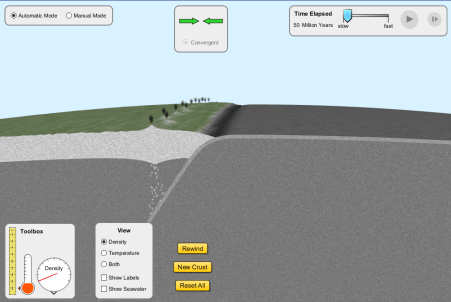
sim

Day 146: Project Intro & Convection Currents

AP Physics: Project Intro

For the rest of the trimester, my students will be working on a project I borrowed from Casey Rutherford. They will pick something they are interested in, explain it using physics from the course, then do some kind of data collection and modeling. A lot of students seem really excited about the project. I’m embedding checkpoints about once a week so I can make sure students stay on track. Today, with most of my students taking the AP Literature exam, I gave them time to start playing with ideas for a topic.

balancrd.jpg

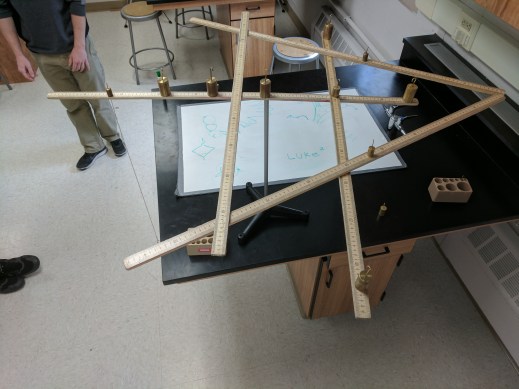
A few students played with balanced torques today

Earth Science: Convection Currents

I’ve been working on replacing the notes in Earth Science with more hands-on activities, but I caved and gave the slides on how convection currents drive plate tectonics today. I really like the way this brought together a lot of ideas from labs we’ve been doing recently, but I found myself wishing that students had some exposure to mountain-building and volcanoes, which are the next unit.

Day 145: AP Test Day & Pangea

AP Physics: AP Test Day!

As I write this, my students are sitting in the AP Physics 1 exam! I only saw one of my classes before the test, and I told them they could do whatever will help them feel good going into this afternoon’s test, with one of the options being to simply relax for a period. The class asked me to go over one of their last quizzes and to review a few concepts. After that, a few students worked independently to go over a practice test they took. Meanwhile, I taught a group of students how to play Quiddler and had a blast while getting royally trounced by all of them.

quiddler

Earth Science: Pangea

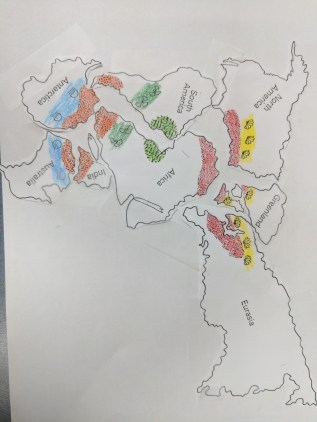
Students got continents with indicators for what kinds of rocks and fossils are present. They used that information, along with the shapes, to construct Pangea, which should lead nicely to the idea of moving plates. I didn’t get to see yet how it went; the AP Chem teacher offered to trade classes with me since she has a lot of my physics students and they were begging for one more chance to ask me questions.

pangea

Day 144: Review & Seafloor Spreading

AP Physics: Review

A little over half of my students were at the AP Chemistry test today, so I left it open for students in class to do what they needed to feel ready for tomorrow’s exam. I had one group of students go back over old quizzes to focus on mistakes they’d made, while some other students asked for a free-response question on circuits.

Earth Science: Seafloor Spreading

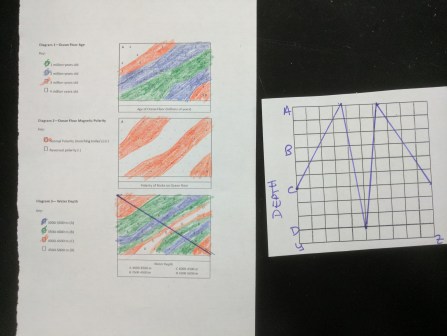
Students looked at maps of a couple of different data on the mid-Atlantic ridge. Next time, I might try to get them pre-colored maps of the data to allow for more time on the analysis and interpretation. This did combine nicely with Friday’s look at earthquake depth to justify subduction on the coast of South America. I lead students through the connection due to lack of time, but it would be interesting to give students more room to connect this data to Friday’s earthquake data.

spreading.jpg

Day 143: Plickers & Plates

AP Physics: Plickers

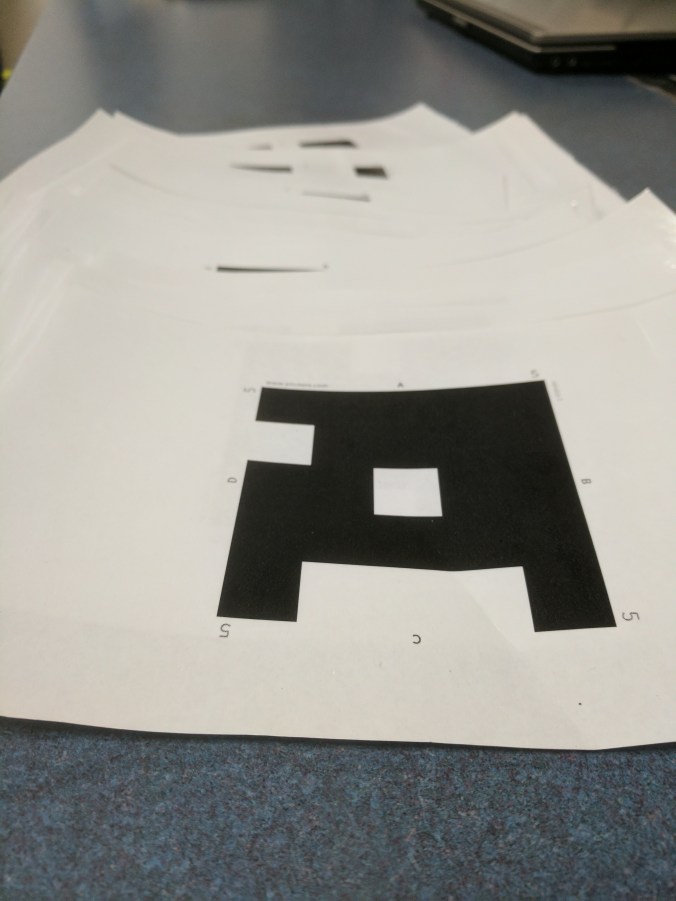
Most of my students will be taking the AP Chemistry exam on Monday, so this was our last day all together before the AP Physics exam. We did one last round of Plickers, using some problems many students got wrong on the practice exam they did outside of class.


Earth Science: Tectonic Plates

My students don’t know it yet, but we started on tectonic plates today. They plotted the location of some earthquakes, color-coding them by depth, then they started looking for patterns. On Monday, we’ll talk about that it’s all means.

Day 142: Models & Earthquake Scales

AP Physics: What Models Apply?

As we’ve been working free-response problems this week, the toughest part for most students was identifying what tools would be useful (almost like that’s actually a very challenging skill). I picked some free-response problems from practice tests and had students identify some models and representations they thought would be useful. Then, we discussed the justifications for the items students picked. 5 days to go!

models

Earth Science: Earthquake Rating Scales

Students read a bit about the three most common rating scales for earthquakes. Afterward, they used witness descriptions to map the Mercalli scale ratings for an imaginary earthquake. I added a question asking students to write a CER for the location of the epicenter, and was pleased with the discussion it sparked and the ways it helped students take the more abstract rating back to something very concrete.

mercalli

Day 141: Center of Mass & Epicenters

AP Physics: Center of Mass

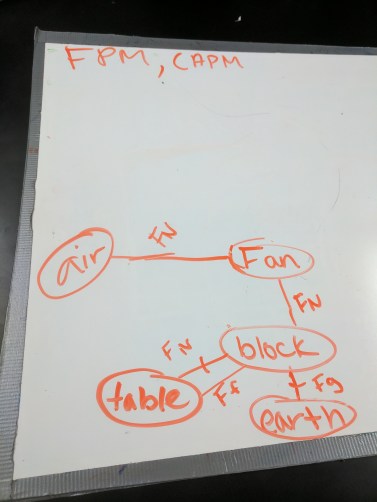
I started class a center of mass demo that I think I first saw from Dan Burns. I balanced a dynamics track on a block and placed a couple of carts in the center, then asked students to predict what should happen when the carts launched. Afterward, students prepared whiteboards with their solutions for the free-response problems we’ve been working on this week.


Earth Science: Epicenter

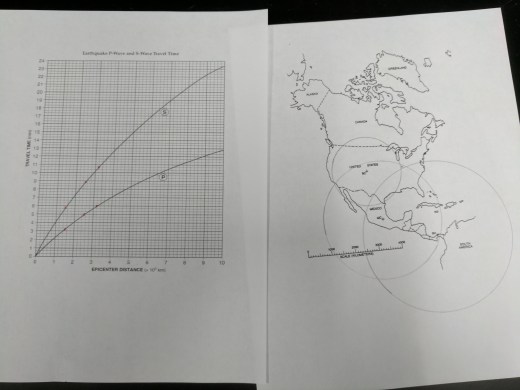
Students used some simulated seismographs and a travel time curve to locate the epicenter of an earthquake. A lot of students struggled with reading the travel time curve, so I need to do a better job of scaffolding it next time. The seismographs had time marked with the number of minutes after an arbitrary zero, which made it difficult for students to separate the arrival time of the waves from the actual travel time; next time, it would be better to use seismographs with actual timestamps. I also would like to have students spend some time interpreting the travel time curve before trying to combine it with seismograph data.

epicenter

Day 140: Types of Mass & Seismometers

AP Physics: Types of Mass
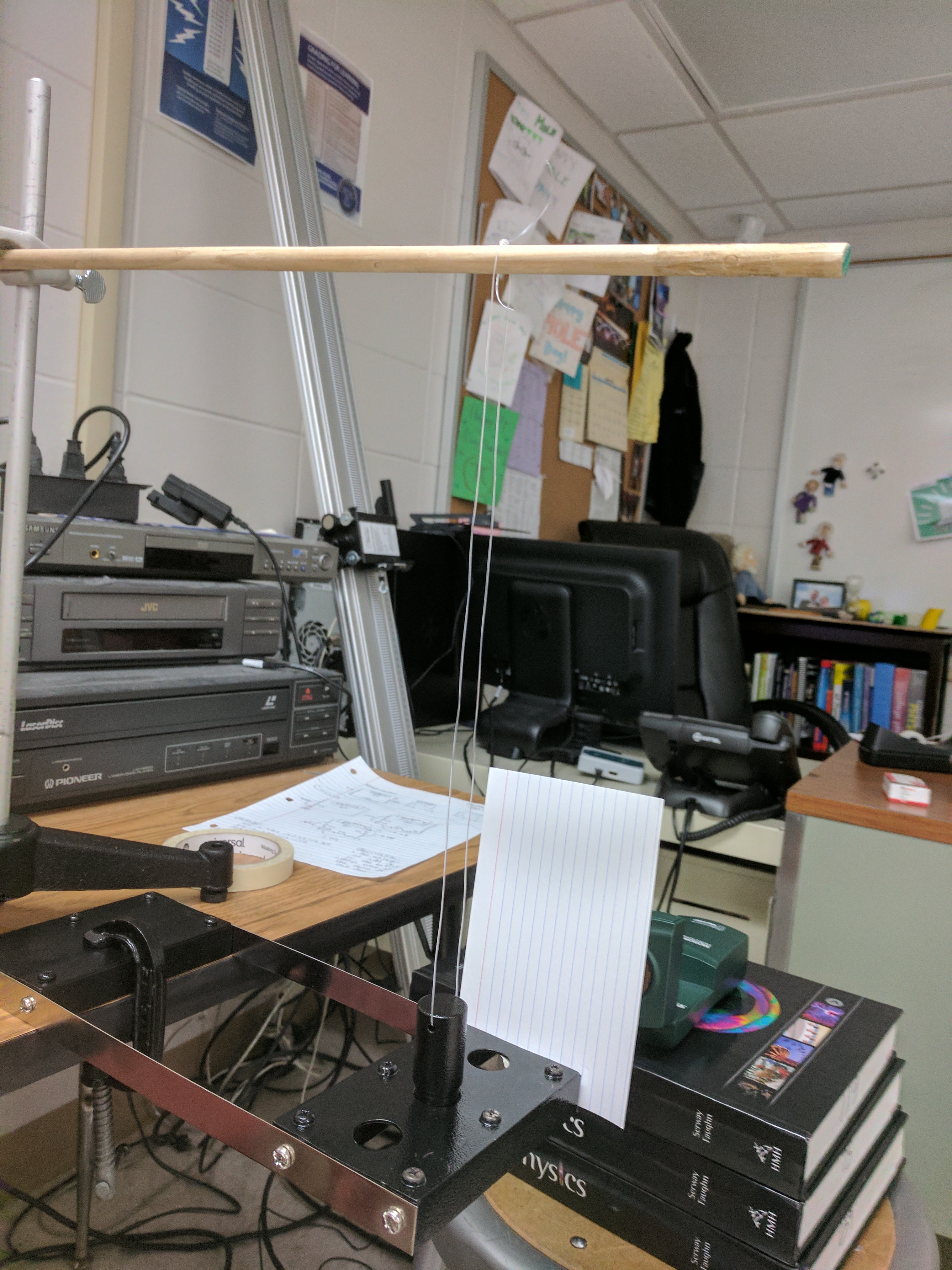
I wanted to revisit gravitational and inertial mass, so I got out the inertial balance and asked which type of mass a spring’s vibration should depend on. Finally, we used the motion detector to find the period with and without a string supporting the added mass and got beautiful results.

Afterward, students worked on some free-response problems in their groups. Tomorrow, they will get limited time with the scoring guides, then present their assigned problem.

Earth Science: Seismometers
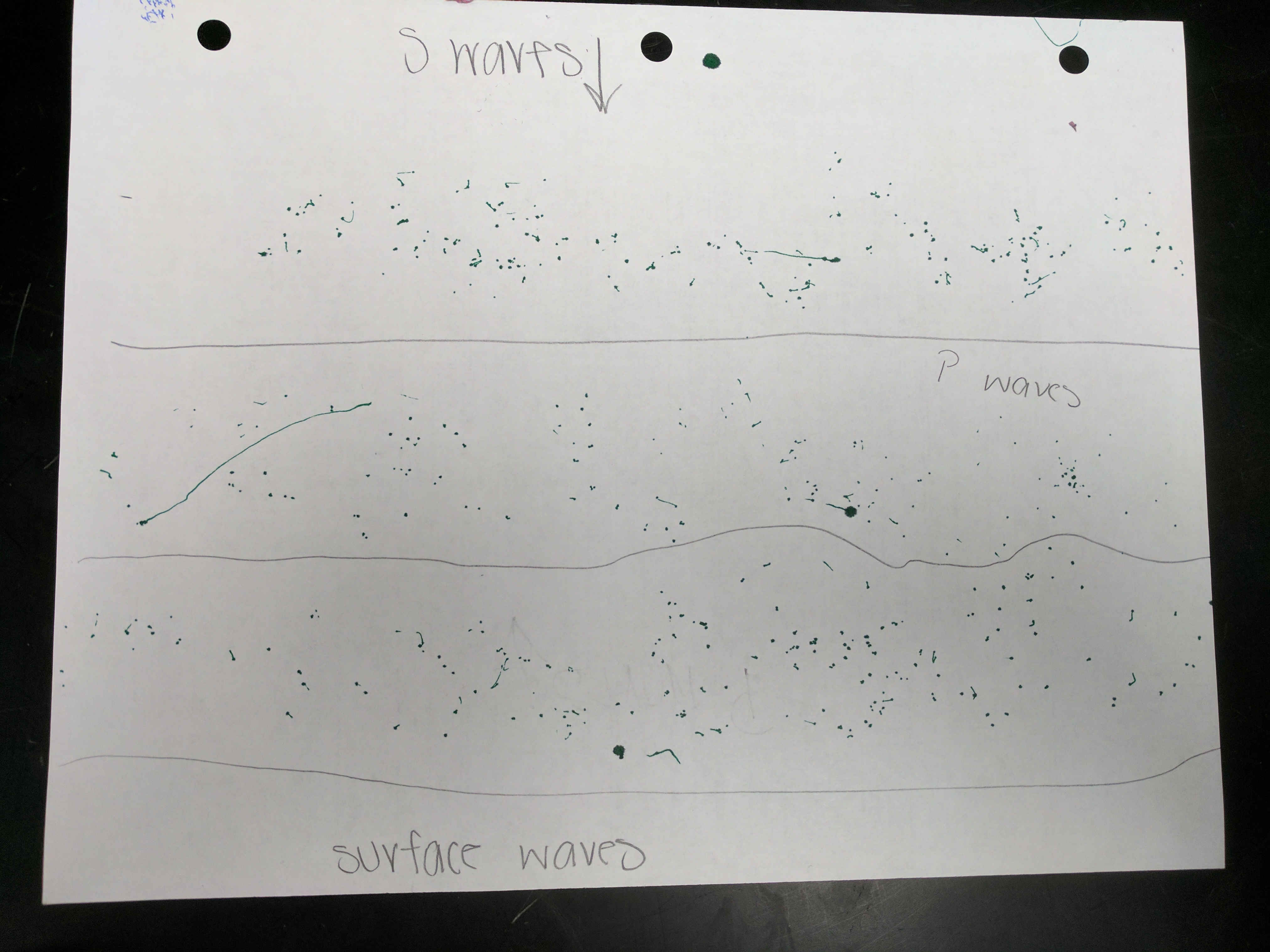
Students built a very basic seismometer, then experimented with recording different types of earthquake waves. The results varied a lot, but it did lead to some good discussion on the limitations of the earliest seismometers.


Day 139: Free Response & Earthquakes

AP Physics: Free Response

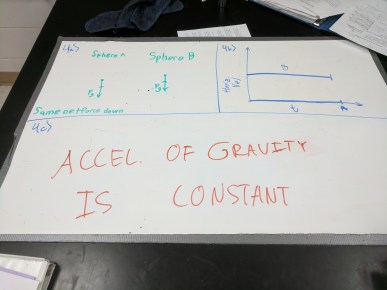
Students whiteboarded a couple of free-response problems off the 2015 exam, then used the released scoring guides to see how they did. All of it happened in small groups, so some groups dug more carefully into their errors than others. Tomorrow, I was planning to do some more free response, and I think I will build in some presentations to the whole class to add a layer of accountability.

wb (4)

Earth Science: Earthquakes

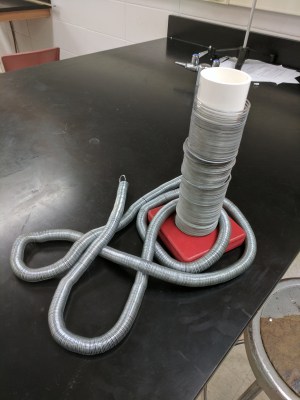
We started establishing some ideas about earthquakes. I pulled out the slinky and snakey spring to model the different types of waves. It was all pretty teacher-directed, so I’d love to come up with a way for students to build more of those ideas on their own.

slinky.jpg

Day 138: Free Response & Review

AP Physics: Free Response

I made today an optional in-class retake day. Since some students wanted the full hour to do multiple learning targets, I decided to skip doing some multiple choice on Plickers and gave students some free response problems from the 2015 AP exam. On Monday, we’ll take a look at the scoring guides.

Earth Science: Review

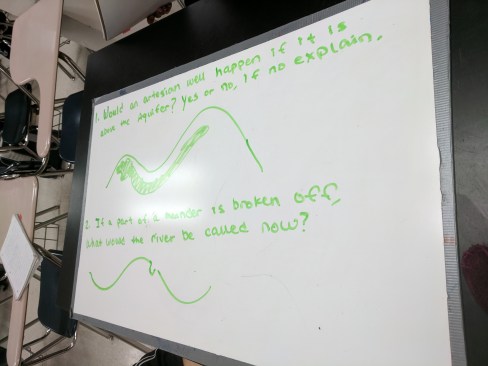
Students generated some questions for each learning target on whiteboards, then traded with other groups to try and answer the questions they came up with. I’ve been doing this a lot in my Earth Science classes, and its fun to see the improvement this year, even with students I only have for one tri. A lot of teachers in my building are working getting students to ask high-level questions as part of using AVID instructional strategies, and its neat to see that paying off a bit.

IMG_20170421_083753