Day 8: Bowling Balls, Motion Maps, & Density

AP Physics 1: Bowling Balls

Students worked on a bowling ball and mallet lab based on Frank Noschese’s version. There was some good debate about whether a bowling ball needs to be tapped to roll at a constant speed, so we used the Motion Shot app to make a motion map we could use to check.

Motion_Shot_2017_09_05_12_06_19

Physics: Motion Maps

To introduce motion maps, I drove a fridge rover across my whiteboard and marked the position at regular time intervals. Motion maps also linked nicely back to the buggy lab, since I forced students to use time as the independent variable. Students then worked on problems; in my 1st hour, most of my students chose to work at desks mostly independently, which I think made the problems more challenging for both my students and for me. In my 6th hour, I started by letting students know the problems were designed to be done in groups and talked about the advantages of completing the task in a group. I’m also wondering if it would help if I made more use of a strategy I got from Designing Groupwork: Strategies for Heterogeneous Classrooms where we take time for some explicit class discussions about what skills are needed for a task to emphasize the value of multiple abilities.

motion map.jpg

Chemistry Essentials: Density of Water

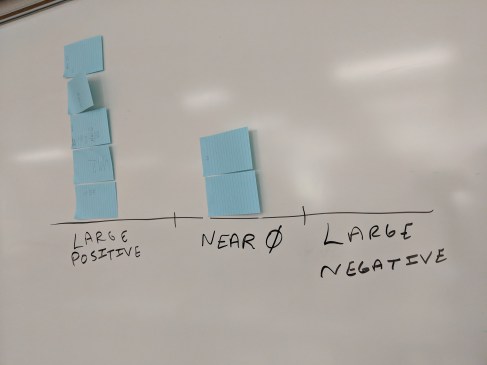
Students did a lab to find the density of water, then we had a short board meeting with the results. We kept the board meeting pretty simple and I was very pleased with how it went; my favorite observation is a student who noticed that different groups had data points at different masses, but every group still got the same slope.

Day 7: Dueling Buggies, Board Meeting, & Volume

AP Physics 1: Dueling Buggies

Students predicted where two buggies would collide based on their starting points and speeds. It was interesting to see how different sections approached this problem; most of the groups in my 2nd hour used motion maps while almost all of my 4th hour used position vs. time graphs. When my 4th hour discussed the buggy paradigm lab, students brought up the fact that some of the graphs intersected, with one even bringing up that position vs. time graphs can be used to elegantly solve the classic two trains problem.

Physics: Board Meeting

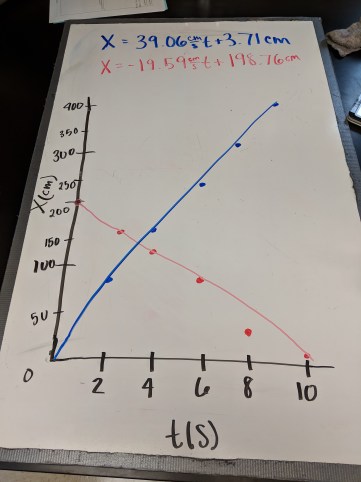
Students wrapped up the buggy lab and we had our board meeting. Before the board meeting, I once again had students do a gallery walk and jot some notes down on their lab sheet, which lead to some really good conversation during the board meeting. The downside is students are using the gallery walk to ask questions I’d normally hope to hear during the whole-class board meeting, like asking about what a group was doing when they collected data that gave a negative slope, but students bringing up those points during the whole-class phase, so it doesn’t feel like a big downside.

buggy lab

Chemistry Essentials: Volume

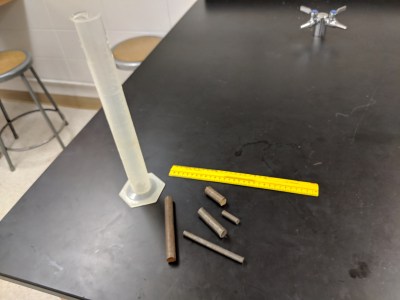
Today, students found a relationship between the amount of water displaced and a solid’s volume in cubic centimeters to get at the equivalence of milliLiters and cubic centimeters. I haven’t had great results with the Modeling Instruction volume lab, so this year I cut some rods from the metals teacher into short sections so that students only needed to find the volume of cylinders. I like that the lab I did today uses the same version of water displacement they’ll use later on, but the math was a struggle for a lot of students. About half of my groups finished data collection and the other half only got one data point because they were caught up calculating the volume. I need to keep working on how to make this lab accessible to all of my students.

volume lab


Day 6: Mistakes, Buggies, & Mass of Gas

AP Physics 1: Mistakes Whiteboarding

Students did mistakes whiteboarding, where groups include intentional mistakes in their solution, then the rest of the class asks questions to try to understand the mistake. I had a lot of groups pick mistakes they’d made working on the problems, which is perfect. In my big class, some students started turning to talk to their peers, which I let go at first since there were good conversations, but it quickly got hard to follow the main conversation and it was hard to shut the side conversations down once I let them start. Next time, I might try having some designated times for talking to a peer vs. talking as a whole class.

ap mistake

Physics: Buggy Lab

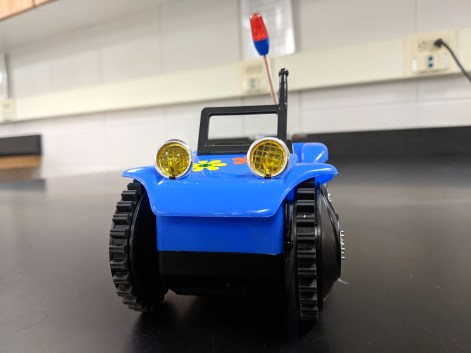
Students collected data for the buggy lab. I’ve found students are often very resistant to adjusting their procedure once they have any data written down, even if its only one point, so on the lab template we’re using, I have a step for students to test their procedure without recording any data. This time did exactly what I wanted today and I saw a lot of groups trying multiple approaches before settling on their steps.

buggy

Chemistry Essentials: Does Gas Have Mass?

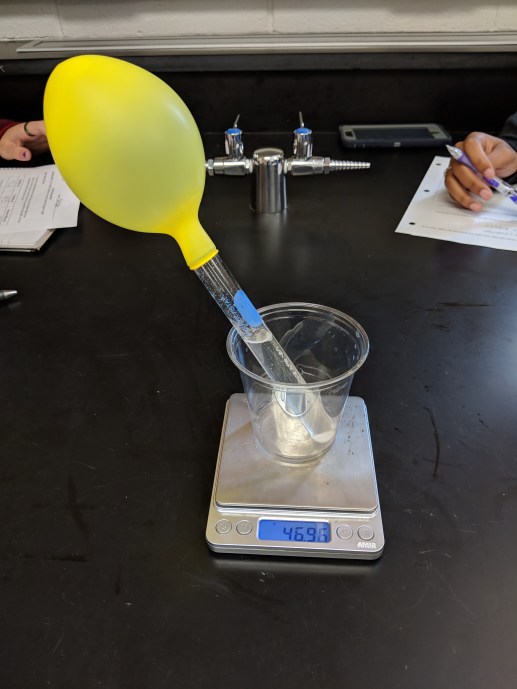
Students dropped Alka Seltzer into water, then measured the change in mass with and without a balloon on the test tube. This year, even though I had an approach in mind, we had some pre-lab discussion about possible strategies, and students had some neat ideas. There were a few things students came up with that provided a nice seque into this lab.

alka Seltzer

Day 5: Problems, FCI, & Problems

AP Physics 1: Problems

Students started working on some problems translating between constant velocity representations. Usually, I see a big difference between those who did and didn’t take calculus last year, but the gap seemed much smaller this year; my students who didn’t take calculus last year seemed very comfortable working with graphs and thinking through problems they aren’t entirely sure how to answer yet, which was great to see. My students are also already very collaborative, with students quick to step in when the realized a peer was stuck.

Physics: FCI

Students took the force concept inventory today. It was interesting that my students in this course seemed much more nervous about the pre-test than my AP students did on Friday. The pre-test is useful for the goal setting my district asks PLCs to do and I find looking at the gains, especially on specific questions, useful, but it does take a toll on students settling in to a challenging course to have a challenging pre-test so early on.

Chemistry Essentials: Particle Diagrams

We started by making and discussing histograms for Friday’s labs. There were some great observations and potential ideas to explain some of the changes we saw. Afterward, students got into groups to work on sketching particle diagrams for the experiments we’d done. I also introduced students to the group roles I’m using this year; I don’t think I did enough training to get the full benefit of the roles, but it did seem to help reinforce the idea that every group member has something to offer.

burning steel wool.jpg

Burning steel wool

Day 3: Board Meeting, Lab Template, & Burning Steel Wool

AP Physics: Board Meeting

We did the first real board meeting using yesterday’s results from the buggy lab. Once again, I borrowed Casey Rutherford’s Observations, Claims, & Evidence structure. Some of the chemistry teachers have been integrating techniques from Modeling Instruction, and I got to reap rewards in a really good first board meeting. There was some discussion about whether some intercepts were small enough to call zero, which, along with a whiteboad where students plotted multiple trials, lead really nicely into an introduction to uncertainty. Next year, I think that would go even smoother if I push all groups to truly make time the independent variable and complete multiple trials.

Physics: Lab Template

For the second round of the dowel lab, I had students follow the lab template we’ll be using this year. I also changed the guiding question to “What is the relationship between the mass and volume of these dowels?” since that more naturally motivates measuring multiple dowels and is closer to the kind of guiding questions we’ll have on future labs.

dowels.jpg

Chemistry Essentials: Burning Steel Wool

We wrapped up yesterday’s lab by making a post-it histogram of the results students got yesterday, then had some discussion on the significance of those results. Afterward, we continued the mass and change sequence from Modeling Instruction by measuring changes in mass as steel wool burned.

steel wool.jpg

Day 2: Buggies Redux, Dowels, & Coffee Can

AP Physics 1: Buggies Redux

Today we repeated the buggy lab, but with a focus on preparing whiteboards that would make a meaningful comparison across groups. I had each group collect data for a standard buggy moving forward from zero and one other variation. One thing I’m really excited about is several groups played with ways to represent multiple trials on a single graph and one group came up with Frank Noschese’s effortless error bars on their own, which will be a great introduction to uncertainty.

Physics: Dowels

This class is also doing two rounds of the first real lab. Today, I asked students to use a bunch of small dowels to collect data that would let them predict the mass of a much larger dowel made out of the same type of wood and represent their data on a whiteboard. The majority of groups used proportions, which was great, but very few measured multiple small dowels on their own and no one thought to try a graph. In most labs, I ask students to find a relationship, and I wonder if that would be a more interesting prompt here.

Chemistry Essentials: Coffee Can

We did the exploding coffee can demo to introduce particle diagrams. I had a few students who were really willing to propose ideas to explain the changes in the can’s behavior as the flame burned, which was awesome.

coffee can

Day 1: Buggies, Broken Circles, & Mystery Tubes

AP Physics 1: Buggies

I took a page from Frank Noschese and embraced the idea that “Any lab worth doing is worth doing twice.” I gave groups the very vague directive to collect data on the buggy’s motion, then represent it on a whiteboard and turned them loose. My students seemed very comfortable with the ambiguity and dove right in, which was fantastic. I had a good mix of data tables and graphs on whiteboards, along with a lot of variations on graphs, which led to some good conversation on what would make it easier for us to compare results. Tomorrow, we’ll re-do the lab with a focus on being able to compare results. I talked more than I’d like today, but that’s pretty typical of when I do a new discussion.

buggy

Physics: Broken Circles

To start building class culture and learning how to collaborate, I started today with Frank Noschese’s subversive lab groups. Once they were in groups, students did the broken circles activity from Designing Groupwork: Strategies for the Heterogeneous ClassroomEach student got an envelope with pieces of a circle inside. As a group, they had to assemble four complete circles without talking. Afterward, we had some discussion about what skills groups needed to complete the task.

broken circles

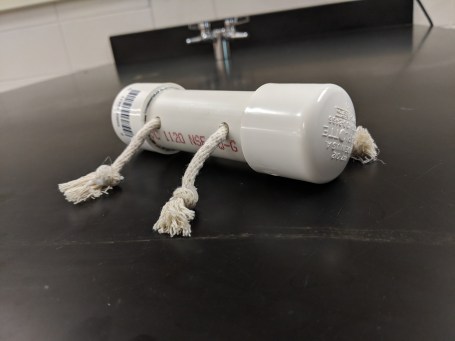
Chemistry Essentials: Mystery Tubes

Today was also about class culture in chemistry. This class also started with subversive lab grouping, but  I stepped in more than I did in physics. There were more students in this class who seemed nervous about approaching their peers and it was tougher for them to identify other possible solutions when a group got too big. Afterward, we got out the mystery tubes. I could tell I didn’t make the goal as clear as I sometimes do; while there were a lot of groups who were very engaged and had great conversations, others had trouble getting started.

mystery tube

Day 122: Universal Gravitation, Pendulums, & Formula Mass

Today was our first day back from spring break! We have kind of an odd start to the week since tomorrow freshmen and seniors have an off-campus learning day to accommodate state testing for sophomores and juniors.

AP Physics: Universal Gravitation

Students worked on an activity Lucas Walker presented at AAPT last summer using exoplanet data to find a relationship between centripetal acceleration and orbital radius. I was nervous about having students calculate the orbital velocity and acceleration in a spreadsheet since most of my students don’t have much experience with spreadsheets, but my students were very willing to dive in using the resources I provided and were very successful with the calculations.

Physics: Pendulums

Students collected data to model the impact of weight, drop angle, and mass on the period of a pendulum. I’m continuing to see students much more confident in their physics abilities than even the end of last trimester, and working more independently as a result.

pendulum.jpg

Using the environment to make measuring release angle easier

Chemistry Essentials: Formula Mass

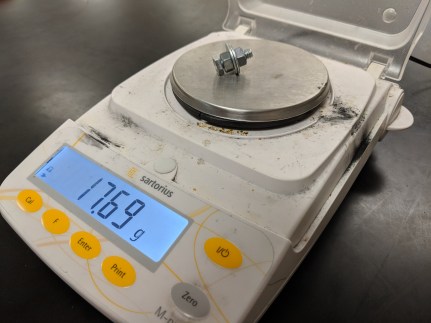
Students started making sense of formula mass by predicting the mass of various combinations of nuts, bolts, and washers. I wanted to give them something pretty concrete they could test directly in the lab before diving into true stoichiometry. When we shifted to chemical formulas at the end of the hour, a few students got tripped up if they skipped the particle diagram, but the math was pretty obvious to everyone once they got that step.

molar mass lab.jpg

Day 121: Free Response, Practical, & Quiz

Today is the last day before spring break.

AP Physics: Free Response

We took some time to look at the free response problems from the tri 2 final exam. A lot of students ran out of time on the final, so we spent some time discussing strategies for time management and steps they can take even when they think they are lost on a problem. We didn’t talk about anything ground-breaking and even the physics seemed pretty clear once we got into it; I think the stress of finals got to students and made it tough to use skills they know.

Physics: Projectile Practical

Students wrapped up the horizontal projectile practical from yesterday. One of the advantages of doing projectiles after energy is I didn’t trip up any groups by switching out the marble for a lighter one. Usually, I get at least some groups that do some wild math to try and figure out what the mass changes, but this year’s students either pointed out the mass never showed up in their calculations or used conservation of energy to show it doesn’t matter.

Maker:S,Date:2017-10-21,Ver:6,Lens:Kan03,Act:Lar02,E-Y

Chemistry Essentials: Quiz

Students took a quiz on balancing and representing chemical reactions. I always have a few students in this course who have trouble staying quiet once they are finished; today, all of the conversations I shut down while students were testing were about problems on the quiz, which was pretty awesome. I felt a little bad telling them it wasn’t the right time for those conversations, especially with how passionate the conversations were.

Day 120: Practicals & Demos

AP Physics: Central Force Practical

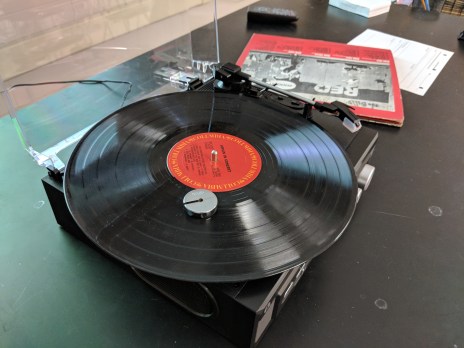
I got out the record player and, as a class, we found where a mass starts to slip when the player is at 33 1/3 rpm. Students then calculated what radius they should place the same mass at when the record player is at 45 rpm. Since the velocity depends on the radius, the math got a little hairy, but students were pretty successful working through it and making sense of how all the variables were connected.

record.jpg

Physics: Projectile Practical

Students rolled a marble down a short ramp to turn it into a horizontal and predicted where it should hit the floor. Both my classes were able to complete it with less support than I expected. After each group managed to hit the target (an old carbon-copy referral form), I asked them to predict where, relative to their first marble, a lighter one should land.

horiz proj.jpg

Chemistry Essentials: Demos

Students balanced a few different chemical reactions, then I demonstrated those reactions. Most of the students seem to be getting pretty confident with both skills and enjoyed the demonstrations. The thing I struggled with is the demos felt very separate from the balancing since they did confirm or otherwise add to the work students had done. I’m wondering if there is something I could have done differently to connect those two pieces better.