Day 53: Reflection & Projectiles Practical

Physical Science: Reflection

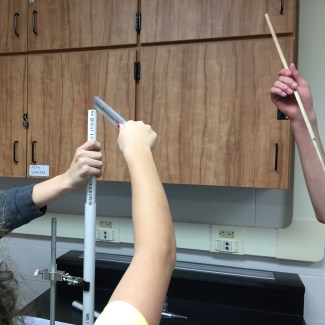
Students used reflectors (like this one) to explore reflection. I gave them some very general questions and directed them to collect evidence that would allow them to answer the questions. Students had some trouble getting started, but did a nice job overall.

Physics: Projectile Practical

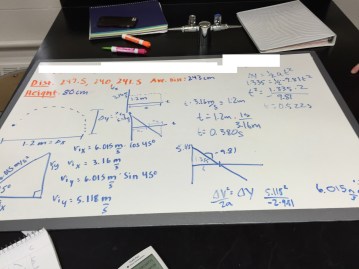
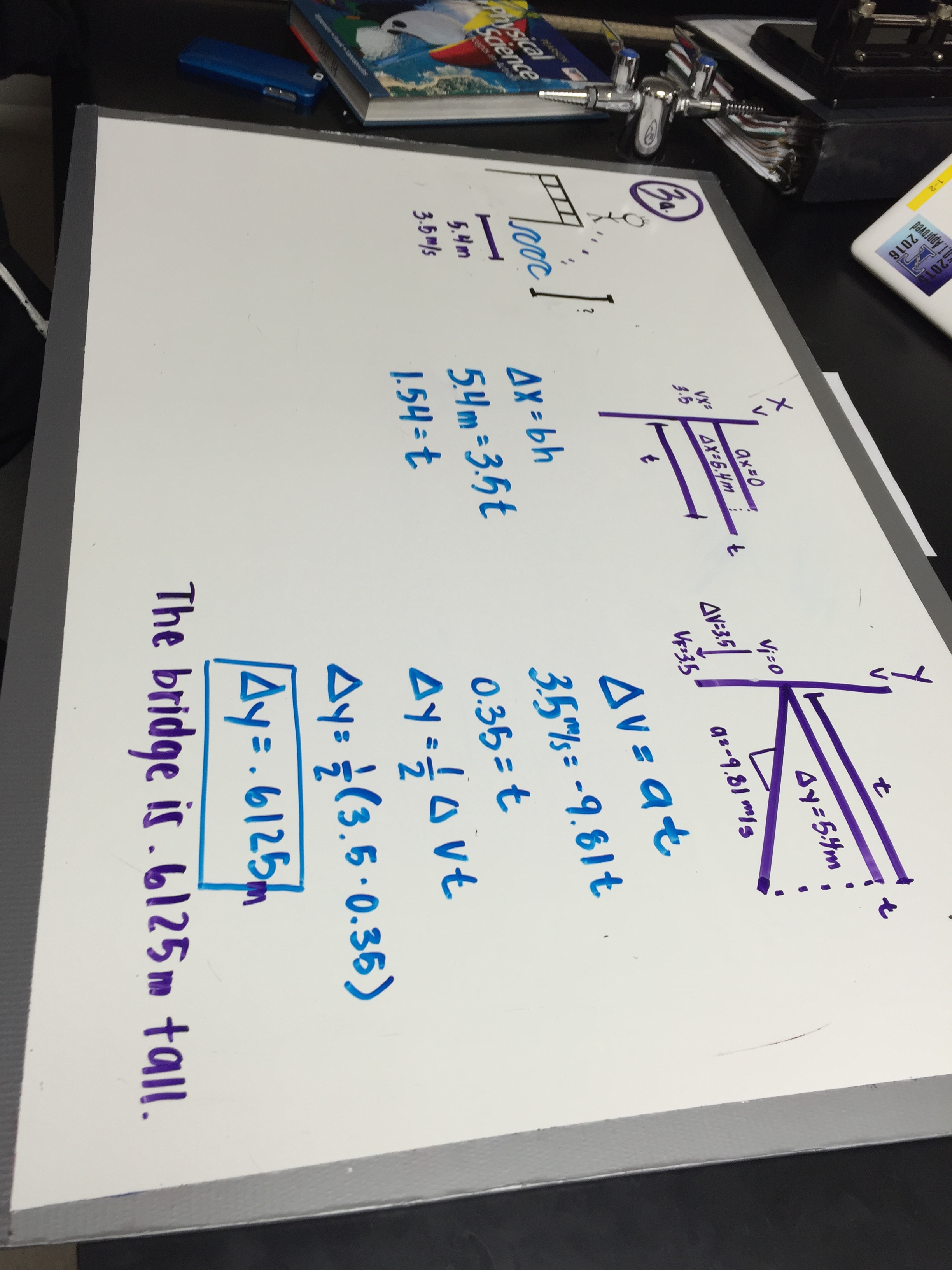
Yesterday, each group was given a distance from a projectile launcher and had to calculate how high above the ground the projectile should be. Today, students placed embroidery hoops at their predicted height and we fired the launcher.

nofaces

Day 52: Color & Projectile Practical

Physical Science: Color

Students used colored filters, felt, and light sources to find patterns in what determines what color they see. By the end of the hour, students were able to use what they saw in the lab to accurately explain their observations in the filters puzzle video.

IMG_1435

Physics: Projectiles Practical

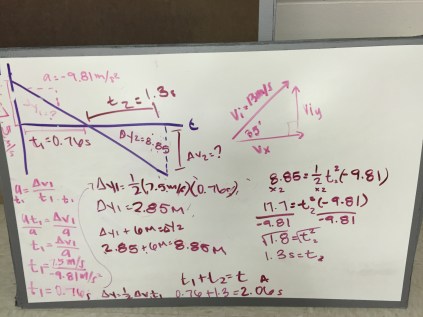
Students began a lab practical for projectile motion. First, we fired a projectile launcher horizontally and measured the range and starting height to determine the launch speed. Then, each group got a different distance from the launcher and calculated how high off the ground the projectile will be at that point if the launcher is fired at an angle of 45 degrees. Tomorrow, each group will place an embroidery hoop at their given distance and calculated height.

IMG_1445

Day 51: Color Intro & Collaborative Problem Solving

Physical Science: Color Intro

For the first half of the period today, my students presented their research projects on different energy sources. Once that was finished, we started on color. I started by having students watch a short video that I blatantly copied from Frank Noschese that shows red ink and red light through both red and blue filters. I like the video because I can show all my students at once and I like having my own version so students can look at the clock and paper I used in the video to verify I wasn’t using some kind of trickery. I asked students to record their observations from the video, then try to come up with a hypothesis to explain their observations. This lead nicely into a lab where students look at things through filter paddles. Once students finish the lab, we’ll revisit the video to see how their explanation has changed.

Physics: Collaborative Problem Solving

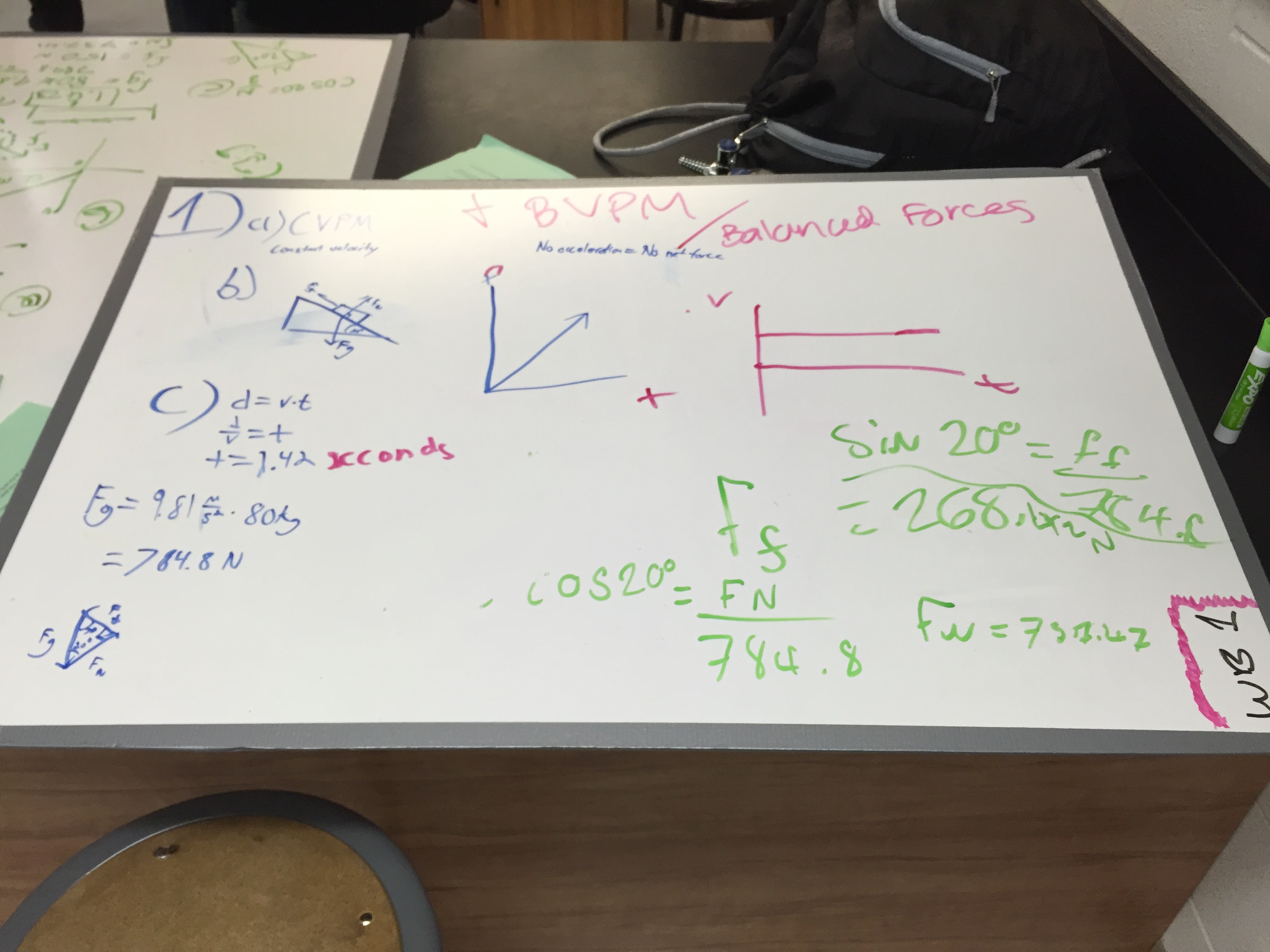
I took a problem from Casey Rutherford’s projectile motion packet about a block given a push up a ramp with friction, then allowed to fly off the end of the ramp to become a projectile. One of the things I love about this problem is it requires to students to use just about everything from the trimester. 2nd hour, students did whiteboard speed dating, but I put a couple of goal-less problems first so students didn’t have much time to work on it, but were intrigued enough by the problem that they asked to continue next week. 4th hour, I decided to start with that problem. I had students work in groups using the roles from the University of Minnesota’s Cooperative Group Problem Solving protocol. It took most of the hour, but students were consistently successful and even my top students were challenged. It was great to see the obvious pride when students finally got the correct answer.

IMG_1421

Day 50: EM Spectrum & Projectiles

Physical Science: EM Spectrum

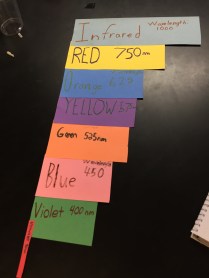
Students made a scale model of infrared through ultraviolet light where the length of the paper represented the wavelength of each type of light. I also had students do the calculations for how long a strip of paper would be needed to represent some other EM waves, including radio waves and gamma rays, just to give them a sense of the range the EM spectrum covers.

IMG_1415

One group decided to turn their model into a Stroop test

Physics: Projectile Problems

Students whiteboarded yesterday’s projectile problems. I’m really pleased by the way my students are not only solving the problems successfully, but gaining confidence on some challenging material.

IMG_1417

Day 48: Experimental Error & TIPERs Projectiles

Physical Science: Experimental Error

Students calculated the speed of sound based on the data they collected yesterday, then compared that to the expected result. Students found the speed using five different tuning forks, so we had some discussion about what it meant for those two different speeds to be close enough to be considered the same, which lead to some good conversation about experimental errors and why the values varied.

Physics: TIPERs Projectile Questions

I picked some questions out of TIPERs to help get my students thinking conceptually about projectiles. I was surprised at how many students struggled with a certain question where a ball is thrown upwards at two different speeds, and a student in the problem predicts that the faster projectile will reach the highest point first. Once I prompted students to sketch velocity vs. time graphs, the question ended up being pretty easy. It was a good reminder for my students to look at what tools they have, even when the problem isn’t about a calculation.

IMG_1405

The faster object reaches its highest point in more time!

Today’s quiz on projectiles launched horizontally also reminded me why I love standards-based grading. Several students have been really working on solving problems with constant velocity and constant acceleration, and finally showed mastery when they applied those skills to projectiles today. I loved being able to give them credit for all the skills they showed, not just the big idea on today’s quiz.

Day 47: Speed of Sound & Projectiles Practical

Physical Science: Speed of Sound

Students worked on the classic speed of sound lab using a closed resonance tube. Since this is one of the first labs my 9th graders do that has an accepted value, it provides a great opportunity for discussion on experimental error, which will happen once students finish the lab tomorrow.

IMG_1377

Physics: Projectiles Practical

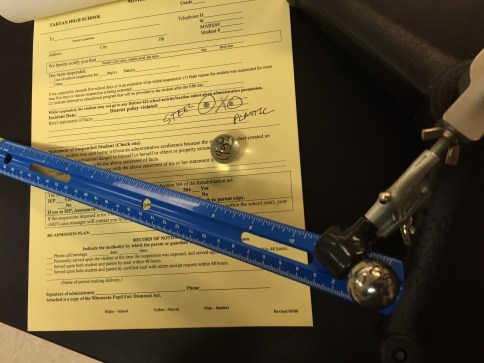
Students did a lab practical for projectile motion where they had to predict where on the ground a marble would land after being sent down a short ramp. In the past, I’ve used a cup, but most students hit the side rather than landing in it, so this year I used the school’s retired referral forms as carbon paper. I also pulled a jerk physics teacher move. After students got a successful prediction, I gave them a marble with a different mass and had them predict where the new marble would land without allowing them to make any new measurements. Most groups had to wrestle with it for a while and even try some calculations before realizing it should land in the same spot. I decided I need to keep this extra challenge in the practical when one student victoriously declared “Misconception changed!” after hitting their prediction with the new mass.

IMG_1393

Day 46: Standing Waves & Mistakes Game

Physical Science: Standing Waves

Students made standing waves on snakey springs and looked for the pattern in how many wavelengths could fit. The lab went a lot faster than I expected, so we also had some qualitative discussion about “Keep in Time” from Direct Measurement Videos to introduce the idea that sound has a speed.

IMG_1368

Physics: Mistakes Game

Students whiteboarded yesterday’s problems for Kelly O’Shea’s Mistakes Game. Students are getting better at making meaningful mistakes and at asking good questions to reveal those mistakes.

IMG_1370 (1)

Day 41: Motors & Forces Practical

Physical Science: Motors

Students built very simple electric motors, then did some playing around with them to start figuring out some of the underlying principles. This will set up some discussion for Monday on how most electricity is generated.

Physics: Forces Practical

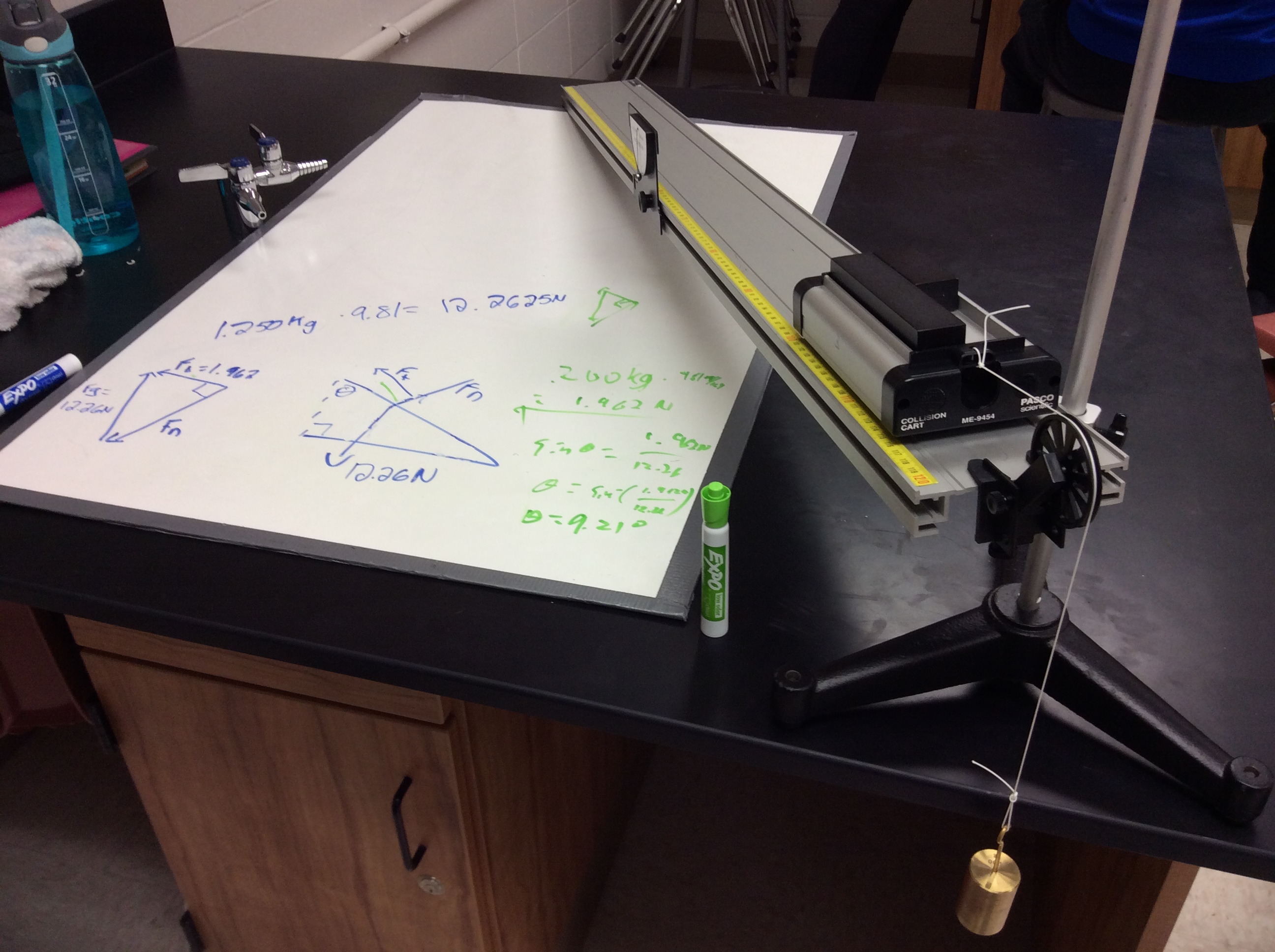
Each lab group got a cart mass and a hanging mass, then had to figure out what angle they should set their ramp to in order to balance the forces. I wasn’t sure how into it students would get since the goal was, pretty literally, to make nothing happen, but there were still cheers when they let go and everything stayed put. My students are now convinced they can do these problems in a way that just getting the right answer doesn’t accomplish. In one period, several groups finished quickly, so I had those groups keep the same angle and cart mass, but add to their hanging mass and calculate how much time it should take for the cart to make it up the ramp. I didn’t set up the photogates, since I wasn’t sure how many groups would get through this part, but students were able to get within 0.2 seconds of their prediction using a stopwatch.

practical 2

Day 40: Electromagnets & Mistakes Game

Physical Science: Electromagnets

Students built electromagnets and designed experiments to test the effect changing the number of coils has on the strength of the magnet. I also pulled out my homemade speaker for students to try out.

Physics: Mistakes Game

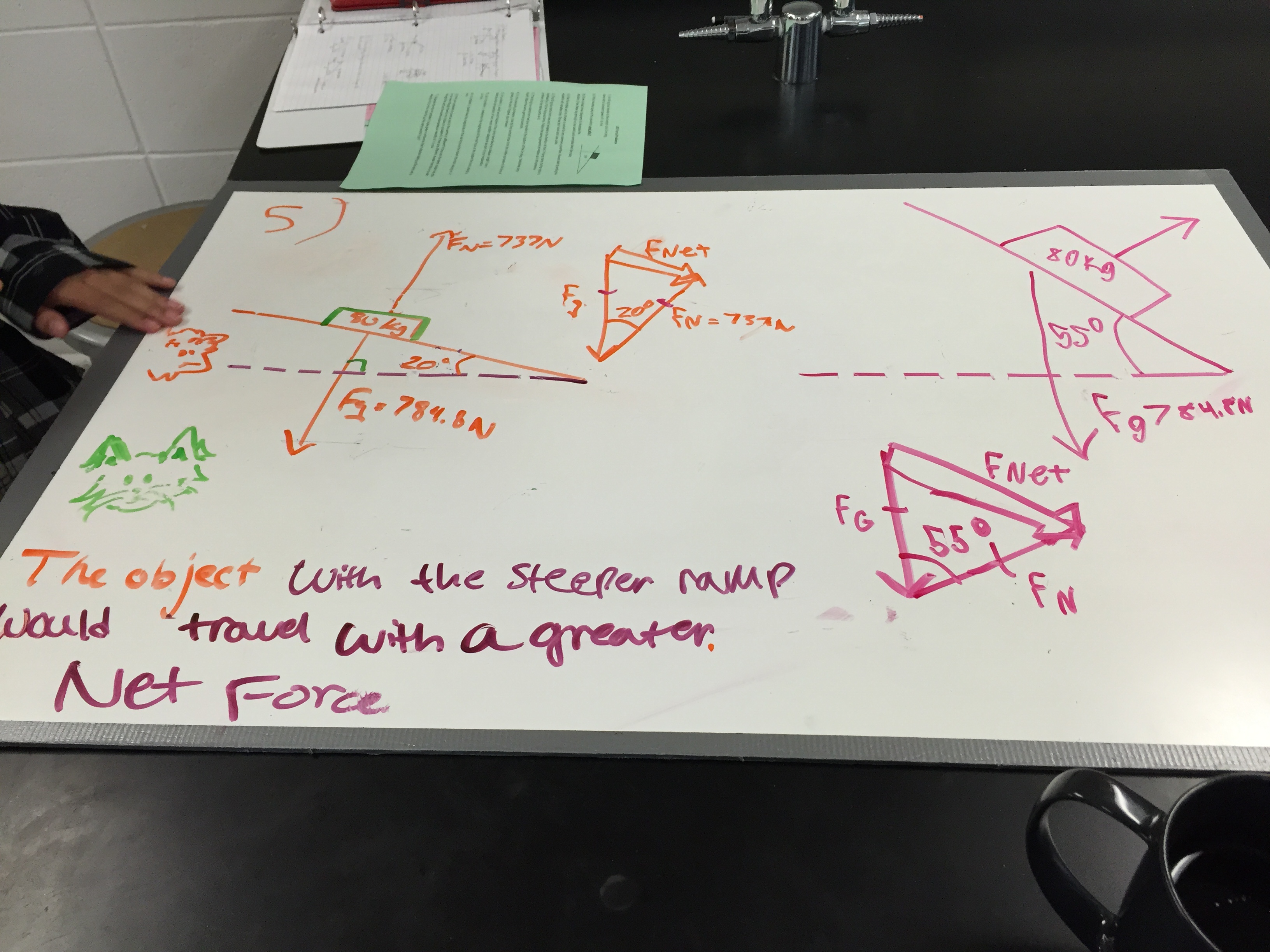
Students played the mistakes game with the diagrams for solving force problems. Once my students have their diagrams, they can get through the problems pretty easily, so I wanted them to focus on drawing and interpreting those diagrams.

IMG_1342

Day 39: Magnetic Fields & 2D Forces

Physical Science: Magnetic Fields

My students have gotten really good at looking at new content in terms of energy, so I put together an assignment to compare topographic maps as a measure of gravitational potential to magnetic field lines as a measure of magnetic potential. The assignment needs some revisions, but I like the basic premise and my students definitely understand magnetic field lines much better than my students have in the past.

Physics: 2D Forces

A lot of students were on a field trip yesterday, so we used whiteboard speed dating to go over yesterday’s problems. Based on what I saw and heard, students have these problems down better than they give themselves credit for. I’m thinking about how I can adjust my plans tomorrow to help students feel more confident with the material without resorting to me doing an example at the board.

IMG_1340 (1)