Days 32-35: Newton’s 3rd Law & Newton’s 1st Law

This was another short week. Parent-teacher conferences were on Thursday night, so Friday was scheduled as a professional development day.

AP Physics 1: Newton’s 3rd Law

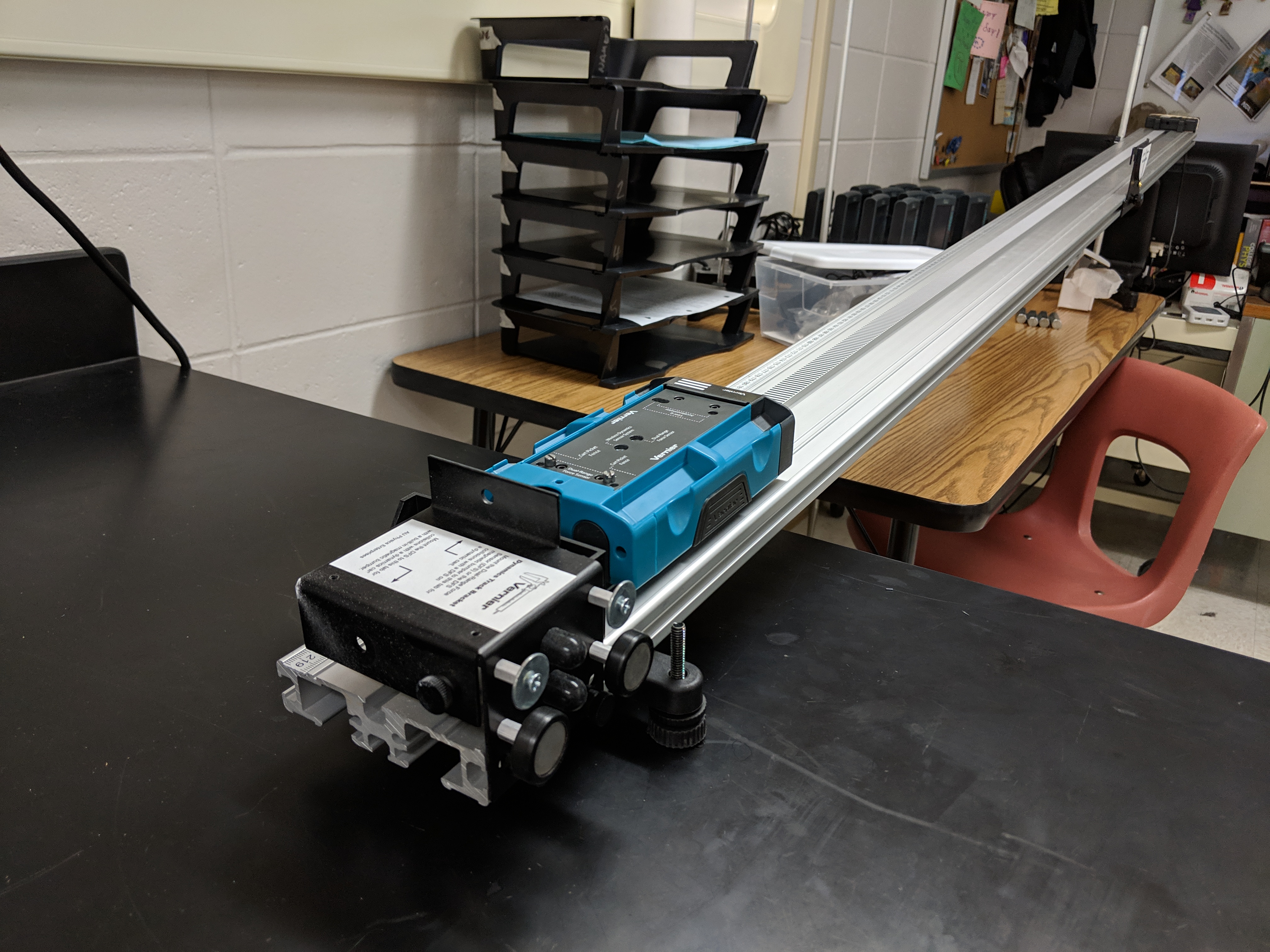
This week our focus was on Newton’s 3rd Law. Students predicted which cart would experience a larger force during various collisions, which we then tested using a pair of carts with force sensors and hoop springs. In my grad class this semester, we’ve been doing a lot of talking about the ways language students use can mask meaningful understanding, which got me thinking about how I can make better use of students’ predictions. This year, I tried being very explicit that our task was to find the useful ideas in students’ predictions and to translate those useful ideas into the language physicists use. There was a great moment where a student said “So the force and the result of the force are different things, but we were treating them as the same”, which I couldn’t have planned better.

I also took a page from Brian Frank this week and used some magnetic hooks for an easy setup of a static forces lab practical.

Find the unknown mass using the spring scale readings, a protractor, and a ruler.

Physics: Newton’s 1st Law

This week was about developing the idea of a force and Newton’s 1st Law using interaction stations and the bowling ball lab. A few students were resistant to actually trying the bowling ball lab this year, rather than actually testing whether what they expected worked, so I had to push some groups to really explore getting the bowling ball moving with a constant speed. Once they got started, however, there was some great discussion.
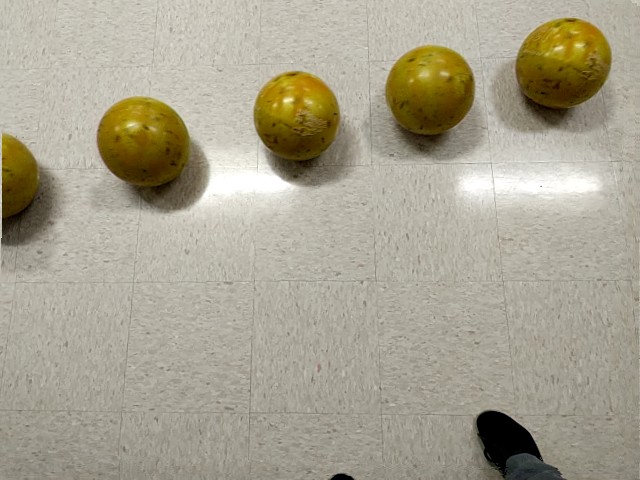
Made in Motion Shot

Days 29-31: Vector Addition Diagrams & CAPM Practical

This was a three-day week since public schools closed on Thursday and Friday for the state teachers union conference.

AP Physics 1: Vector Addition Diagrams

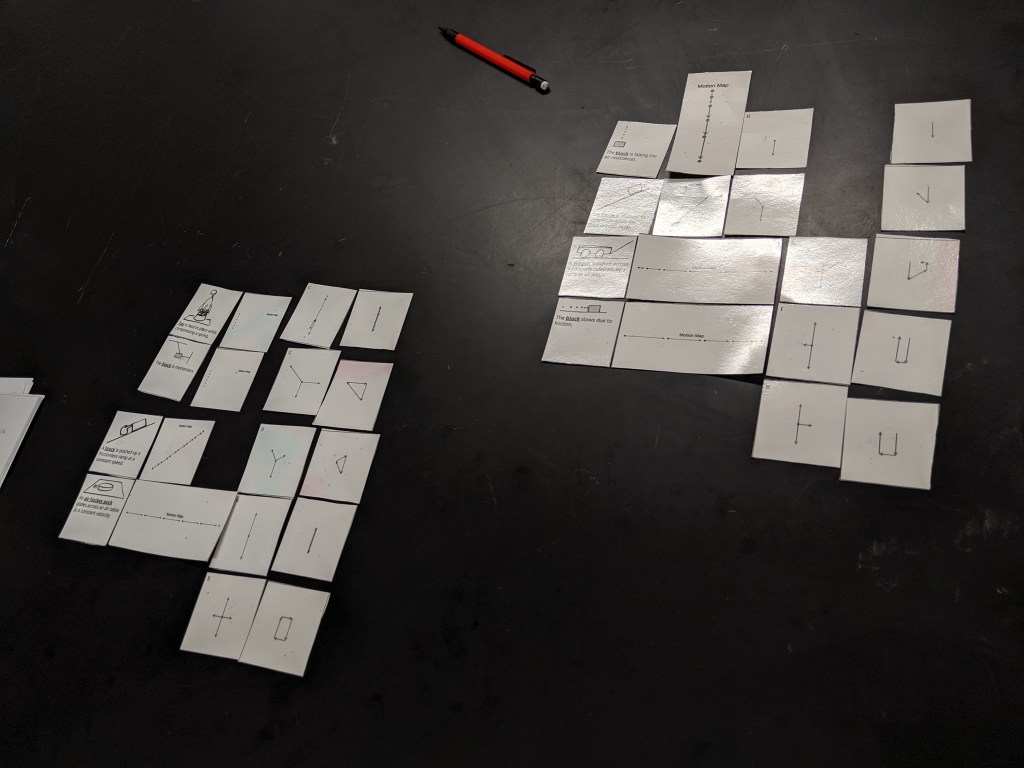
Students started the week by doing Kelly O’Shea’s forces representations card sort. I used the card sort to introduce vector addition diagrams, and students easily recognized key aspects of the VAD. The rest of the week, we worked on applying VADs to solve problems. They are successfully applying the VADs, but aren’t feeling confident in their skills just yet.

A completed forces representations card sort categorized into balanced and unbalanced forces.

Physics: CAPM Practical

After wrapping up some problems using the constant acceleration model, students started working on a practical to figure out where to start a marble on a ramp so that it lands in a passing buggy. We ran out of time for students to test their calculations. While students made good progress, many are uncertain of their skills; I’m hoping that completing the practical on Monday will help them build confidence.

Days 24-28: Force Formulas & CAPM Diagrams

AP Physics 1: Balanced Forces

This week was all about figuring out the formulas for gravitational force, spring force, and friction force, then practicing combining them with free-body diagrams. After doing some fairly standard labs to develop the formulas, students did a version Kelly O’Shea’s problem solving stations. I’d like to add a station using the force of friction, but need to make sure there’s a good way for students to check their answer.

This year, I’ve been working on keeping my pace on track, and most students are keeping up. I always have some students who start out goofing off during the daily work because its not graded, but the majority of them are figuring out they need to stay engaged, which is great because students are deciding for themselves that the daily work is valuable and my retake policy means they aren’t stuck with a grade based on choices they made early in the term! The problem is I’ve also got a few students who I see starting a cycle where they are missing pieces because of goofing off, then struggle with what comes next, and disengage more out of frustration. Before students become stuck in that cycle, I need to give some thought to how to help those students feel a greater sense of control over their learning. I think on Monday I might spend some time talking as a whole class about strategies for when students are feeling stuck or frustrated. I’m also trying to be conscious of how I approach those students, trying to keep my focus on communicating I’m available to help rather than chiding them for being off-task.

Physics: Constant Acceleration Representations

Students practiced using constant acceleration representations. A lot of them are having trouble connecting what we’re doing now to constant velocity representations, which happened last year, as well. I need to put some thought into how we structure this unit to help students see how we are extending their skills, rather than starting something completely new.

In whole-class discussions, students are still pretty quiet, though I’m seeing signs of progress. I’m hearing a lot from students how much they like mistakes whiteboarding, even if just a few students are responsible for most of the questions during those activities. There was a great moment where a group presenting said they didn’t want any questions from a peer who’d been very vocal during the other presentations, and he responded “That’s a great idea!” When no one raised their hands, a member of the group started calling on some of the other people she knew had a good grasp of the problems, but rarely speak up. It was a pretty awesome moment.

Days 20-23: Newton’s 1st LAw & Constant Acceleration Model Building

This week was a little goofy. Students were off Friday for a staff development day and it was homecoming week, so classes were shortened on Monday and Thursday for festivities.

AP Physics 1: Free-Body Diagrams

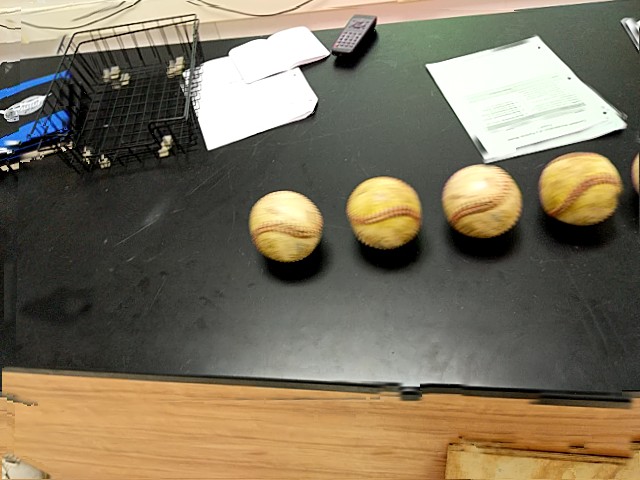
This week was all about Newton’s 1st law. We started with the bowling ball lab to come up with a formulation of N1L, then worked on representing forces with free-body diagrams and system schema. Both sections had mistakes whiteboarding sessions that were overall really good. There was a debate about whether a projectile should experience air resistance that had a lot of good thinking. We ended up grabbing a softball out of the storeroom and capturing an image of it rolling in Motion Shot to see if it had a constant velocity. There was a much more intense debate about air resistance than I’ve seen before and I think the group presenting felt like it became a “gotcha” moment. I need to think about how I could have intervened differently in that discussion to shift the tone it took on.

Made in Motion Shot; photo with multiple, evenly spaced images of a softball as it rolls across a table

Physics: Constant Acceleration Model Building

Students used video analysis to produce graphs of the motion for an object on a ramp. I was ornery about making students attempt to follow a reference guide I made before I’d help with the technology, which made it a lot easier for me to spend time with students who needed help troubleshooting. The results were better than when I’ve used photogates, but still fairly messy. I think part of the problem is, regardless of the approach, students rush on key pieces and get sloppy data as a result. I need to think about how to slow my students down at key steps. It was also tough to get students to speak up during the board meeting, even with doing a gallery walk and jotting down some observations with their group beforehand. I’ve got more students than usual who underestimate how much they know and are wary of jumping in as a result. I have some work to do on increasing the social safety in my classroom and helping students recognize their contributions.

Students also did Kelly O’Shea’s CAPM card sort. Interestingly, even though this fell on the day of our homecoming pep fest, students were overall very engaged in the activity. I saw a lot of the same students I struggled to get to speak up during the board meeting asking great questions and sharing ideas during the card sort. I think the small group setting was a factor. I need to give some thought to what else made students comfortable speaking up so much in their small groups and how I can bring that to whole class discussions.

This group used chalk to turn their card sort in to a Venn diagram

Day 134: Problems, Mistakes Whiteboarding, & PhET Limiting Reactants

I had a sub for half the day today, so only saw two of my sections.

AP Physics 1: Problems

Students worked on some problems with angular acceleration. I was at school for my smaller section, and the problems went very smoothly. They worked very independently and I overheard a lot of great discussion and connections to linear motion.

Physics: Mistakes Whiteboarding

I was at school for my only section, so we did some mistakes whiteboarding with Thursday’s problems. Students had some great mistakes and great discussion about the problems. One of the interesting things is when students were asked to sketch a v-t graph and divide it into sections, most groups did before, during, and after, mirroring the way we’d used velocity vs. time graphs during momentum transfer (inspired by Brian Frank). Asking them to tell me about what was happening to the box during each phase was pretty effective at shifting them.

physics fbd mistake.jpg

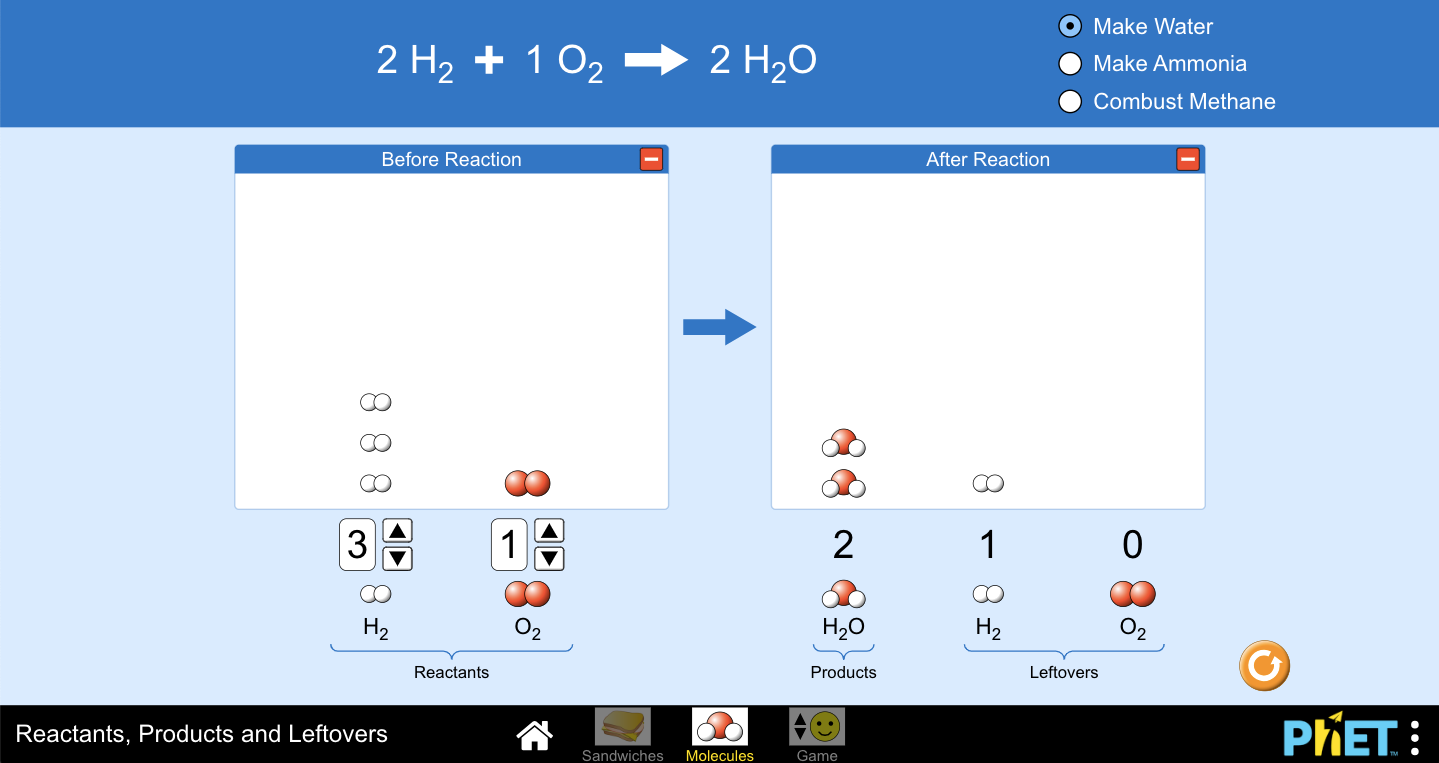
Chemistry Essentials: PhET Limiting Reactants

I was gone for both sections of this class, so it was a great day for students to use PhET to introduce limiting reactants. My co-teacher sent me a message that the kids who got started got the ideas pretty quickly, but a lot had trouble getting started. The para who supports the class was also out today, so I think some students felt like they didn’t have the support they needed; I need to keep working on how to support my chem students in developing independence in the classroom.

phet limiting.png

Day 133: Goal-less Problem, Forces Revisited, &

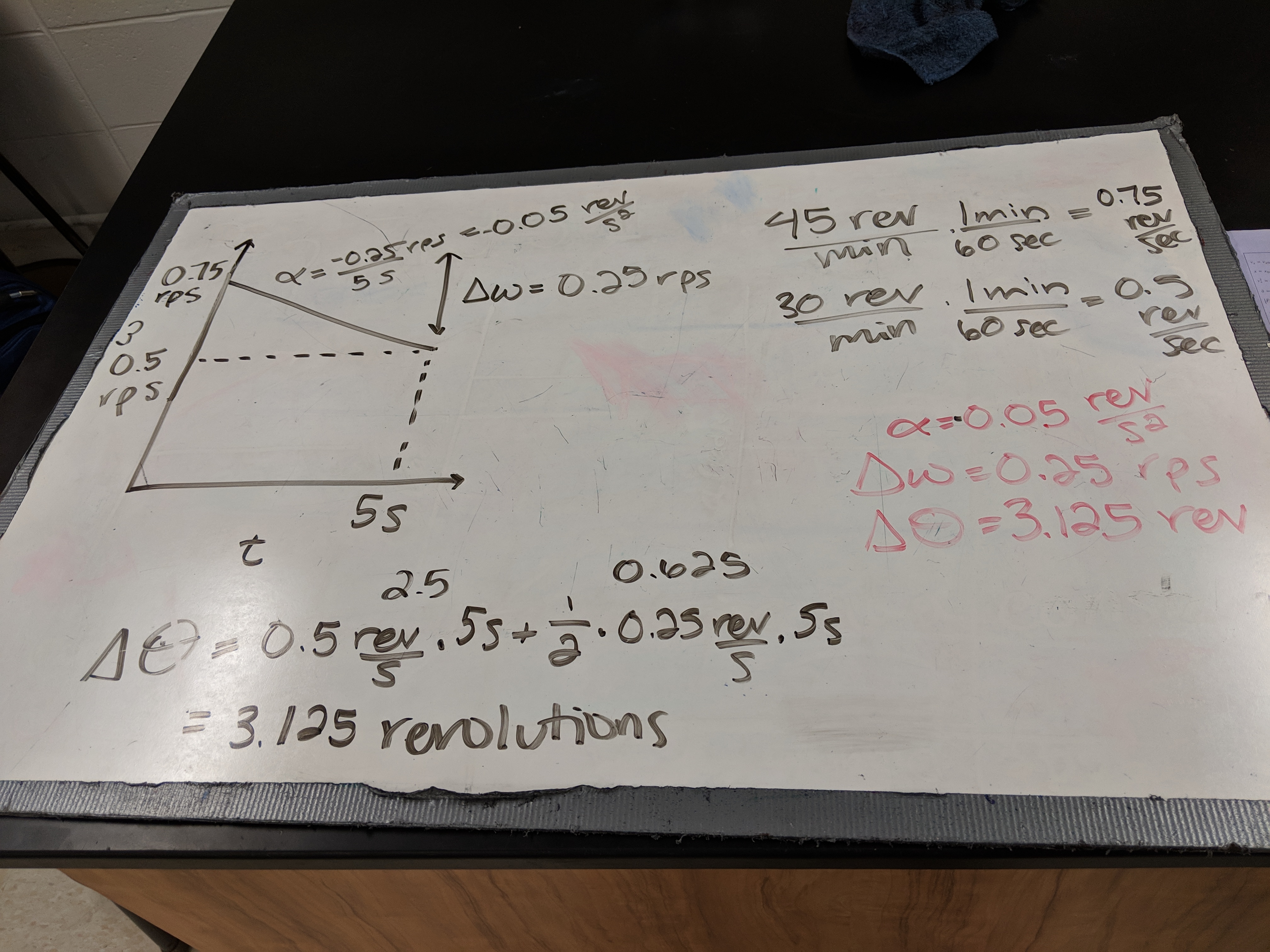
AP Physics 1: Goal-less Problem

We started with some mistakes whiteboarding of yesterday’s problems, which went very quickly and smoothly thanks to the connections my students were making to linear motion. Afterward, I gave them a goal-less problem for accelerated circular motion, and those connections continued to serve students well

AP goal less.jpg

Physics: Forces Revisited

We’d originally planned on taking a few days to close out the mechanics part of the course after oscillating springs, but the other physics teacher and I both forgot. Now that we’ve done what we’re going to with mechanical waves, we decided now would be a good time. Students worked on some problems revisiting the links between force, motion and other concepts from this year. There was lots of good discussion as they worked.

Chemistry Essentials: Gallery Walk

We did a gallery walk of some stoichiometry problems. Students have been doing well with the problems and seem to understand WHY they are doing the math they are, which I’m really excited about. I’m thinking about switching to BCA tables in the future; I need to spend some time trying problems with them. We’ll be starting work on some curriculum revisions for the course next year, and that might be a good time to take a closer look.

chem gallery (1).jpg

Day 128: Problems, Tuning Forks, & Stoichiometry

I was on a field trip today, so had a sub.

AP Physics 1: Balanced Torque Problems

Students worked some problems with balanced torques. I wish I’d edited the worksheet to include some problems revisiting forces, but ran out of time last week. I’ll be interested to see if and how my students used the area model I showed them yesterday.

Physics: Tuning Forks

Students did a lab playing with tuning forks to start building some ideas about sound waves. There’s usually some good discussion that I’m a little sorry I missed.

Chemistry Essentials: Stoichiometry

Students started doing stoichiometry by using nuts, bolts, and washers to represent different types of atoms, making it possible for them to “see” how many moles they have and measure the masses very directly.

Day 125: Assessment & Problems

AP Physics 1: Assessment

Students took their central net force quiz. Most seemed to feel pretty good about it, even though we moved through the content quickly.

Physics: Wave Problems

Students worked on problems using what we’ve learned this week. The problems went very smoothly.

Chemistry Essentials: Molar Mass Problems

Students worked on some problems combining molar mass with balancing chemical reactions.

Day 72: Tests

Today was our last day of class before winter break. In all three of my classes, we wrapped up a topic by taking an assessment.

AP Physics 1: Energy Bar Charts & Unbalanced Forces

I’ve been giving students at least two in-class opportunities on every learning target this year, so this assessment covered energy bar charts and revisited unbalanced forces. Almost everyone improved on unbalanced forces, which is exactly what I want to see!

Physics: Conservation of Momentum

Students took their conservation of momentum test. Students have been saying the bar charts make the math very intuitive, and it definitely shows on the work I’ve graded so far. This is definitely the easiest time I’ve seen students have with momentum.

Chemistry Essentials: Density

This assessment was more hit or miss than my other classes. I had some students who did great, but a few were surprised to see some representations, like particle diagrams and a mass vs. volume graph, that were significant components of our daily work. I’m thinking about doing some individual conferences with students after break to try to get a better understanding of what’s behind that.

Day 71: Unbalanced Forces Practical, Mistakes Whiteboarding, & Density Practical

AP Physics 1: Unbalanced Forces Practical

Since tomorrow’s assessment will include a second shot at our unbalanced forces learning target, we did a practical where students used unbalanced forces and constant acceleration to predict the velocity of a cart after it traveled a certain distance down a ramp. While we haven’t really dug into energy calculations yet, I did encourage students to try doing it as an energy problem if they had time, and the groups that tried it were excited to see the same answer two different ways.

ap practical

Physics: Mistakes Whiteboarding

Students did mistakes whiteboarding to go over yesterday’s problems; not surprisingly, it went very quickly. I also didn’t have to get on students’ case about units or well-labeled diagrams, since they are at a point where they find it useful to see and were asking each other for that information when someone left it off.

I noticed a couple of groups in one section had started some interesting notation for their unknown I haven’t seen before; students really, really like to use x for their unknown, which I push back on, but these groups were using x plus a unit for their unknown. I can’t quite decide whether I like it; using x as an unknown does get in the way of using x to represent position, so I know I’d rather they use the standard variable. On the other hand, seeing the units written out for the unknown helped a lot of students see what math they needed to do and the students I talked to were very clear that “x m/s” represented how many meters the object traveled for every second, which the students just using v were not as consistently clear about. I’m trying to decide whether the potential value here outweighs the hurdles it may cause down the line; one option is to let them leave the units, but push they should still use the standard variable (like “v m/s” here). I don’t see myself ever introducing this kind of notation, but I’m also not sure I need to get students away from it if they find it useful.

phys mistake (1).jpg

Chemistry Essentials: Density Practical

As a practical to wrap up the density unit, I asked students to plan an experiment they could use to answer either whether the shape of an object impacts its density or whether the volume of an object impacts its density. It went about as I expected; initially, students were uncomfortable with how open-ended the task was, but, once they got started, they moved forward easily with the task. I think the challenge had more to do with students’ discomfort with this kind of task than their ability to complete it.

chem prac