Day 23: Elevators, Board Meeting, & Pressure

AP Physics: Elevators

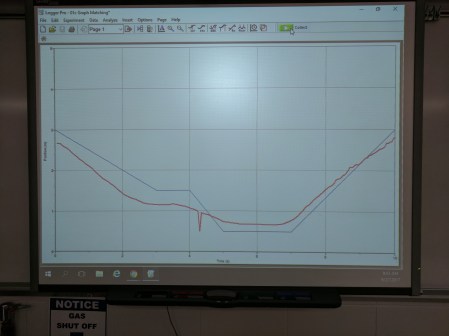
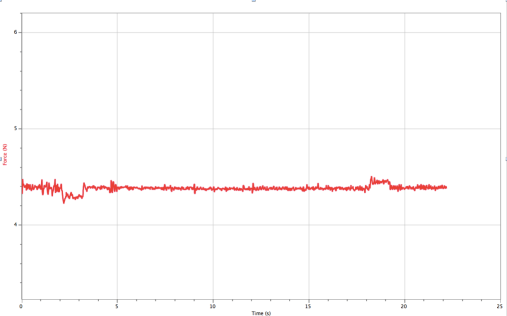
I took some time today to introduce students to the CER framework. I showed them a force vs. time graph I made by riding the elevator with a mass hanging on a force sensor, then asked them to determine whether I was riding the elevator up or down. We haven’t done much with unbalanced forces yet, but they were pretty successful determining which direction I rode it.
Elevator Ride Down.png

Physics: Board Meeting

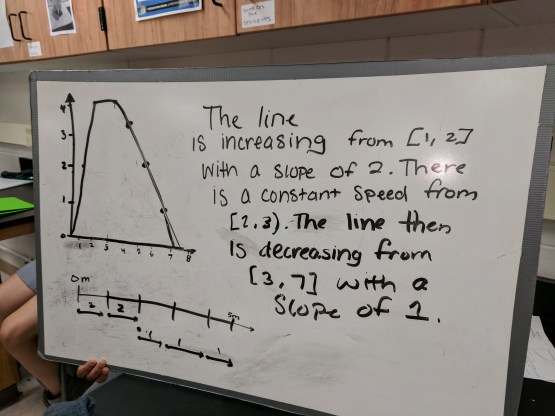
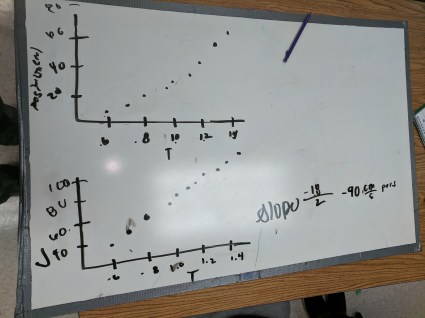
Students whiteboarded sketches of their graphs from yesterday. Its been taking longer and longer for groups to prepare whiteboards, so I think I will try setting a time on the SMARTBoard to try and speed things up. I also found a lot of groups were missing information we’d discussed recording prior to the lab yesterday, so I think we need to revisit lab notebook practices. The discussion was very abbreviated, so we only got a chance to discuss a little about the position vs. time graphs, but students were able to recognize the key ideas. On Monday, we’ll talk about the v-t graphs and look at some variations.
vid wb

Chemistry Essentials: Pressure

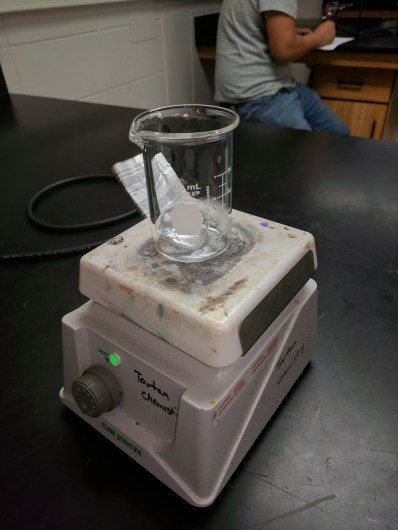
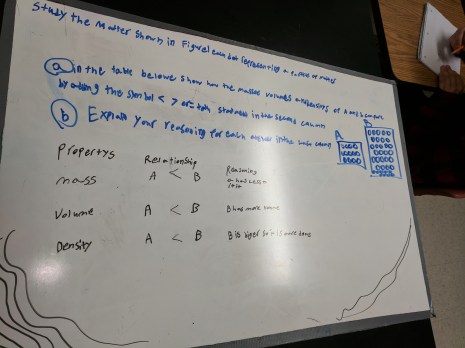
To introduce pressure, students watched a balloon in a vacuum chamber, then whiteboarded what they thought was happening. Students were pretty successful at coming up with useful ideas to explain what they saw and inventing the idea of pressure.
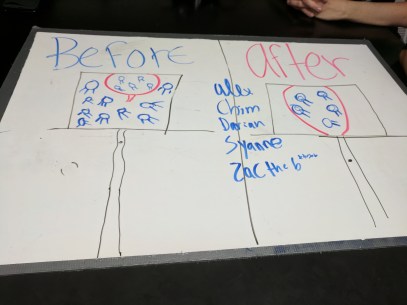
chem wb (1)

Afterward, we boiled water in the vacuum chamber. We ran out of time to whiteboard it, but, on a whim, I got out my thermal camera and recorded a video to show the water stays cool.

 

Day 22: 3rd Law, Video Physics, & Thermal Expansion

AP Physics: 3rd Law

Students predicted which cart would experience a larger force for several different collisions, then we got out the force sensors and hoop springs to find out. In one of my classes, the computer was acting up, so we relied on the hoop springs and slow motion video. Fortunately, students found the video very convincing and even described watching the hoop springs compress as satisfying.

collision lab f-t graph

Physics: Video Physics

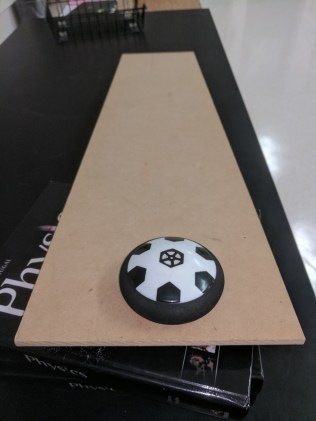
We started constant acceleration today. Students used photogates with a cart on a ramp during the first unit, so I decided to have students analyze hover disks on a ramp using Video Physics.  I’m hoping that some of the features, like seeing the points in the video, will help students connect the representations we’re using to their physical meaning.

hover

Chemistry Essentials: Thermal Expansion

I did a few demos of thermal expansion, and had students complete particle diagrams of each one. Students seem to be getting the big ideas, and I’m seeing students naturally improving how they represent key elements of their particle diagrams as time goes on. One student called me on falling into pretty teacher-centered habits during the whiteboard discussions; I have a tendency to talk to much the first time I teach a lesson, and this is my first time through Chemistry Essentials A, so that’s happening a lot. I need to spend a little more time during my lesson planning making sure I clarify the goal of each discussion and planning out some open-ended questions so I can give students more of the reigns.

chem wb

Day 21: Lab Practical, More Problems, & States of Matter

AP Physics: Lab Practical

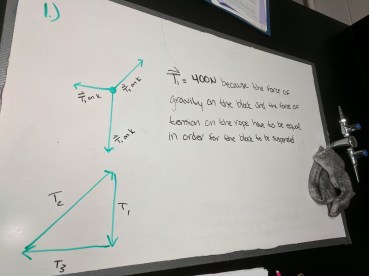
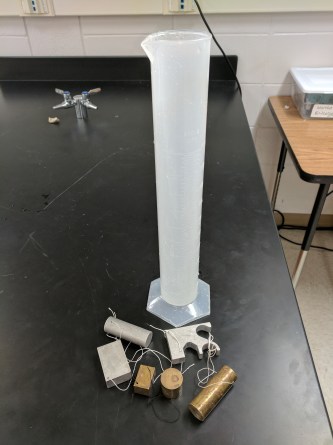
Students worked on a balanced forces lab practical to determine an unknown mass given the tensions supporting it. I just made one set-up, and it was interesting to see that in one class, each group wanted to take their own measurements, while the other class wanted to just have one person take the measurements and record them on the whiteboard. The hour that took measurements as a whole class actually took longer to get everyone the data, but had a lot more conversation about what they needed.

static prac

Physics: More Problems

I’ve got enough students struggling with constant velocity that we took a day to do a Modeling worksheet that I usually skip. Talking to students, there were several groups who thought the area of the velocity vs. time graph only gave displacement in special cases. I’m also seeing a lot of evidence that students are losing track of the physical meaning of the graphs and their connections with the math. For example, when writing an expression based on a graph, a lot of students are using units and variables from the dowel lab, which tells me they know a procedure to turn y=mx+b into “physics”, but don’t have a conceptual understanding of what they are doing. These challenges have been a recurring theme in physics this year; we’re starting constant acceleration tomorrow, and I think I want to revamp the lab a bit to try and prevent some of these issues.

Chemistry Essentials: States of Matter

Students melted ice into steam and made observations and drew particle diagrams along the way. This led nicely into the idea that as the temperature increases, the particles are moving more. Students also made some nice connections to yesterdays’ demo with food coloring in water.

boil ice

Day 20: Force Diagrams, v-t Graphs, & Diffusion

AP Physics: Force Diagrams

We went over the force problems from last week. I skipped having them whiteboard all of the trig and algebra, and just had students whiteboard the diagrams and some selected reasoning. There was some good debate on whether the normal force should equal gravity on some of the problems, and the vector addition diagrams were a great tool for reasoning that through.

vad wb

Physics: v-t Graphs

Students whiteboarded their solutions to Friday’s constant velocity problems. The problems were a lot more challenging than I expected. One big struggle for a lot of groups was making sense of what the problem was asking. The other big struggle was connecting strategies and ideas from one problem to the next one. For example, after using the area of a velocity vs. time graph to find displacement on the first problem, many students struggled to find the displacement from a v-t graph on the second problem. This tells me students were following a procedure without understanding why, so I need to think about how to step back and get that idea across.

vt wb

Chemistry Essentials: Diffusion

Students whiteboarded particle diagrams for perfume dispersing through the classroom and food coloring dispersing through water. In both cases, students made a lot of great observations prior to whiteboarding and had a lot of good foundation on their whiteboards.

diffusion.jpg

Day 19: Plickers, Dueling Buggies, & Quiz

AP Physics: Plickers

After a quiz, I introduced students to Plickers. One piece of feedback I got from students last year was that they would have liked to practice multiple choice earlier in the year so, this year, I’m planning to spend part of each Friday on that. I have students read the question silently and vote on an answer, then vote again after talking to their peers. My 4th hour had some great, spirited discussion and was actually disappointed when I told them it was time to put the cards away and head to lunch.

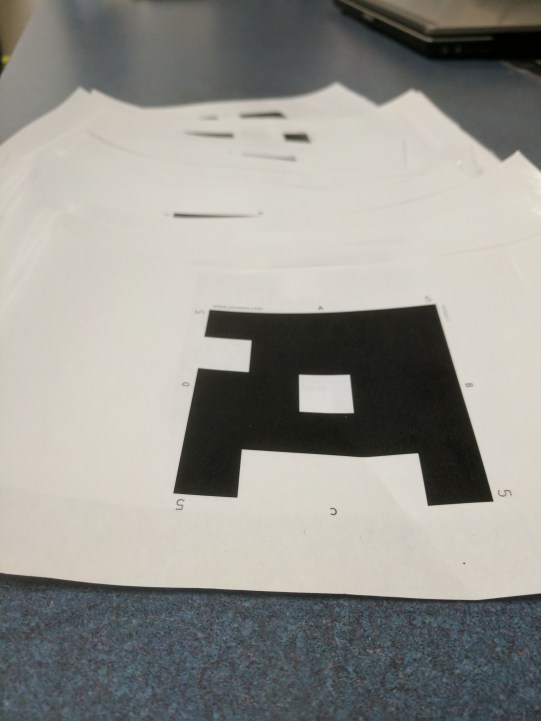
plicker

Physics: Dueling Buggies

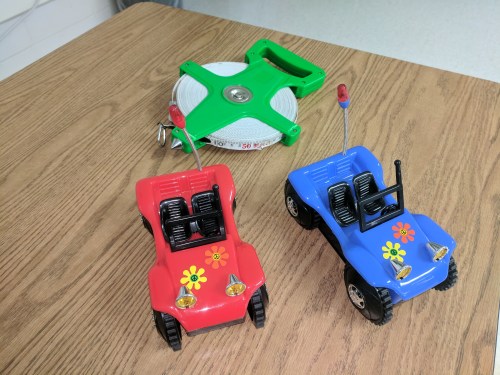
We wrapped up the dueling buggies lab practical. For the rear end collision, most of my groups got a crash position behind where both of the buggies started, so I paused the class to look at what results would make sense. I’m debating whether its worth having that conversation sooner next year, or if it is better to wait until there is a need. This fits with a pattern I’ve noticed this year where more students than usual are struggling to connect their graphs and math to what is physically happening.

I couldn’t get a volunteer to release the second buggy or to film the collisions for me, so here’s a video from a couple years ago.


Chemistry Essentials: Quiz

Students spent most of the hour on their density quiz. While I haven’t graded them yet, there were some stark differences in how students did on the quiz. Several students immediately made a connection to some of the worksheets and labs we’d done and found the quiz extremely easy. Others thought the quiz was completely unfamiliar and really struggled. I need to keep working on helping students to make connections across different days, as well as supporting my students in developing as independent thinkers.


Day 18: Trig It Out, Dueling Buggies, & Density Problems

AP Physics: Force Problems

Students worked on using vector addition diagrams to solve balanced force problems (one of many things I learned from Kelly O’Shea). I really like that while many of my students still ended up using a version of components, they see where the components come from. Once students set up their vector addition diagrams, the slogan for the day was “Trig it out!”, a line from last year’s students.

Physics: Dueling Buggies

Students worked on the Modeling Instruction lab practical to predict where two buggies will collide. I didn’t give quite enough instruction to my 1st hour, but once I suggested they try drawing some representations and play with them, they started making some progress.

One of my goals this year is to help students value ways of being successful in class besides knowing the answer quickly, so as part of the lab practical I gave them a list of skills based on similar lists from Kelly O’Shea and Ilana Horn, then asked them to identify at least one example for each group member where they demonstrated one of those skills. I’m looking forward to reading their responses.

dueling buggy.jpg

Chemistry Essentials: Density Problems

Students worked on some density calculations. Some students really struggled with the algebra, so I’m trying to decide whether that really needs to be in the course. Most are getting to a point where they are successful with the graph, and I think that is more valuable in the long term than using the equation.

I also handed back the first quiz; most students performed about how I expected, but I was surprised at how many students had underestimated how they did and were genuinely excited about their score. Several confirmed with me (multiple times, in one case) that they got to keep their quiz so they could show their parents. I need to work on reinforcing the connections between our day-to-day work and the assessments so that more students will see that kind of success.

Day 17: Vector Addition, Motion Detectors, & Water Displacement

AP Physics: Vector Addition Diagrams

Students worked through an activity from Casey Rutherford to introduce vector addition diagrams. A few groups started thinking about how they could use trig and other math to do calculations with the shapes they made; one group even came up with the idea of components, which was awesome!

vad

Physics: Motion Detectors

For the first half of class, we did the mistakes game for yesterday’s problems. Based on the mistakes several groups decided to make and the discussion that followed, I realized that a lot of students are drawing their velocity vs. time graphs to look like the motion maps.

After finishing the problems, we got out the motion detector and focused on what the time axis means. Watching the graph form live seemed to help some of the students who’ve been sketching graphs that look like motion maps.

motion detector

Chemistry Essentials: Water Displacement

Students used displacement of water to find the volume and density of aluminum and brass blocks. I collected results to put on a class graph, and it was interesting to ask students to predict the shape of the graph. A lot of students expect the graph to have no pattern since the blocks are all different shapes. I may need to have them do some particle diagrams tomorrow to help compare.

density

Day 16: Systems, v-t Graphs, & Good Questions

AP Physics: Systems

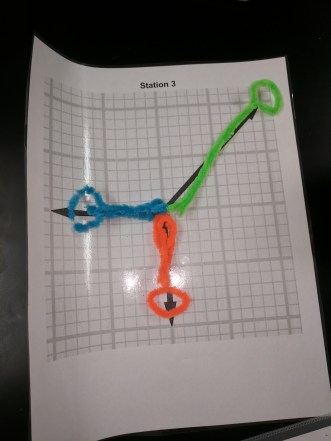
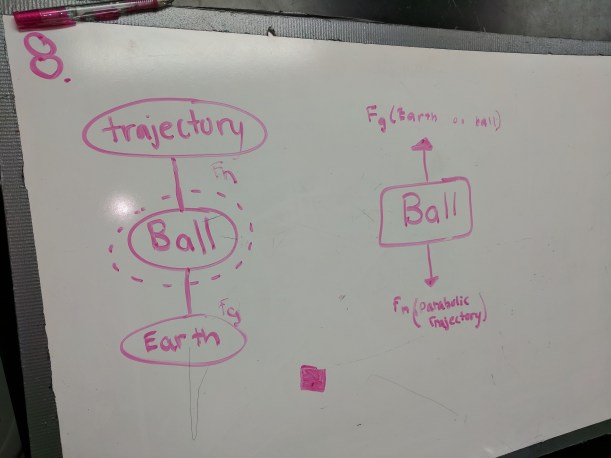
Students did the mistakes game (pretty much my default mode of whiteboarding if you can’t tell yet) for a free-body diagram worksheet. Both classes had some great discussion about whether there should be an upward force for a projectile while it is in the air and it helped a lot to frame forces as interactions. I ended up wishing I’d taken some time to revisit Newton’s 1st Law from the momentum unit since some students were having trouble with the idea that forces are balanced on an object rising with a constant velocity. I’ll probably spend some time reinforcing that tomorrow.

I also took this opportunity to introduce students to the idea of defining their system. Both sections had debates about different problems where they were trying to decide what was causing an upward force. That lead nicely into discussing how we could define our system to make each possible answer correct.

fbd mistake.jpg

Physics: v-t Graphs

Students worked on sketching velocity vs. time graphs based on motion maps and position vs. time graphs. The calculus class started v-t graphs at the end of last week, so I had some students who not only finished quickly, but were eager to exercise their new knowledge by helping their peers, which was great. I had a lot of students who struggled with the idea that the horizontal axis on the graph represents moving forward in time; I want to try getting out the motion detectors tomorrow so they can watch the graph form in real-time to see if that helps.

Chemistry Essentials: Good Questions

We spent some time working on asking good questions. I prepped a whiteboard with an intentional mistake, and asked students about what they saw. Some were able to use the question stems to immediately get to a good question. When a student had an observation or an idea of where to steer me next, I had them share it and we formed a question as a class. Then, we went back to the remaining student whiteboards and were much more successful and focused than yesterday.

Day 15: Rubber Bands & Mistakes Game

AP Physics: Rubber Bands

Both sections worked on drawing interaction diagrams and free-body diagrams, but one of my sections is about 30 minutes ahead and was able to get the problems mostly done last week. That section had asked about what the graph looks like when a spring is overstretched and Hooke’s Law breaks down, so we got out some rubber bands to try. I told students I hadn’t had a chance to collect my own data, so we’d be finding out together, and they seemed on board with that.

rubber band

Physics: CVPM Mistakes Game

Students played Kelly O’Shea’s mistakes game with Friday’s worksheet on translating between different representations of constant velocity. I really like this worksheet for introducing the mistakes game since its easy to direct students towards meaningful mistakes. I usually talk about some stems for good questions, but this time, I also projected them, which seemed to help. When the discussion lagged, I used Post-It notes to feed questions to students, but another student would usually ask the question I had in mind before I could finish writing, which is a good reminder to give them time.

phys mistake

Chemistry Essentials: Density Mistakes Game

This class played the mistakes game with Friday’s density problems. I also used the question stems with them, but they struggled a lot more with asking good questions. I think they need a little more scaffolding; I might put together a whiteboard and have students prep questions in their groups. A lot of students fell back into some of the behaviors I’ve been trying to push back against with the work on norms, and I think some of that was a result of some students feeling confused and frustrated with the discussion.

chem mistake

Day 14: Friction, Multiple Representations, & Density

Today is homecoming, so classes are shot and students are excited.

AP Physics: Friction

I decided not to take the time for a lab on friction, so I collected some data with a force sensor and motion detector and asked students for observations. I used the motion detector to help connect what the force was doing to what we know about momentum so far. Students pretty readily recognized the force of friction changed when the block when from being at rest to being in motion.

Afterwards, students took their second quiz. Last year, I had very few students complete retakes, so this year I’m giving them at least two in-class attempts at each learning target to try and normalize reassessment. So far, I’m hearing a lot of talk from students that suggests they are much more comfortable with reassessing than last year’s students.

friction take 1

Physics: Multiple Representations

Students worked on a Modeling worksheet to practice translating between position vs. time graphs, motion maps, and descriptions of motion. Overall, students did well and I think this helped reinforce the value of what came out of yesterday’s discussion. In the class where I see the most struggles with math skills, several groups chose to shuffle themselves today, and ended up needing much less support from me than usual. For the first time, however, I had some students who made graphs showing multiple positions for a single point in time. I need to probe their thinking a little more and think about how to address that when we go over the problems on Monday.

Chemistry Essentials: Density

Students worked on a Modeling worksheet connecting particle diagrams and density. I got a little nervous when a very large group gathered around the para who assists the class, but they had some good discussions. I do need to think about how that will impact whiteboarding on Monday when 1/3 of the class worked as part of the same group.