Day 42: Problems, Practical, & Bohr Model

AP Physics 1: Problems

Students took the plunge to solving problems for objects with a constant acceleration. There was a great moment in one class where a group was struggling with a problem, and a student said “I’m gonna be [calculus teacher]!” He then proceeded to walk the graph while describing his motion to the rest of the group, which was just what they needed to figure out the problem. Thanks, Ms. Hyers!

Physics: Practical

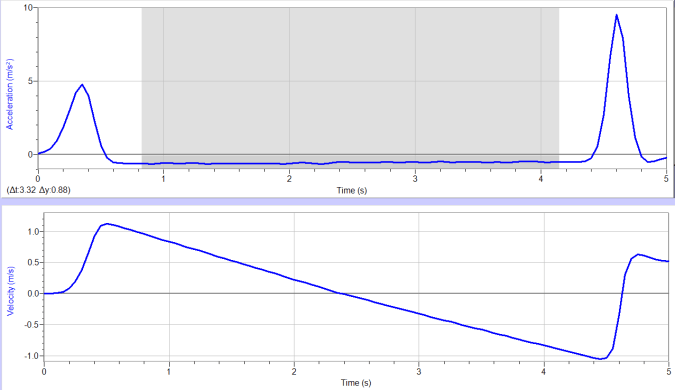
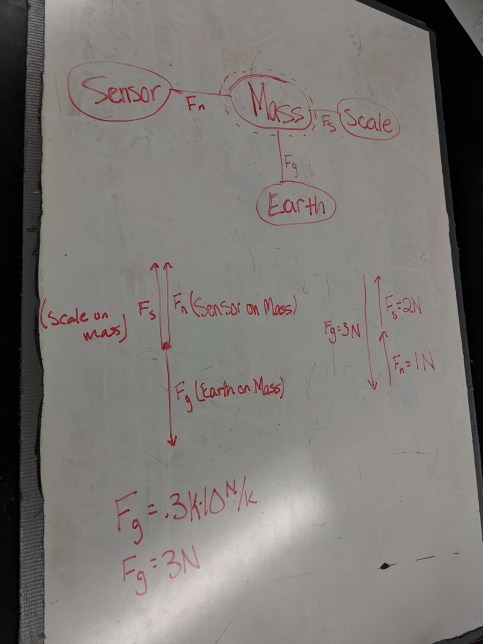
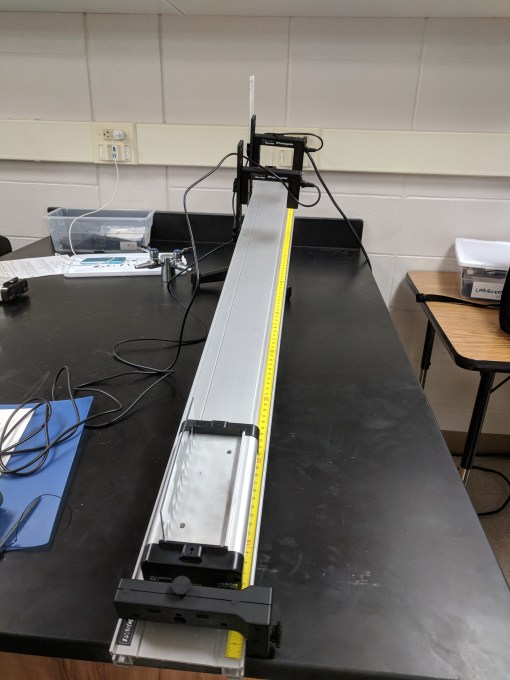
Students did a lab practical where they needed to calculate how much mass to hang off a string in order to balance the forces on a cart on a ramp. Students tested their calculations using mass sets that went down to 10 g, which got them close enough to be satisfying.
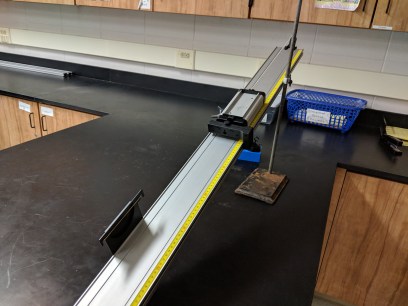
practical

Chemistry Essentials: Bohr Model

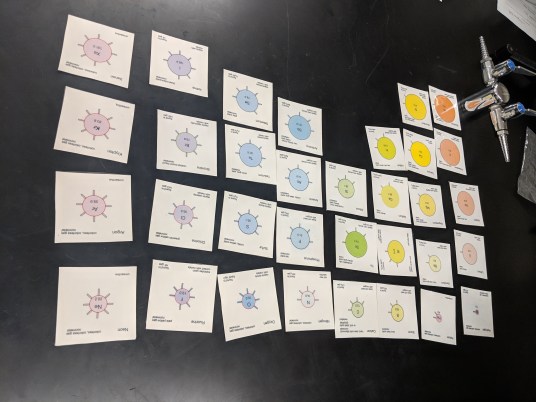
Students whiteboarded yesterday’s problems connecting the Bohr model of the atom to the periodic table. I remembered today that I want to re-work the problems I have to make the periodic trend in valence electrons pop out. The students who were checked in were feeling very confident by the end of the hour today. The trouble is I’m seeing more and more students check out; I’m wondering if another round of one-on-one conferences might help some students get more engaged by making it clear that they can still improve their grade.

bohr models

Day 41: Mistakes & Bohr Model

AP Physics 1: Mistakes Whiteboarding

We wrapped up discussing the whiteboards students made on Friday for some mistakes whiteboarding. Students seem to be pretty solid on the graphs and motion maps, so we should be ready to start doing some problems tomorrow.

Physics: Mistakes Whiteboarding

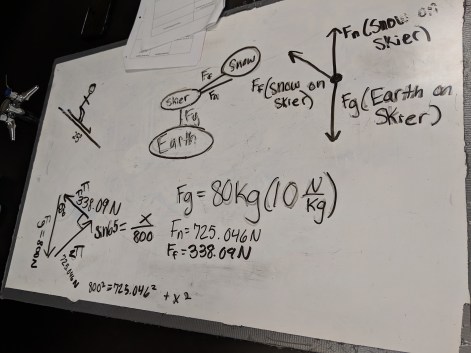
We finished discussing the whiteboards students had prepped for some mistakes whiteboarding. Students seem to be getting the hang of balanced forces and are managing to connect the trig to the problems they have.

phys mistake.jpg

Chemistry Essentials: Bohr Model

Friday was not the most productive day, so students had some time to finish working on the PhET simulation, then started a worksheet connecting the Bohr model to the information on our periodic table. Students were either really on the ball today or pretty checked out; this is something I usually see toward the end of the trimester in this course, but its happening earlier than usual and I need to give some thought to how I’m going to keep my students engaged through finals.

build an atom

Day 40: Mistakes Whiteboarding & Build an Atom

Today was one of those days, and I did not manage to take any pictures.

AP Physics 1: CAPM Mistakes Whiteboarding

We spent some time discussing the graphs for a set of problems about marbles on ramps. The one with a marble that goes up a ramp, then comes back down, lead to some good discussion. Afterward, students started prepping whiteboards for some mistakes whiteboarding with stacks of kinematic graphs.

cart on ramp.PNG

Physics: Mistakes Whiteboarding

Students did some mistakes whiteboarding for balanced force problems. They are having some trouble connecting the trig to the problems, but are making progress.

Chemistry Essentials: Build an Atom

We had a short quiz today and I had students work on PhET’s Build an Atom simulation to start connecting the Bohr model to the periodic table. The students who worked on it were very successful at getting the ideas I was after, but it was very tough to get students to work on the simulation after their quiz.

build an atom.PNG

Day 39: Graph Stacks, Vector Addition Diagrams, & Review

AP Physics 1: Graph Stacks

Students worked on sketching stacks of kinematic graphs. I had a sub during my 2nd hour, so I’m not sure yet how it went, but my 4th hour had some great discussions. I’m looking forward to whiteboarding these problems tomorrow.

Physics: Vector Addition Diagrams

Students worked on some problems using vector addition diagrams. I had a sub during my 1st hour, so only got to see things in my 6th hour. A lot of students had trouble with the idea that the arrows on the vector addition diagram need to have the same orientation as the arrows on the free-body diagram, but I think they made progress on the idea.

Chemistry Essentials: Review

After some wrap-up on yesterday’s lab, we did some whiteboarding to review the key ideas that will be on tomorrow’s quiz, including the main atomic models we talked about and key trends on the periodic table.

atomic models.jpg

Day 38: Card Sort, Vector Addition Diagrams, & Rutherford

AP Physics 1: Card Sort

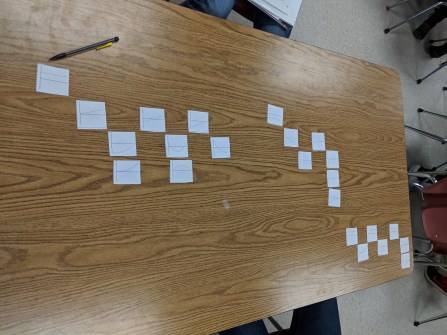
Students worked on Kelly O’Shea’s CAPM card sort. First, they did the most basic sort they could using just the graphs. Next, they did a sort using their physics knowledge with just the graphs. Once groups had a physics-y sort they were happy with, I gave them the word cards for a third round. I liked how the progression went and there was a lot of good discussion along the way.

ap card sort.jpg

Physics: Vector Addition Diagrams

Students worked through an activity from Casey Rutherford using pipe cleaners to make manipulative vectors and rearrange free-body diagrams into vector addition diagrams. I really like the way this activity drives home that forces can be balanced even if they are not equal, but it is a pain in the neck to get the pipe cleaners nice. I might try to make a version using Brian Frank’s vector manipulatives for next year.

vad.jpg

Chemistry Essentials: Rutherford

Students simulated Rutherford’s experiment by rolling a marble towards a set of hidden marbles and tallying how many times they hit something. In the past, I’ve had students calculate the diameter of their target marble, but the math is always kind of a black box. This year, I’m having students do the lab once with big marbles as the target and once with small marbles as the target in the hopes of keeping the focus on the key ideas.

rutherford.jpg

Day 37: Linearization, Force Representations, & Millikan Experiment

AP Physics 1: Linearization

Students linearized their data from yesterday’s ramp lab and used the mean value theorem to make a velocity vs. time graph, then prepped whiteboards.

Physics: Force Representations

Before taking a quiz, students whiteboarded some diagrams based on yesterday’s problems. I really pushed labeling the vector addition diagrams, which seemed to help things click for a lot of students.

We’ve been including a short collaboration reflection at the end of each packet, and I was really pleased when a student working on that said it really makes her think about what she did leading up to the assessment and how it affected her learning, which was great to hear!

phys wb.jpg

Chemistry Essentials: Millikan Experiment

I borrowed an idea from Frank Noschese and had students find the mass of a penny by weighing a whole lot of film canisters with different numbers of pennies inside. Reasoning from the graph was tricky for a lot of students, but they were able to make sense of the stair step graph and reason out the mass of a single penny with some coaching.


Day 36: Ramps, Interaction Problems, & Atomic Models

AP Physics 1: Ramps

Students collected position vs. time data for a cart on a ramp. I can tell that I did a better job introducing photogates than I have in the past because students flew through the data collection with nice looking results.

ramp

Physics: Interaction Problems

Students worked on some real-life balanced force problems based on Kelly O’Shea’s. There were some students who made really nice connections to the labs we’d done; there was a great moment when I heard a student use the “for every” statement we made about the slope in the force of gravity lab to figure out a station. One thing I’m thinking about is I had students start at a random station, then rotate through, but they build nicely enough that it could be helpful to figure out a way for all students to do them in order.

Chemistry Essentials: Atomic Models

Students did a reading on the main historical models of the atom. I like that students recognized that at each stage, new evidence showed a major limitation in the previous model, but I have yet to find a reading or other atomic models activity that doesn’t reinforce the myth of the “lone genius”. Afterward, we got out the gas tubes and diffraction gratings to see some of the evidence for the Bohr model.

spectrum.jpg

Day 35: Assessment, Board Meeting, & Two Truths and a Lie

AP Physics 1: Assessment

After wrapping up yesterday’s whiteboards, students took their quiz on impulse and momentum conservation in collisions. One of the things I love about giving this assessment is a lot of students felt much more confident than on the assessment on impulse of a single object, in spite of it being the same material in a more complex situation. Its a great opportunity for students to see their growth so far.

Physics: Board Meeting

We had the board meeting for the spring force lab. I’ve been hitting “for every” statements about the slope much harder and more consistently this year than in the past, and I’m seeing students with a much stronger conceptual understanding of what their slopes represent, which is fantastic.

spring wb

Chemistry Essentials: Two Truths & a Lie

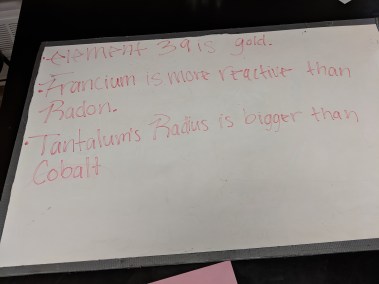
After going over some key periodic trends and how to read a periodic table, I used a variation on a community-building activity that we frequently use in homeroom called “Two Truths and a Lie”. Each group came up with two accurate statements, and one wrong statement. Groups then traded whiteboards and had to correct the wrong statement. A lot of groups had some good discussion and seemed to get more comfortable reading their periodic table, which was the goal.

w truths

Day 34: Mistakes Whiteboarding, Spring Force, & Card Sort

AP Physics 1: Mistakes Whiteboarding

Students did mistakes whiteboarding using yesterday’s problems. To keep us from getting bogged down in algebra, I had students put their mistake in the diagrams or annotations, then we focused the discussion on getting those parts right and I posted final answers to the class website. Dropping a negative sign was a very popular mistake today, but a lot of students have been making that error, so it was a good one to work on.

ap mistake.jpg

Physics: Spring Force

Students finished data collection for the spring force lab. I like to have students collect data for the spring both when it is vertical and when it is horizontal to get the idea that the orientation of the spring does not affect its spring constant.

horiz spring.jpg

Chemistry Essentials: Card Sort

Students worked on a card sort based on how Mendeleev worked out his periodic table. I skipped having students do a gallery walk of how other groups sorted their cards before seeing a periodic table, and I wish I’d taken the time to do so since I think it would have gotten students thinking about other ways to sort.

chem card sort.jpg

Day 33: Problems, Board Meeting, & Assessment

AP Physics 1: Problems

Students worked on some conservation of momentum problems, including Michael Lerner‘s watermelon on wheels, that require them to be flexible about the system they are using. A lot of groups went straight for a whiteboard once the work time started, which lead to some great discussion and collaboration on the problems.

Physics: Board Meeting

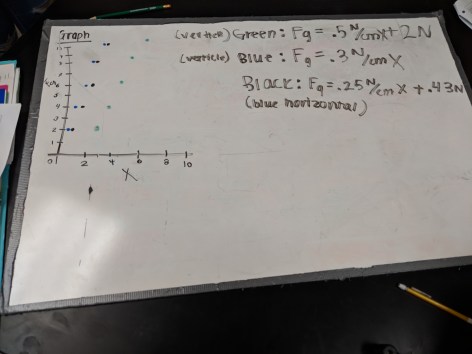
We had a board meeting for yesterday’s force of gravity lab. This was actually the first traditional formula students got from a lab this year. During the discussion, I could tell my students are getting much better at making “for every” statements about the slope and describing the meaning of the intercept.

force of gravity wb.jpg

Chemistry Essentials: Assessment

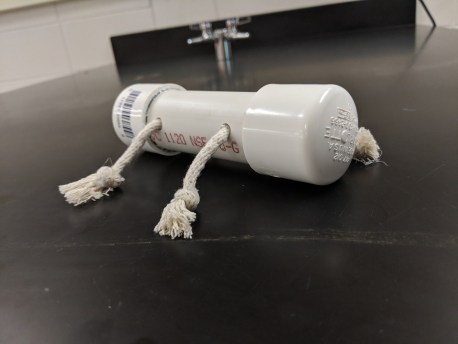
Students took their quiz on phase changes. One problem talked about a generic chemical, rather than something specific, which threw several students off. It was a good reminder to keep problems firmly rooted in real situations. Afterward, we revisited the mystery tubes from the first day of class as preparation to start talking about the periodic table and atomic models.

mystery tube