Day 26: Defining Systems & Topography

AP Physics: Defining Systems

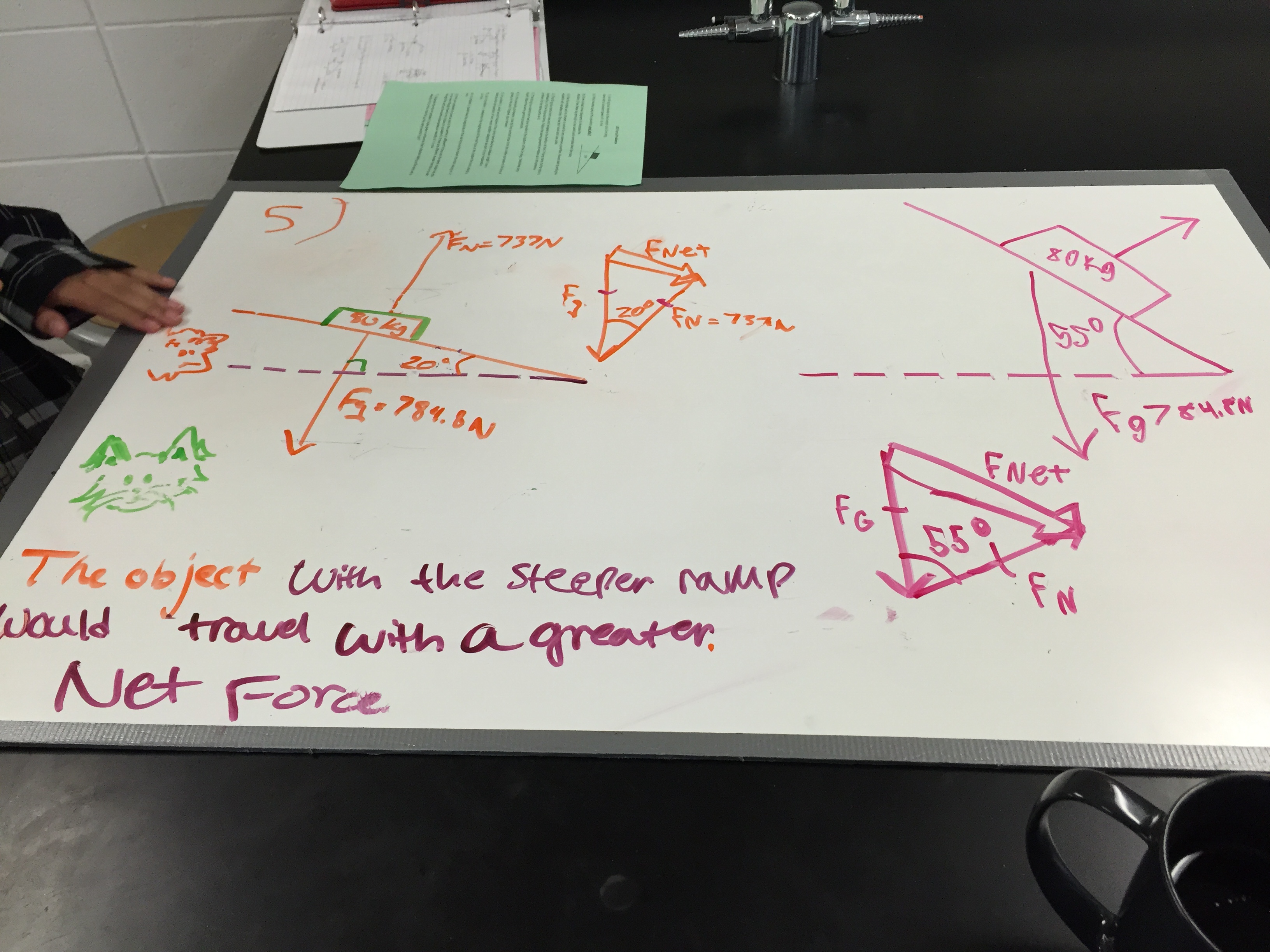
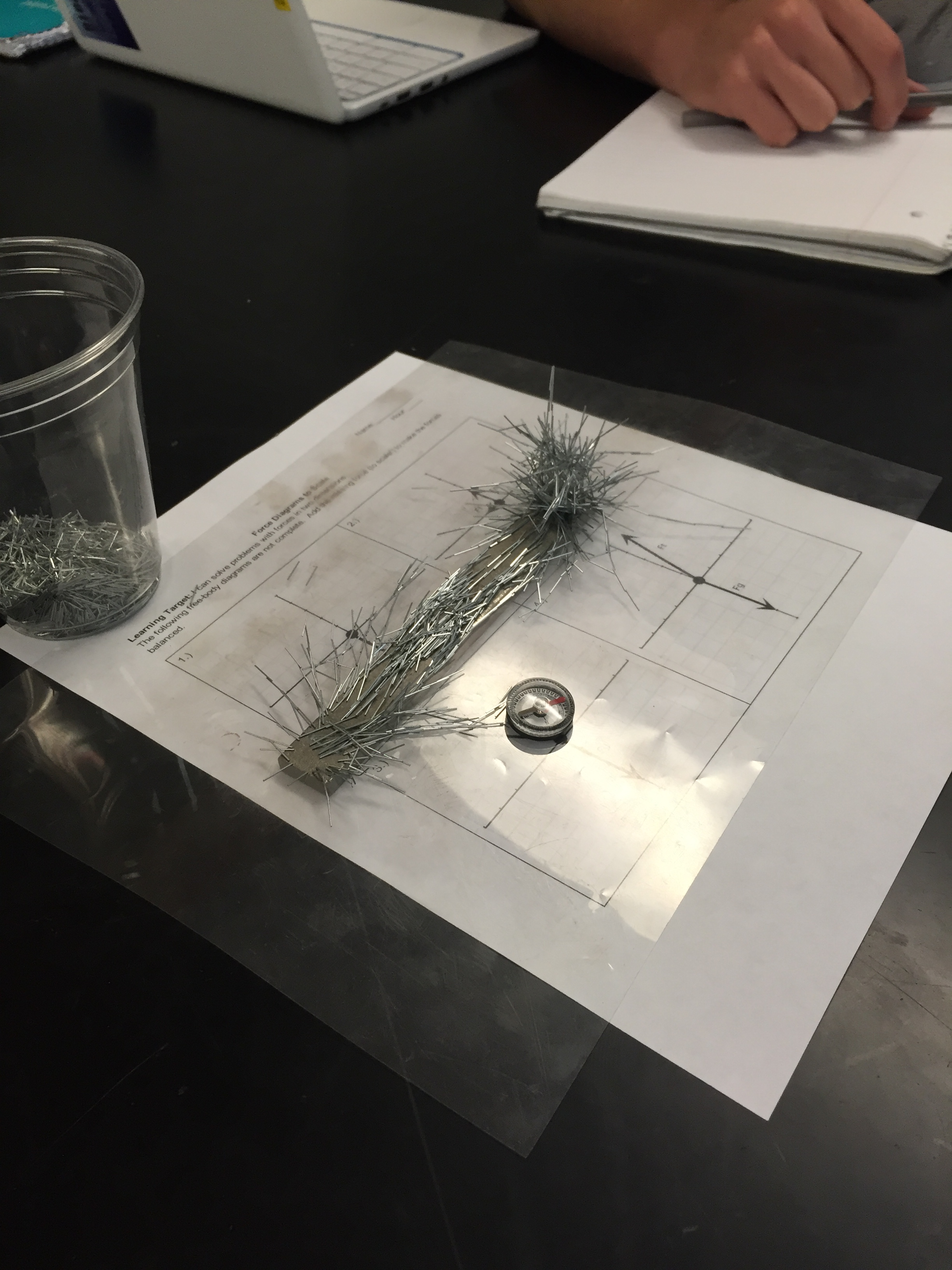
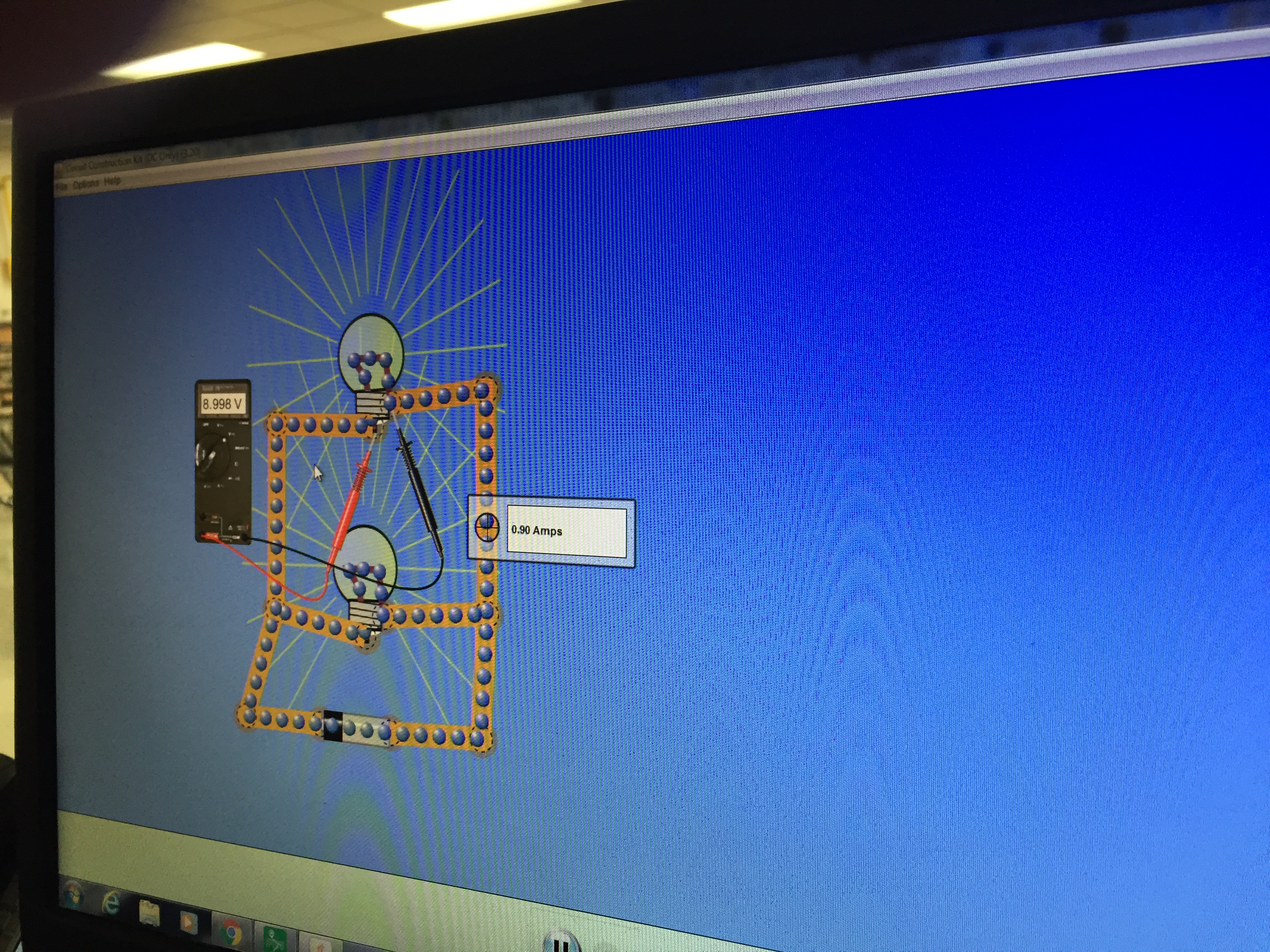
We played the mistakes game with yesterday’s free-body diagrams. In both my hours, there was some great discussion about a problem with a skydiver attached to a parachute and whether the upward force should be a tension force from the straps of the parachute or a normal force from the air on the parachute, which lead beautifully into the importance of defining your system.

IMG_2328.JPG

Earth Science: Topography & Wind

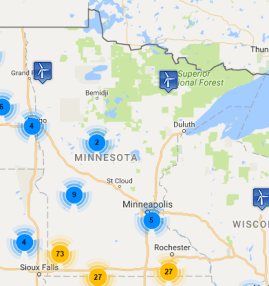
As the next stage of their project to plan a wind farm, students built a simple “topography” using textbooks and used simple flags to make observations about how that impacted wind speeds. Afterwards, students tried placing a turbine at some of the locations where they’d left flags and measuring the current produced.

img_2324

Day 25: FBDs & Wind Maps

AP Physics: Free-Body Diagrams

I gave a short lecture on the types of forces, then had students work on drawing some free-body diagrams. I’m being really picky about including the interaction when labeling forces this year (i.e. Fg (Earth on object)) which I’m hoping will pay off in deciding whether a force should be there as well as with the 3rd law. There were some great conversations about which forces need to be accounted for as well as what causes an object to move forward after the force is done.

Earth Science: Wind Maps

Students used some maps to look for a relationship between average wind speeds and topography. Then, they picked what locations in Minnesota might make sense for a wind farm. This lead to some good conversations about trade-offs in engineering, such as why  there are some wind farms near big cities, even in parts of the state with relatively slow average wind speeds.

wind-turbine-map

Day 24: Bowling Balls & Problem Scoping

AP Physics: Bowling Balls

Students did a lab I borrowed from Frank Noschese hitting bowling balls with rubber mallets to look for a relationship between force and acceleration. I really like the conversations that happen when students are working out how to get a bowling ball to move at a constant velocity. When one group was wondering how to check, we ended up pulling out the Motion Shot app to make a motion map. Another group decided they needed to use gentle forward taps to maintain the constant velocity combined with even gentler backwards taps to counteract the forward ones; as they made their taps gentler and gentler, they eventually realized they could do away with them entirely. My 4th hour also got very excited about balancing things on their bowling balls.


Earth Science: Problem Scoping

On Thursday, students only had time to answer the problem scoping questions individually. Today, I had them answer the questions with their lab groups using a different colored pencil to differentiate individual ideas from group ideas. After that, we discussed as a class what kinds of things students will need to know for the engineering design challenge, which lead nicely into introducing and previewing the learning targets for the unit.

Day 108: Balances & Isotopes

Physics: What does a balance measure?

A couple of students turned in their work from yesterday to my sub, and I saw they pretty consistently interpreted the balance in the video as measuring mass rather than force. To help clear that up, I took a balance on the school elevator and recorded some video. We started by drawing some free-body diagrams, then connected those to changes in the reading on the balance to get at what the balance is really measuring. From there, students whiteboarded and shared their answers to yesterday’s activity.

Chemistry: Isotopic Pennies

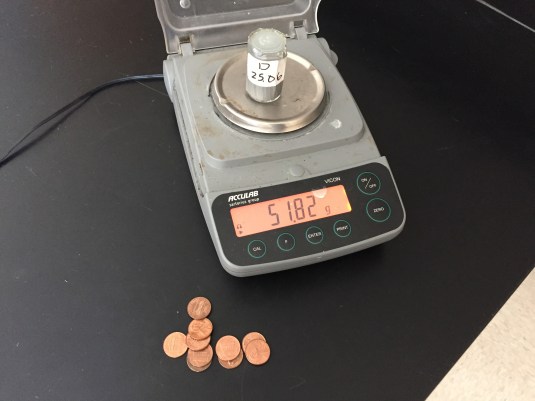
To introduce the idea of isotopes, students got sealed jars with 10 pennies and had to determine how many of their pennies were made before 1982 without opening the jar.

IMG_1702

Day 41: Motors & Forces Practical

Physical Science: Motors

Students built very simple electric motors, then did some playing around with them to start figuring out some of the underlying principles. This will set up some discussion for Monday on how most electricity is generated.

Physics: Forces Practical

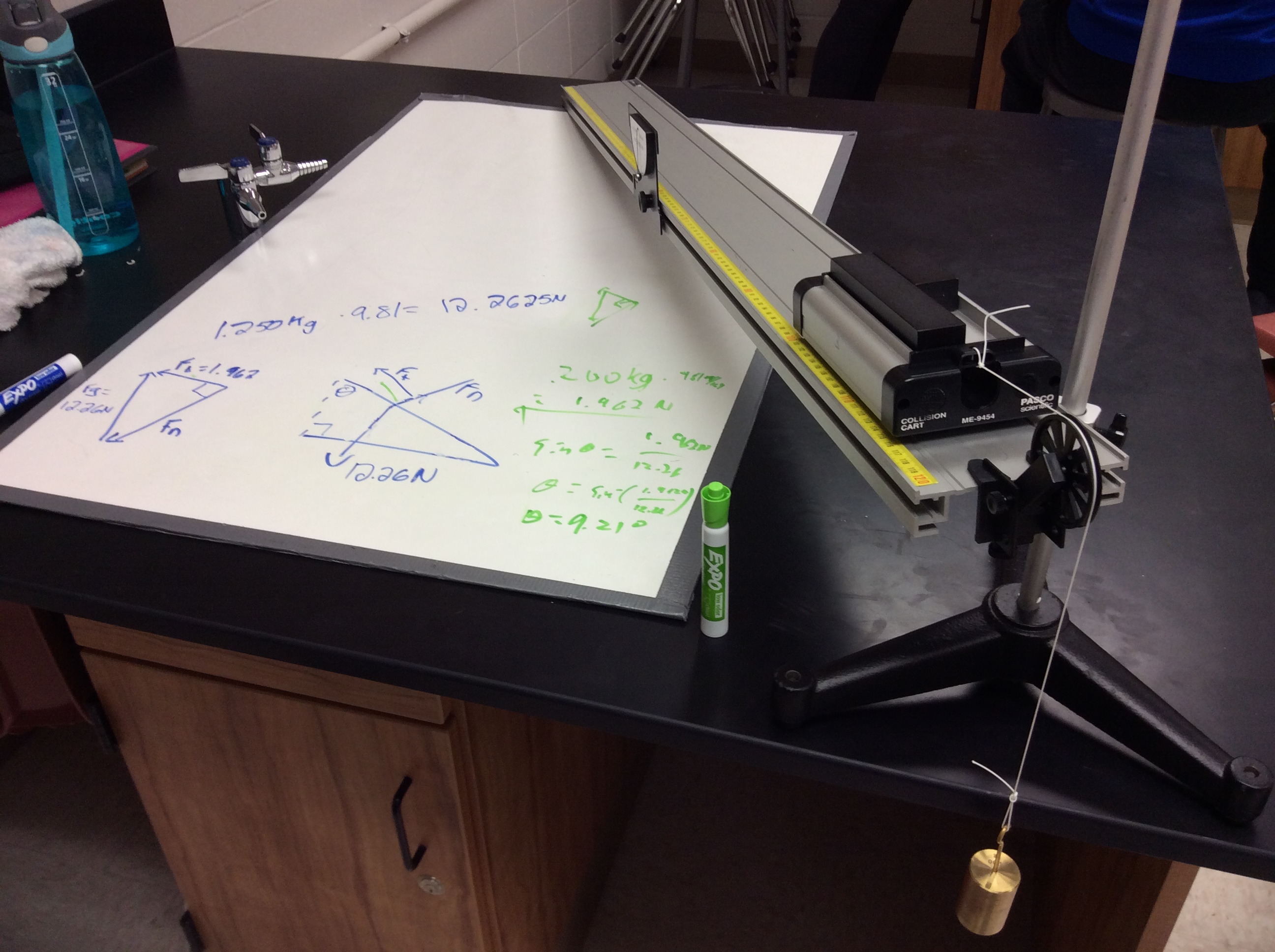
Each lab group got a cart mass and a hanging mass, then had to figure out what angle they should set their ramp to in order to balance the forces. I wasn’t sure how into it students would get since the goal was, pretty literally, to make nothing happen, but there were still cheers when they let go and everything stayed put. My students are now convinced they can do these problems in a way that just getting the right answer doesn’t accomplish. In one period, several groups finished quickly, so I had those groups keep the same angle and cart mass, but add to their hanging mass and calculate how much time it should take for the cart to make it up the ramp. I didn’t set up the photogates, since I wasn’t sure how many groups would get through this part, but students were able to get within 0.2 seconds of their prediction using a stopwatch.

practical 2

Day 40: Electromagnets & Mistakes Game

Physical Science: Electromagnets

Students built electromagnets and designed experiments to test the effect changing the number of coils has on the strength of the magnet. I also pulled out my homemade speaker for students to try out.

Physics: Mistakes Game

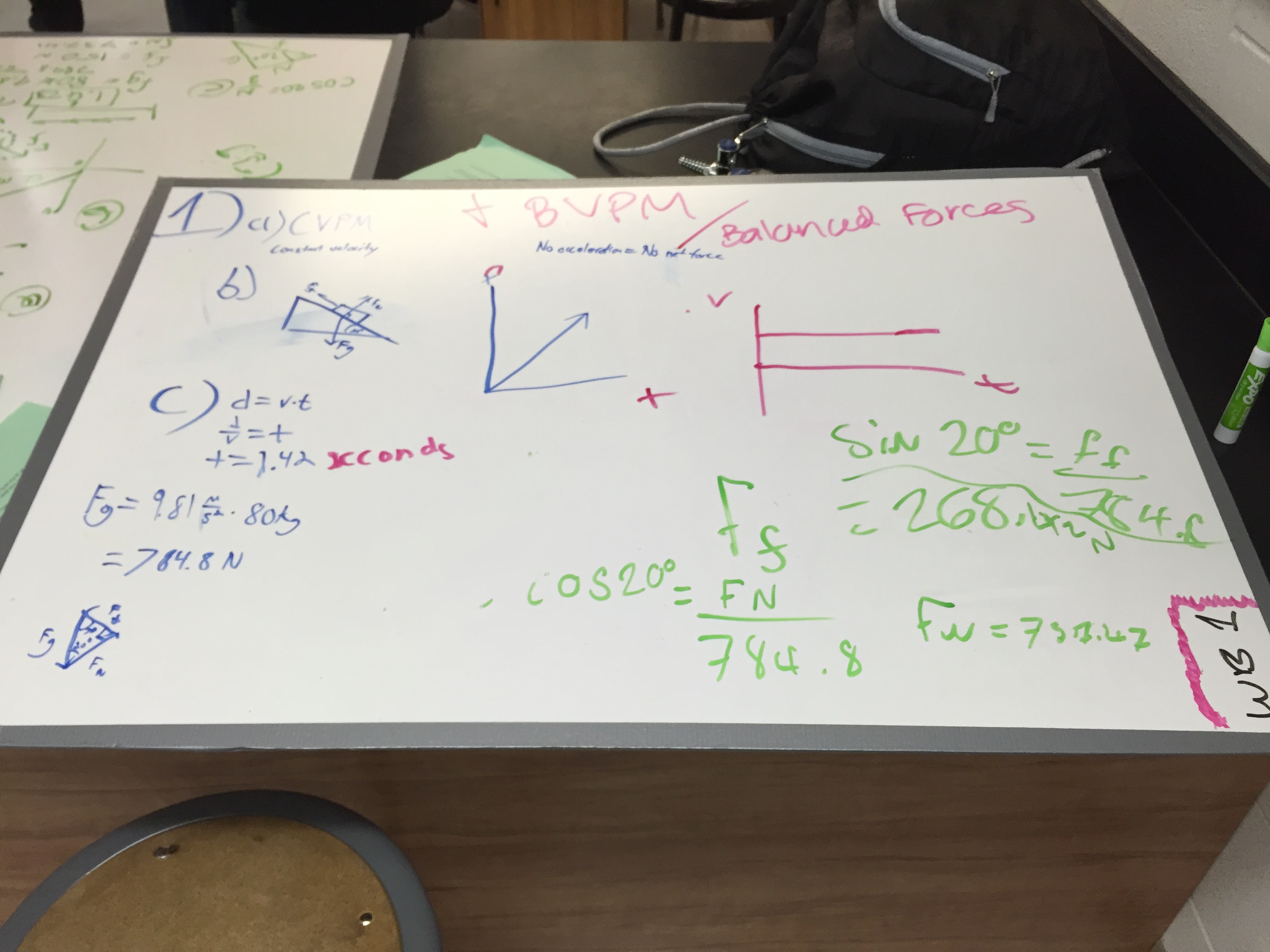
Students played the mistakes game with the diagrams for solving force problems. Once my students have their diagrams, they can get through the problems pretty easily, so I wanted them to focus on drawing and interpreting those diagrams.

IMG_1342

Day 39: Magnetic Fields & 2D Forces

Physical Science: Magnetic Fields

My students have gotten really good at looking at new content in terms of energy, so I put together an assignment to compare topographic maps as a measure of gravitational potential to magnetic field lines as a measure of magnetic potential. The assignment needs some revisions, but I like the basic premise and my students definitely understand magnetic field lines much better than my students have in the past.

Physics: 2D Forces

A lot of students were on a field trip yesterday, so we used whiteboard speed dating to go over yesterday’s problems. Based on what I saw and heard, students have these problems down better than they give themselves credit for. I’m thinking about how I can adjust my plans tomorrow to help students feel more confident with the material without resorting to me doing an example at the board.

IMG_1340 (1)

Day 38: Magnetic Fields & Vector Addition

Physical Science: Magnetic Fields

To introduce magnetic fields, I had students play around with a bar magnet, some filings, and a compass. Several groups were really fascinated by the compass, and there was a lot of discussion about why the north indicator on the compass go would to the south pole of the magnet. I also decided we need to revisit forces tomorrow. A group noticed that the magnet made some of the filings stand straight up and was trying to figure out why, which was great! The problem is the best why they could come up with is “magnets break gravity.” I’m pretty sure students just don’t have the idea of balanced forces well enough to come up with the idea that the magnet must exert a force to balance gravity.

IMG_1339

“Magnets break gravity”

Physics: Vector Addition

After yesterday’s practice drawing vector addition diagrams, students combined the diagrams with calculations to solve more traditional word problems. I gave them a few goal-less problems, which simply describe a situation without asking for anything in particular. My students don’t have a lot of experience with these (at least not yet!), but I like the way they encourage students to play with models to see what they can come up with, rather than getting fixated on the right answer. They really reinforce physics as a creative, sometimes playful, process.

Day 37: Kirchoff’s Rules & Vector Addition Diagrams

Physical Science: Kirchoff’s Rules

With my 9th graders, I’ve always done series and parallel circuits pretty superficially where they try a few things in the lab, then memorize a couple of key behaviors. This year, my students have been thinking about the energy in circuits in some interesting ways that seem useful for getting at Kirchoff’s Rules, so I decided to give it a go. Today, students used PhET’s circuit kit to compare the voltage and current in different parts of each type of circuit. Students were able to articulate very nicely their own versions of Kirchoff’s Rules based on the energy in the circuit.

IMG_1337

Physics: Vector Addition Diagrams

Today, students took their first look at forces in 2D and drew some vector addition diagrams to scale. The problems, lifted from Kelly O’Shea, were all on a grid to keep things straightforward. This gave students the opportunity to practice drawing vector addition diagrams and start thinking about what they mean without getting bogged down in the math. Tomorrow, we’ll start crunching numbers with the diagrams.

Day 36: Electric Power & Unbalanced Force Problems

Physical Science: Electric Power

Students plugged several different light bulbs into Kill A Watt meters to find the power used by each, then calculated how much you’d pay for the electricity to use each one for a year. This is the first year I’ve done energy before electricity with my 9th graders, so I decided to have them sketch energy bar charts for each light bulb, using thermal energy and light as the energy types. For the first time, my students had an easy time articulating in a meaningful way why the low wattage LED was just as bright as the high wattage incandescent.

IMG_1334

Physics: Unbalanced Force Problems

Students worked on some problems that combined Newton’s 2nd Law with constant acceleration calculations. I was a little nervous, because they just got Fnet = ma yesterday and many are still mastering net force, so I wasn’t sure how they’d do with using multiple models on a single problem. However, a lot of pieces seemed to really click today. By the end of the hour, several students who’ve been struggling with constant acceleration declared today’s problems easy, including the portions where they had to do constant acceleration calculations.