Day 140: Types of Mass & Seismometers

AP Physics: Types of Mass
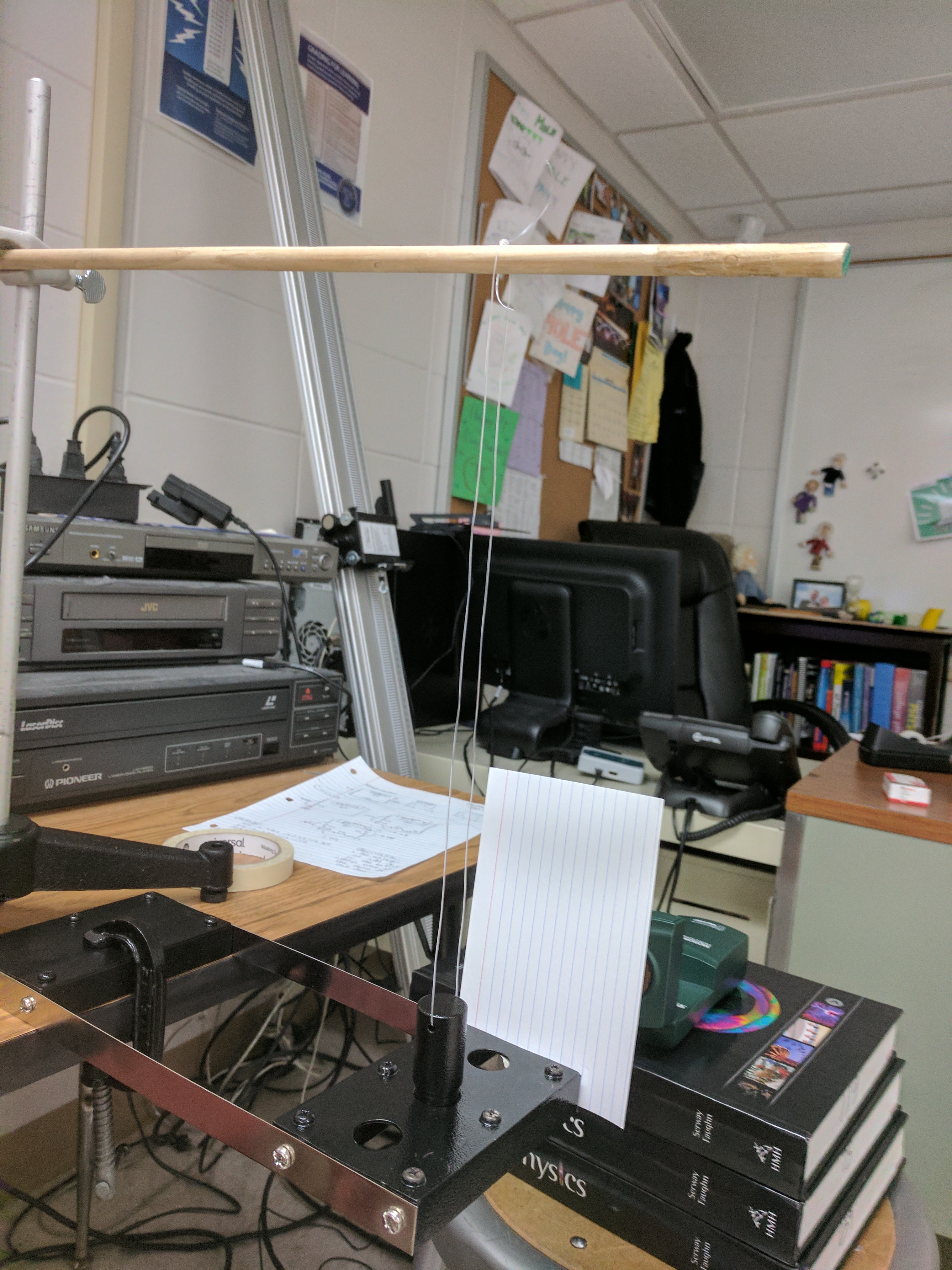
I wanted to revisit gravitational and inertial mass, so I got out the inertial balance and asked which type of mass a spring’s vibration should depend on. Finally, we used the motion detector to find the period with and without a string supporting the added mass and got beautiful results.

Afterward, students worked on some free-response problems in their groups. Tomorrow, they will get limited time with the scoring guides, then present their assigned problem.

Earth Science: Seismometers
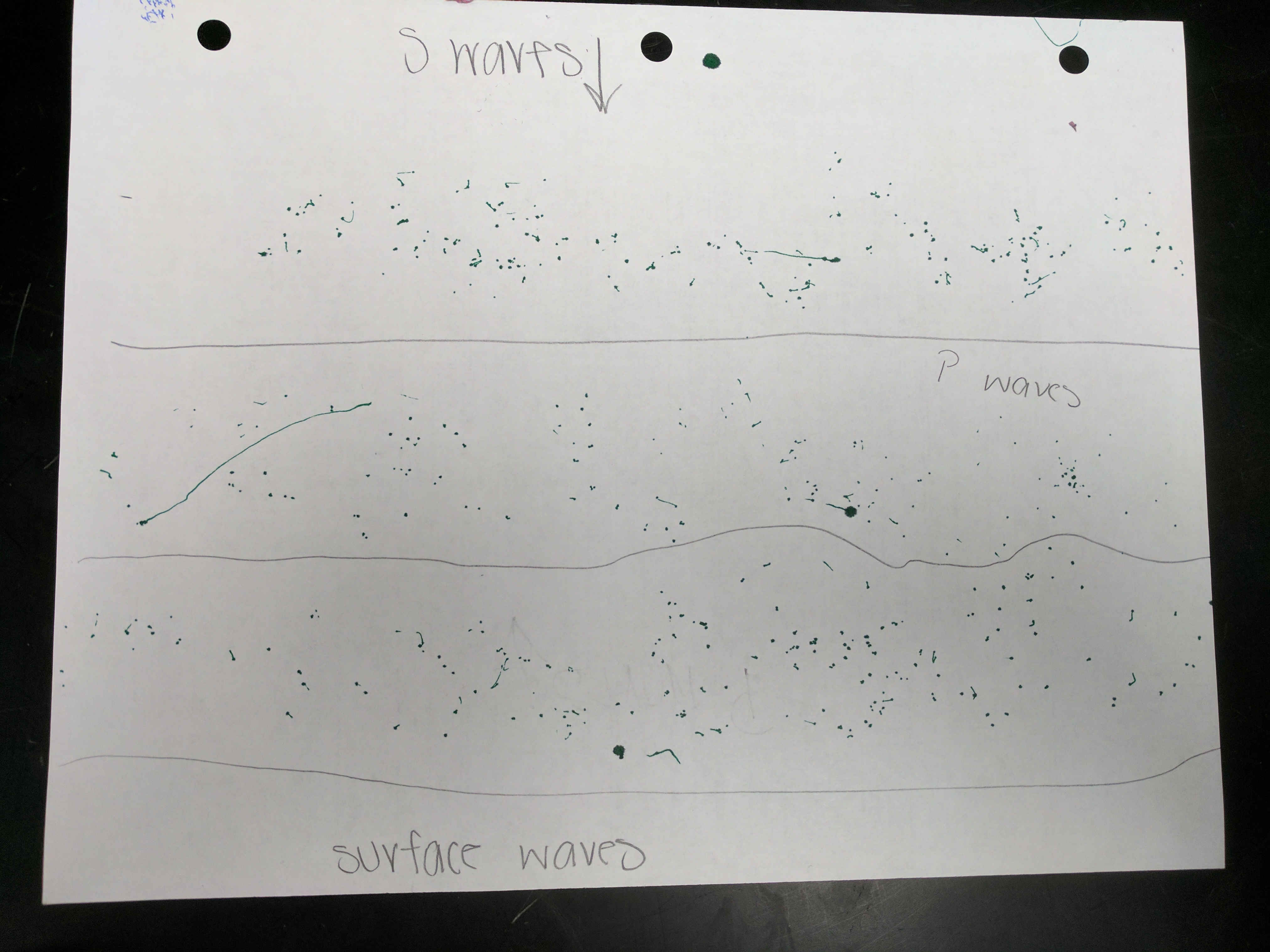
Students built a very basic seismometer, then experimented with recording different types of earthquake waves. The results varied a lot, but it did lead to some good discussion on the limitations of the earliest seismometers.


Day 139: Free Response & Earthquakes

AP Physics: Free Response

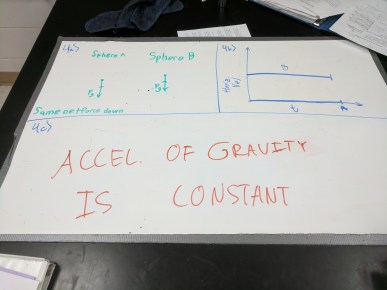
Students whiteboarded a couple of free-response problems off the 2015 exam, then used the released scoring guides to see how they did. All of it happened in small groups, so some groups dug more carefully into their errors than others. Tomorrow, I was planning to do some more free response, and I think I will build in some presentations to the whole class to add a layer of accountability.

wb (4)

Earth Science: Earthquakes

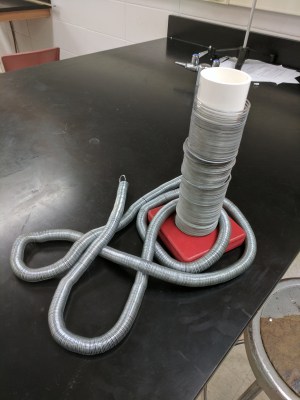
We started establishing some ideas about earthquakes. I pulled out the slinky and snakey spring to model the different types of waves. It was all pretty teacher-directed, so I’d love to come up with a way for students to build more of those ideas on their own.

slinky.jpg

Day 138: Free Response & Review

AP Physics: Free Response

I made today an optional in-class retake day. Since some students wanted the full hour to do multiple learning targets, I decided to skip doing some multiple choice on Plickers and gave students some free response problems from the 2015 AP exam. On Monday, we’ll take a look at the scoring guides.

Earth Science: Review

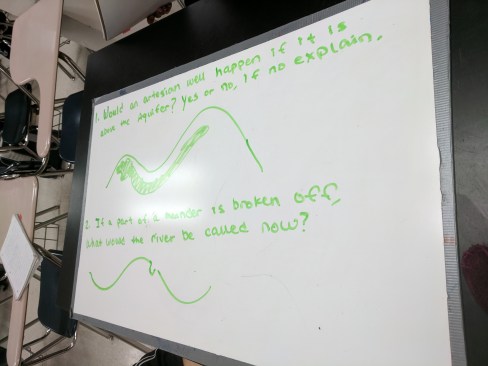
Students generated some questions for each learning target on whiteboards, then traded with other groups to try and answer the questions they came up with. I’ve been doing this a lot in my Earth Science classes, and its fun to see the improvement this year, even with students I only have for one tri. A lot of teachers in my building are working getting students to ask high-level questions as part of using AVID instructional strategies, and its neat to see that paying off a bit.

IMG_20170421_083753


Day 137: Universal Gravitation & Glacier Video

After no classes yesterday due to state testing, we got back in the swing of things today.

AP Physics: Universal Gravitation

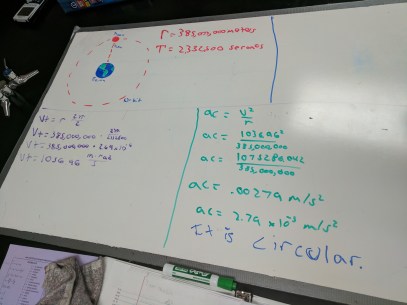
Today continued quick and dirty coverage of some topics on the AP exam that we haven’t really addressed yet. Today, I asked students whether uniform circular motion or free fall is a better description of the Moon’s motion, and students went very quickly to wanting to find the acceleration, so I gave them the Moon’s period and orbital radius, and got out of the way. This served as a nice refresher on circular motion. Once students got a tiny acceleration, we reasoned that a 1/r2 relationship might make sense for gravity and checked that against gravity at Earth’s surface and get to the Law of Universal Gravitation.  Then, since most of my students saw Coulomb’s Law in chemistry, we used the parallels with gravity to make sense of that formula.
wb (3)

Earth Science: Glacier Video

With conferences tonight, I went ahead and showed the video in the curriculum for today. The video was about the data sources glaciers can provide, which got me thinking about how to have students explore those data sources in the lab. For glacier movement, I’m wondering of something like gak could be used to simulate a glacier, maybe with food coloring drops or toothpick flags to track specific points. For the ice cores, I was thinking it would be really cool to find some scale photos of actual ice cores, especially if I could find a way to have students compare the core data to weather data for that year. Of course I thought of all this while watching the video, rather than last night while I stared at the curriculum materials. Oh well.
Day 136: Electrostatics & Permeability

AP Physics: Electrostatics

I missed class for a field trip today, but the rest of this week is all about squeezing in superficial coverage of the last few topics. Today, students worked some problems I wrote to refresh their memory on some electrostatics from chemistry, then help them reason their way to what they need for physics. There are no classes tomorrow, so I’ll find out Thursday how it went.

Earth Science: Permeability

Students whiteboarded yesterday’s lab results, then we did a quick demo on permeability. Then students used what they’ve learned to design an aquifer.

Day 135: Closed Pipe Waves & Porosity

AP Physics: Closed Pipe Waves

I started class by showing students a few examples of sound waves in open pipes to establish that standing sound waves follow the same rules we saw last week for a standing wave on a string fixed at both ends. Then, I had students use our speed of sound materials to find the pattern for sound waves in a closed pipe. To keep the follow-up discussion short, I went back to standing at the front of the room and asking students to share their general results. In one class, students spontaneously started answering my questions by pointing out a lab partner who’d said something interesting and asking them to share, which lead to some students who don’t always speak up in whole-class settings getting their voices heard, which was pretty cool.

standing wave (1).jpg

Earth Science: Porosity

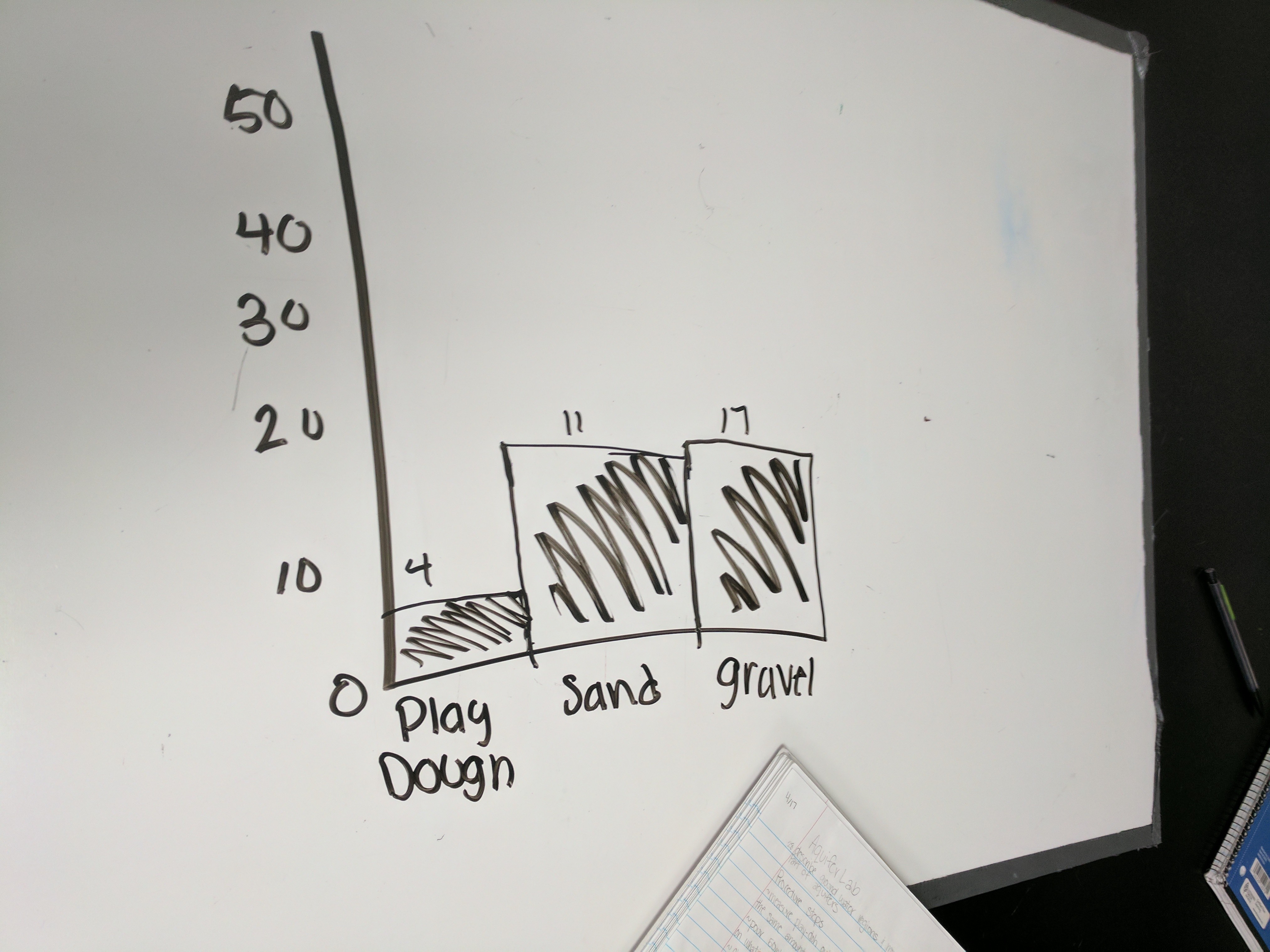
Students designed their own experiments to compare the porosity of sand, gravel, and Play-Doh. Students needed a little more scaffolding on how to measure the amount of water absorbed, but they ended up with nice results overall. Tomorrow, we’ll spend some time connecting these results back to the structure of aquifers.

aquifer

Day 134: Board Meeting & Artesian Wells

AP Physics: Board Meeting

Students whiteboarded the results of yesterday’s lab. Several students had already seen λ=c/f in AP Chemistry, and I was pleased to hear them discussing how their results fit with that formula.

wave wb

Earth Science: Artesian Wells

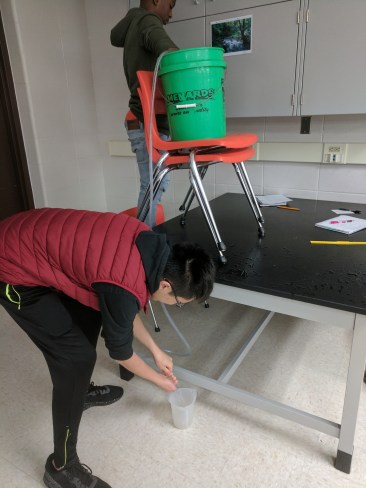
Students simulated an artesian well to find how the change in elevation affects the flow rate. I wish I’d spent more time on the pre-lab discussion to help set up what students should measure and why. I really liked the connections to energy it was possible to make; a few of the students I had last tri sketched bar charts and were able to generate some very nice explanations for why the big elevation change produced a high flow rate.

well

Day 133: Standing Waves & Glaciers

AP Physics: Standing Waves

Today started the standing waves unit. I gave a quick overview of standing waves using a simple sim in Desmos, then we got out the wave generator to collect data for a relationship between wavelength and frequency. To save time, we collected data as a class, but students felt very little connection to the results. Last year, I had students use a Direct Measurement Video to get the same kind of data, then used the wave generator to test some ideas, and I think I’d like to go back to that approach next year.

standing wave.jpg

Earth Science: Glaciers

Students used the textbook to dig into how glacial features are formed. While I wish I’d been able to come up with something more tangible, there were some good conversations about how to effectively use the textbook.

Day 132: Problems & Glaciers

AP Physics: Problems

Students worked on some oscillating particle problems. Students had some really good discussion about a cart on an angled ramp oscillating on a spring; a lot of groups really dug into what should happen when the angle of the ramp changes. At the end of the hour, we tested their predictions. I wasn’t paying much attention to when I started data collection, but still got a set of graphs my 2nd hour considered applause-worthy.


Earth Science: Glaciers

I gave students a brief overview of some glacial features, then had them use some sand in the stream tables to make a recreational area with a variety of glacial features. Students liked the activity, but they did not connect the vocabulary to how the features form or how they are related. I think I’d prefer to do this at the end of a glacier unit, where students would have the background to tie the features they are using together. At this point in the unit, I’d rather focus on how these features form to give some basis for naming them.

glacier

Day 131: Pendulums & Springs & Dam Removal

AP Physics: Pendulums & Springs

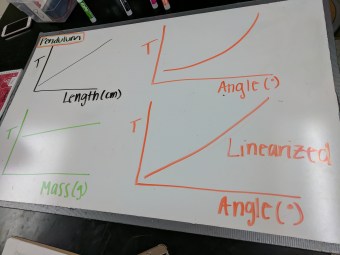
Students wrapped up their labs on what affects the period of  springs and pendulums, then whiteboarded the results. I could tell I was rushing the lab more than I have in the past and I ended up taking over a lot of the post-lab discussion and got a bit hand-wavy. As I rush through the last few topics, I haven’t been doing as much with uncertainty, and this is a lab where it would have really helped. I also skipped having students predict the period of a 5 m long pendulum, which made it much tougher to settle on which relationship works best for the length of a pendulum. Going into waves, I need to think about how I will balance the need to keep moving with giving students time to truly engage with the content.

pendwb

Earth Science: Dam Removal

Students continued work on their dam removal project. Today, they looked at a gradual release, which we modeled by removing one lay of foam at a time. I was very pleased at some of the detailed observations students made and how engaged they were in trying to think about why their observations happened. I’d love to re-work this unit to give students a better grasp of sediment transport in rivers before looking at dams specifically to give them more tools for thinking about the project.

dam