Day 147: Joly Photometer & Energy in Reactions

Physics: Joly Photometer

With over half of my students gone for another AP test today, I ended up giving them the hour to finish yesterday’s assignment with the Joly Photometer Direct Measurement Video. I’ll have a lot of students gone tomorrow for AP calc, so I need to figure out how I want to handle discussing the results of this and Monday’s lab.

Chemistry: Energy in Reactions

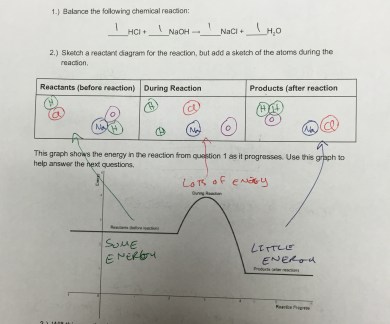
We talked about of yesterday’s lab, then took a look at energy changes in chemical reactions to start thinking about why some of the things we tried change the reaction rate.

IMG_1854

Day 146: Joly Photometer & Reaction Rates

Physics: Joly Photometer

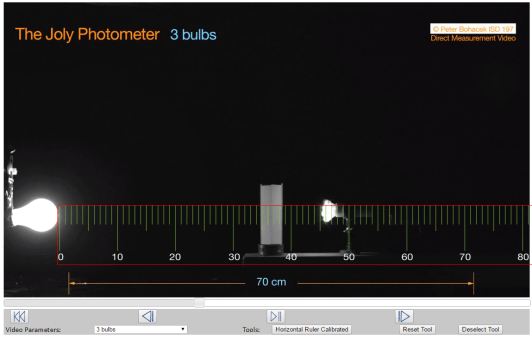
Students used the Joly Photometer Direct Measurement Video to find a relationship between light intensity and distance from a source. I could tell a lot of my students had an AP test yesterday; I spent a lot more time than usual discussing with lab groups what variables they should graph, how they should collect data on those variables, and how to interpret and linearize the graph. I think their struggles had more to do with how mentally fried the AP chem students were than anything else.

joly photometer.PNG

Chemistry: Reaction Rates

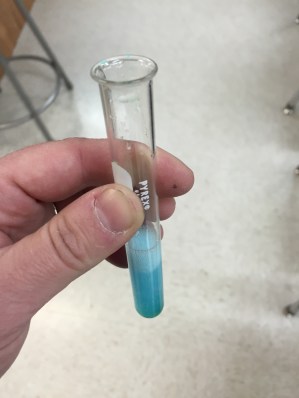
Students timed a reaction between copper chloride and hydrogen peroxide under different conditions to determine what impacts the reaction rate.

IMG_1845

Day 145: Light Intensity & Exothermic vs. Endothermic

Physics: Light Intensity

About half of my students were gone for an AP exam today. The students who were here used a flashlight to find a relationship between the area light covers and the distance to a light source.IMG_1844

Chemistry: Exothermic vs. Endothermic Reactions

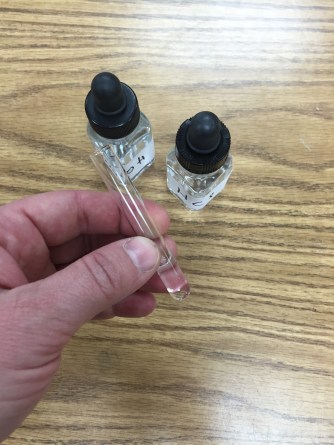
I introduced students to exothermic and endothermic reactions and we used a PhET simulation to look at the role of energy. Then, students did a short lab where they made observations of these two reactions.

IMG_1840

Day 144: Ray Diagrams & Activity Series

Physics: Ray Diagrams

Students worked through some pinhole ray diagrams.

Chemistry: Activity Series

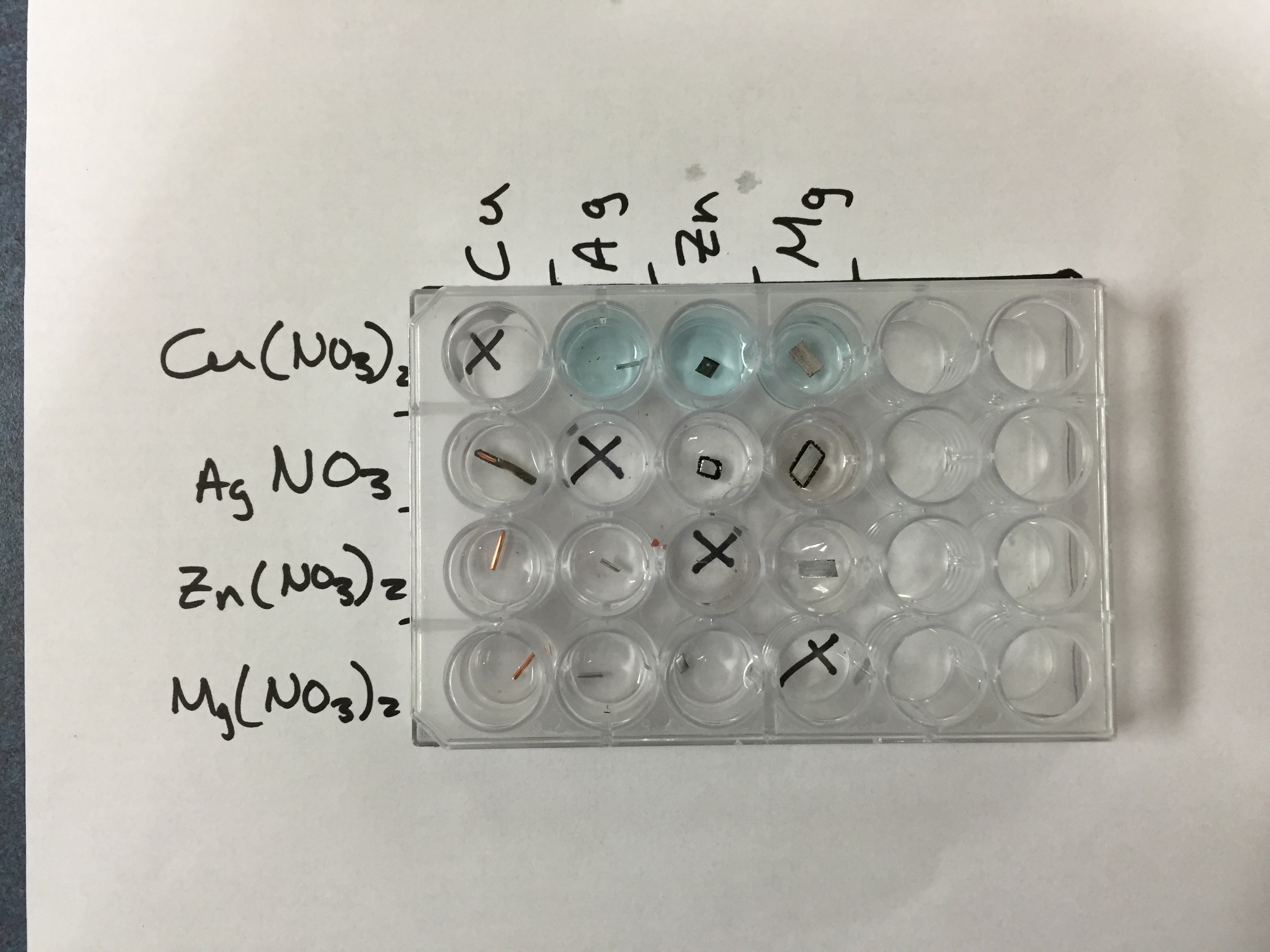
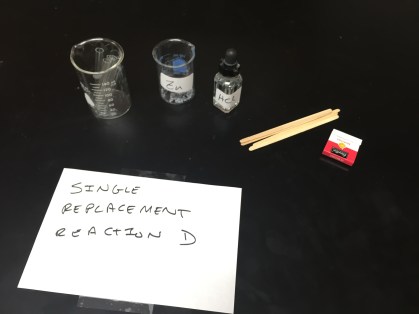
Students did a simple lab to produce an activity series for single replacement reactions. As we discussed the results, I realized students were not making the connection to what was replacing what. Next time, I think I’ll have students write out reaction equations  for at least some of these and plan some questions to solidify the connections to single replacement reactions.

Day 143: Pinhole Cameras & Reaction Types

Physics: Pinhole Cameras

Students built simple pinhole cameras, then experimented with how to change the image that appeared and drew some ray diagrams to explain their observations. A lot of students were really thinking deeply about what the ray diagrams mean and how to interpret them to understand the image produced, which was great to see.

Chemistry: Reaction Types

Students did a lab where they observed each of the five reaction types in action. Several groups were really thinking through how their observations connected back to the reaction equation, which lead to some great conversations.

IMG_1829

Day 142: Whiteboarding

Physics: Ray Diagram Whiteboarding

Students whiteboarded their solutions to the shadow and color worksheets from earlier this week. Students had a good grasp of the ray diagrams and there was some good discussion about the color stuff. We used some overhead projectors with stained glass panes to test a few of the color questions.


Chemistry: Reaction Types Whiteboarding

Students whiteboarded their solutions to the problems on yesterday’s lab. Compared to last tri, students had a much better grasp of the different types, especially single replacement and double replacement. I think the Legos helped reinforced the physical meaning of the reaction equations.

Day 141: Ray Diagrams & Lego Reaction Types

Today was the second day in a row I was gone for a field trip.

Physics: Ray Diagrams

Students practiced drawing and interpreting ray diagrams using a worksheet from the Modeling Instruction physics curriculum. Based on what I saw of their work from yesterday, I’ll need to do some work with them tomorrow on details like including arrow heads.

Chemistry: Lego Reaction Types

Students used Legos to represent different ions and worked through examples of each reaction type. I’m hoping that manipulating the Legos helped make what’s going on in some of those reactions more concrete. I’ll find out for sure tomorrow.

Day 140: Shadows & Reaction Types

Today and tomorrow, I’m chaperoning field trips so my students are left with subs.

Physics: Shadows

Students played with how to change the shadow produced by an object and light source, then drew ray diagrams to explain their observations.

Chemistry: Reaction Types Reading

Students spent some time with the textbook to start building vocabulary for the different classifications of chemical reactions.

Day 124: Spring Problems & Mistakes Game

Physics: Spring Problems

Students worked through a Modeling Instruction worksheet using forces and energy to analyze the motion of a spring. The worksheet has students define h = 0 in a way that gives a negative gravitational potential energy at one extreme of the spring’s oscillation, and my students struggled with what a negative potential means. Both for cases like this and for negative electric potential differences, I need to adjust my energy unit to include some scenarios with negative energies.

Chemistry: Mistakes Game

Students whiteboarded yesterday’s problems balancing chemical equations, including intentional mistakes to help spur discussion. A lot of students were gone yesterday for a blood drive, and this seemed to help them get caught up. Tomorrow, they’ll be taking a quiz on balancing, so I took some time during class to do a practice problem under quiz-like conditions. Last tri, the chemistry students who did poorly in the class tended to have trouble self-assessing and would equate having an answer with understanding the problem, even when the answer was just copied from a classmate. I have some students who look like they could go down the same path this tri and, after the practice quiz, they were interested in how to improve their understanding before tomorrow’s quiz. While this is a step in the right direction, my real challenge is to help these students self-assess much earlier in hopes of helping them shift their habits in my class.

Day 123: Board Meeting & Balancing Equations

Physics: Period of a Spring Board Meeting

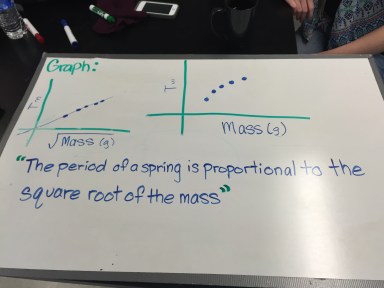
Students whiteboarded their results to yesterday’s lab. Once we get situated, I usually give students a minute or two to talk with their lab group. I watched one group use this time to furiously tap at a tablet, then edit their board to reflect a square root, rather than linear, relationship between period and mass. During the discussion, I asked them to explain the change they made and they shared that, prior to seeing they other whiteboards, they stopped after trying a linear fit because it had a really nice correlation coefficient. When they saw other groups got an intercept much closer to zero using a square root fit, they quickly tried the same fit on their data, and saw they got a better correlation and an intercept of nearly zero. We’re talking a lot in my building about how to use technology in the classroom, and this moment exemplifies how I want students to use technology. This group had to decide whether their linear fit or their classmate’s square root fit was more convincing, and Desmos made it possible to quickly and easily test the competing ideas and get the evidence they needed to be convinced.
IMG_1765

Chemistry: Balancing Equations

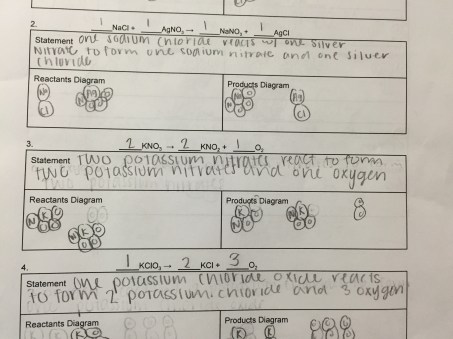
Students combined the multiple representations we worked on before break with what they figured out in yesterday’s sim to practice balancing chemical equations. I remain very impressed with how easy the reaction diagrams make this process for students.
IMG_1764