Day 143: Plickers & Plates

AP Physics: Plickers

Most of my students will be taking the AP Chemistry exam on Monday, so this was our last day all together before the AP Physics exam. We did one last round of Plickers, using some problems many students got wrong on the practice exam they did outside of class.


Earth Science: Tectonic Plates

My students don’t know it yet, but we started on tectonic plates today. They plotted the location of some earthquakes, color-coding them by depth, then they started looking for patterns. On Monday, we’ll talk about that it’s all means.

Day 142: Models & Earthquake Scales

AP Physics: What Models Apply?

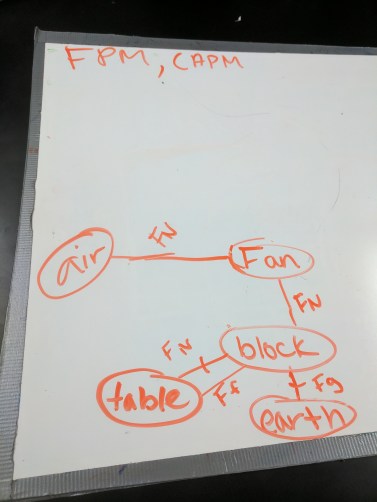
As we’ve been working free-response problems this week, the toughest part for most students was identifying what tools would be useful (almost like that’s actually a very challenging skill). I picked some free-response problems from practice tests and had students identify some models and representations they thought would be useful. Then, we discussed the justifications for the items students picked. 5 days to go!

models

Earth Science: Earthquake Rating Scales

Students read a bit about the three most common rating scales for earthquakes. Afterward, they used witness descriptions to map the Mercalli scale ratings for an imaginary earthquake. I added a question asking students to write a CER for the location of the epicenter, and was pleased with the discussion it sparked and the ways it helped students take the more abstract rating back to something very concrete.

mercalli

Day 141: Center of Mass & Epicenters

AP Physics: Center of Mass

I started class a center of mass demo that I think I first saw from Dan Burns. I balanced a dynamics track on a block and placed a couple of carts in the center, then asked students to predict what should happen when the carts launched. Afterward, students prepared whiteboards with their solutions for the free-response problems we’ve been working on this week.


Earth Science: Epicenter

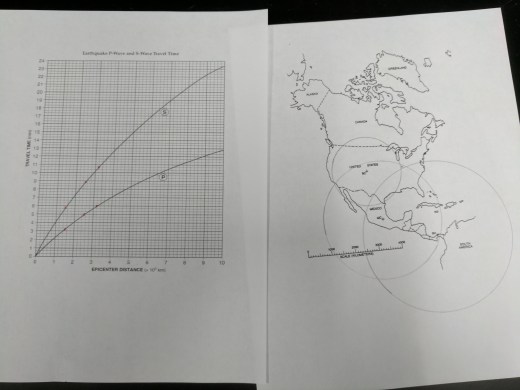
Students used some simulated seismographs and a travel time curve to locate the epicenter of an earthquake. A lot of students struggled with reading the travel time curve, so I need to do a better job of scaffolding it next time. The seismographs had time marked with the number of minutes after an arbitrary zero, which made it difficult for students to separate the arrival time of the waves from the actual travel time; next time, it would be better to use seismographs with actual timestamps. I also would like to have students spend some time interpreting the travel time curve before trying to combine it with seismograph data.

epicenter

Day 140: Types of Mass & Seismometers

AP Physics: Types of Mass
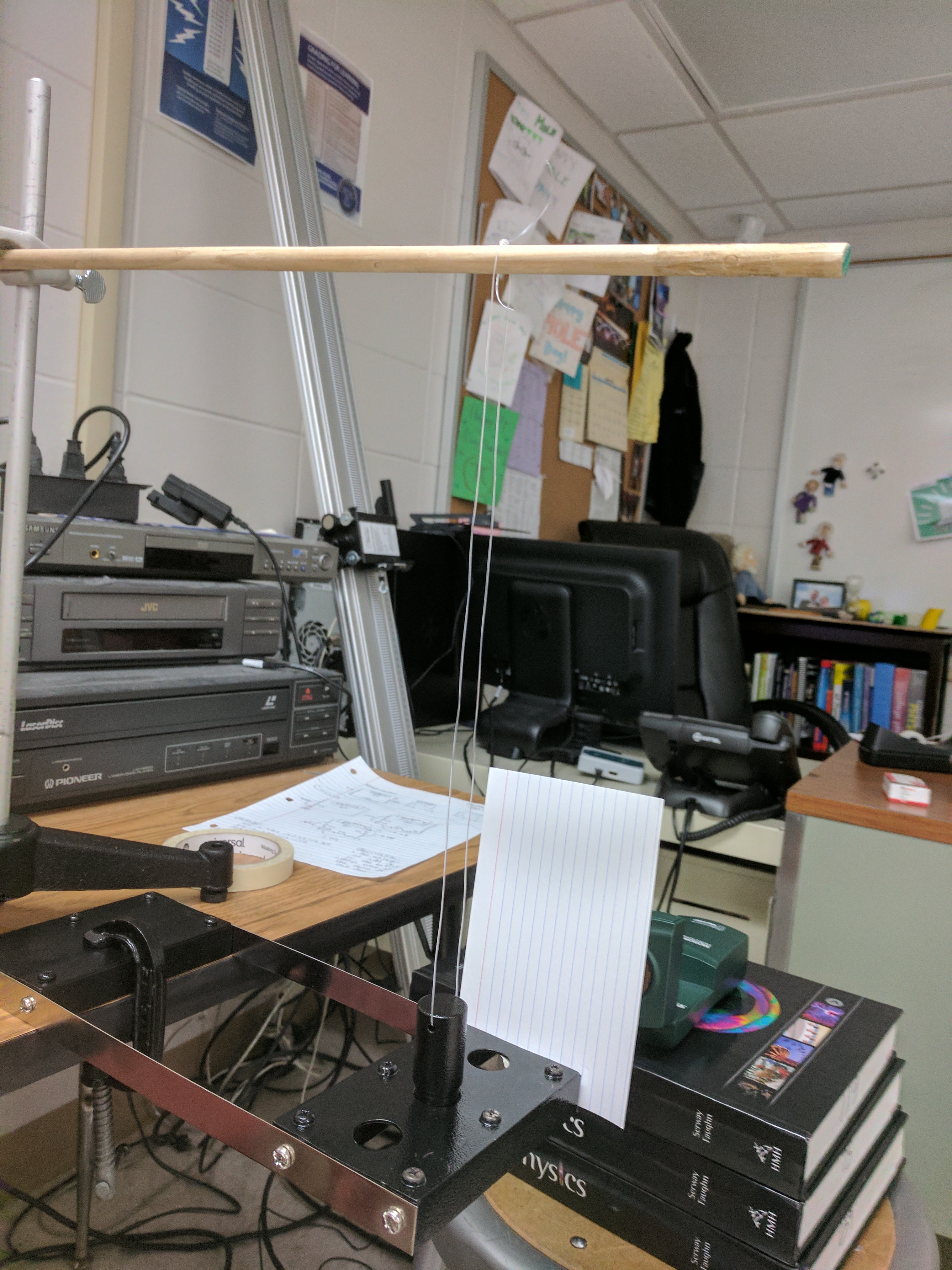
I wanted to revisit gravitational and inertial mass, so I got out the inertial balance and asked which type of mass a spring’s vibration should depend on. Finally, we used the motion detector to find the period with and without a string supporting the added mass and got beautiful results.

Afterward, students worked on some free-response problems in their groups. Tomorrow, they will get limited time with the scoring guides, then present their assigned problem.

Earth Science: Seismometers
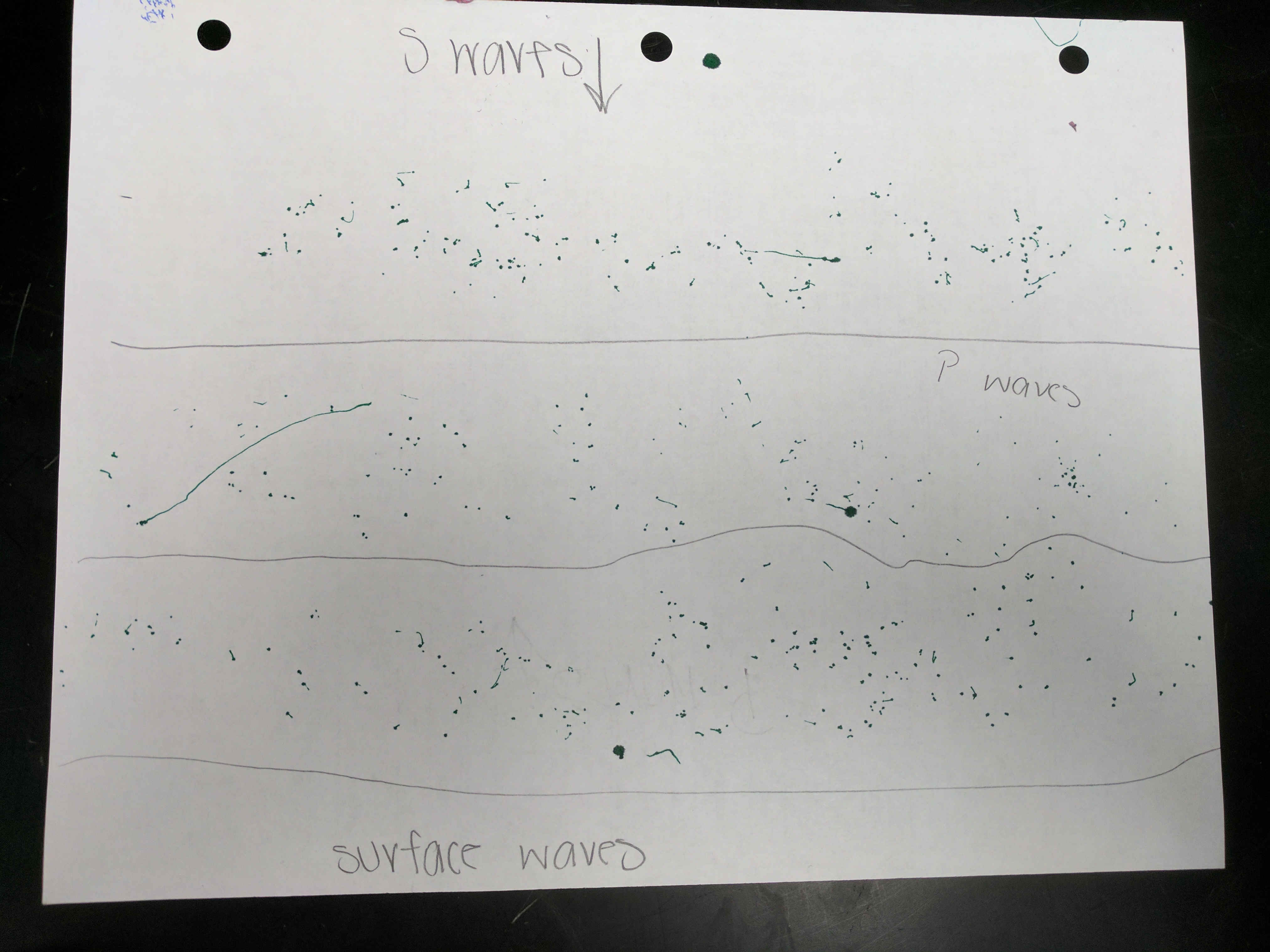
Students built a very basic seismometer, then experimented with recording different types of earthquake waves. The results varied a lot, but it did lead to some good discussion on the limitations of the earliest seismometers.


Day 139: Free Response & Earthquakes

AP Physics: Free Response

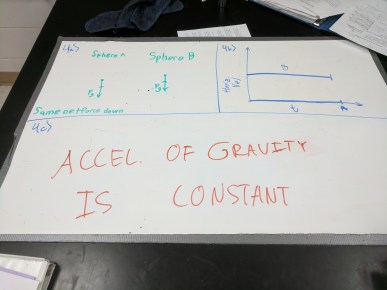
Students whiteboarded a couple of free-response problems off the 2015 exam, then used the released scoring guides to see how they did. All of it happened in small groups, so some groups dug more carefully into their errors than others. Tomorrow, I was planning to do some more free response, and I think I will build in some presentations to the whole class to add a layer of accountability.

wb (4)

Earth Science: Earthquakes

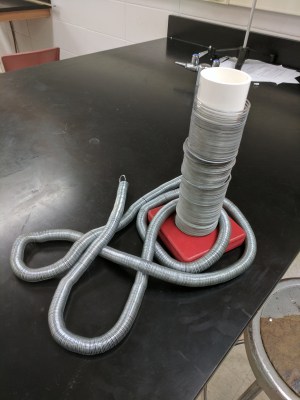
We started establishing some ideas about earthquakes. I pulled out the slinky and snakey spring to model the different types of waves. It was all pretty teacher-directed, so I’d love to come up with a way for students to build more of those ideas on their own.

slinky.jpg

Day 138: Free Response & Review

AP Physics: Free Response

I made today an optional in-class retake day. Since some students wanted the full hour to do multiple learning targets, I decided to skip doing some multiple choice on Plickers and gave students some free response problems from the 2015 AP exam. On Monday, we’ll take a look at the scoring guides.

Earth Science: Review

Students generated some questions for each learning target on whiteboards, then traded with other groups to try and answer the questions they came up with. I’ve been doing this a lot in my Earth Science classes, and its fun to see the improvement this year, even with students I only have for one tri. A lot of teachers in my building are working getting students to ask high-level questions as part of using AVID instructional strategies, and its neat to see that paying off a bit.

IMG_20170421_083753


Day 137: Universal Gravitation & Glacier Video

After no classes yesterday due to state testing, we got back in the swing of things today.

AP Physics: Universal Gravitation

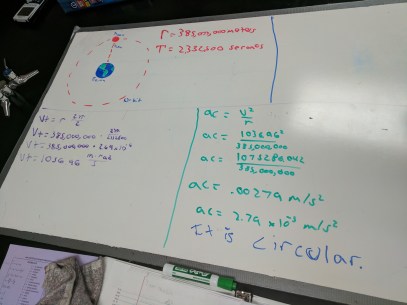
Today continued quick and dirty coverage of some topics on the AP exam that we haven’t really addressed yet. Today, I asked students whether uniform circular motion or free fall is a better description of the Moon’s motion, and students went very quickly to wanting to find the acceleration, so I gave them the Moon’s period and orbital radius, and got out of the way. This served as a nice refresher on circular motion. Once students got a tiny acceleration, we reasoned that a 1/r2 relationship might make sense for gravity and checked that against gravity at Earth’s surface and get to the Law of Universal Gravitation.  Then, since most of my students saw Coulomb’s Law in chemistry, we used the parallels with gravity to make sense of that formula.
wb (3)

Earth Science: Glacier Video

With conferences tonight, I went ahead and showed the video in the curriculum for today. The video was about the data sources glaciers can provide, which got me thinking about how to have students explore those data sources in the lab. For glacier movement, I’m wondering of something like gak could be used to simulate a glacier, maybe with food coloring drops or toothpick flags to track specific points. For the ice cores, I was thinking it would be really cool to find some scale photos of actual ice cores, especially if I could find a way to have students compare the core data to weather data for that year. Of course I thought of all this while watching the video, rather than last night while I stared at the curriculum materials. Oh well.
Day 136: Electrostatics & Permeability

AP Physics: Electrostatics

I missed class for a field trip today, but the rest of this week is all about squeezing in superficial coverage of the last few topics. Today, students worked some problems I wrote to refresh their memory on some electrostatics from chemistry, then help them reason their way to what they need for physics. There are no classes tomorrow, so I’ll find out Thursday how it went.

Earth Science: Permeability

Students whiteboarded yesterday’s lab results, then we did a quick demo on permeability. Then students used what they’ve learned to design an aquifer.

Day 135: Closed Pipe Waves & Porosity

AP Physics: Closed Pipe Waves

I started class by showing students a few examples of sound waves in open pipes to establish that standing sound waves follow the same rules we saw last week for a standing wave on a string fixed at both ends. Then, I had students use our speed of sound materials to find the pattern for sound waves in a closed pipe. To keep the follow-up discussion short, I went back to standing at the front of the room and asking students to share their general results. In one class, students spontaneously started answering my questions by pointing out a lab partner who’d said something interesting and asking them to share, which lead to some students who don’t always speak up in whole-class settings getting their voices heard, which was pretty cool.

standing wave (1).jpg

Earth Science: Porosity

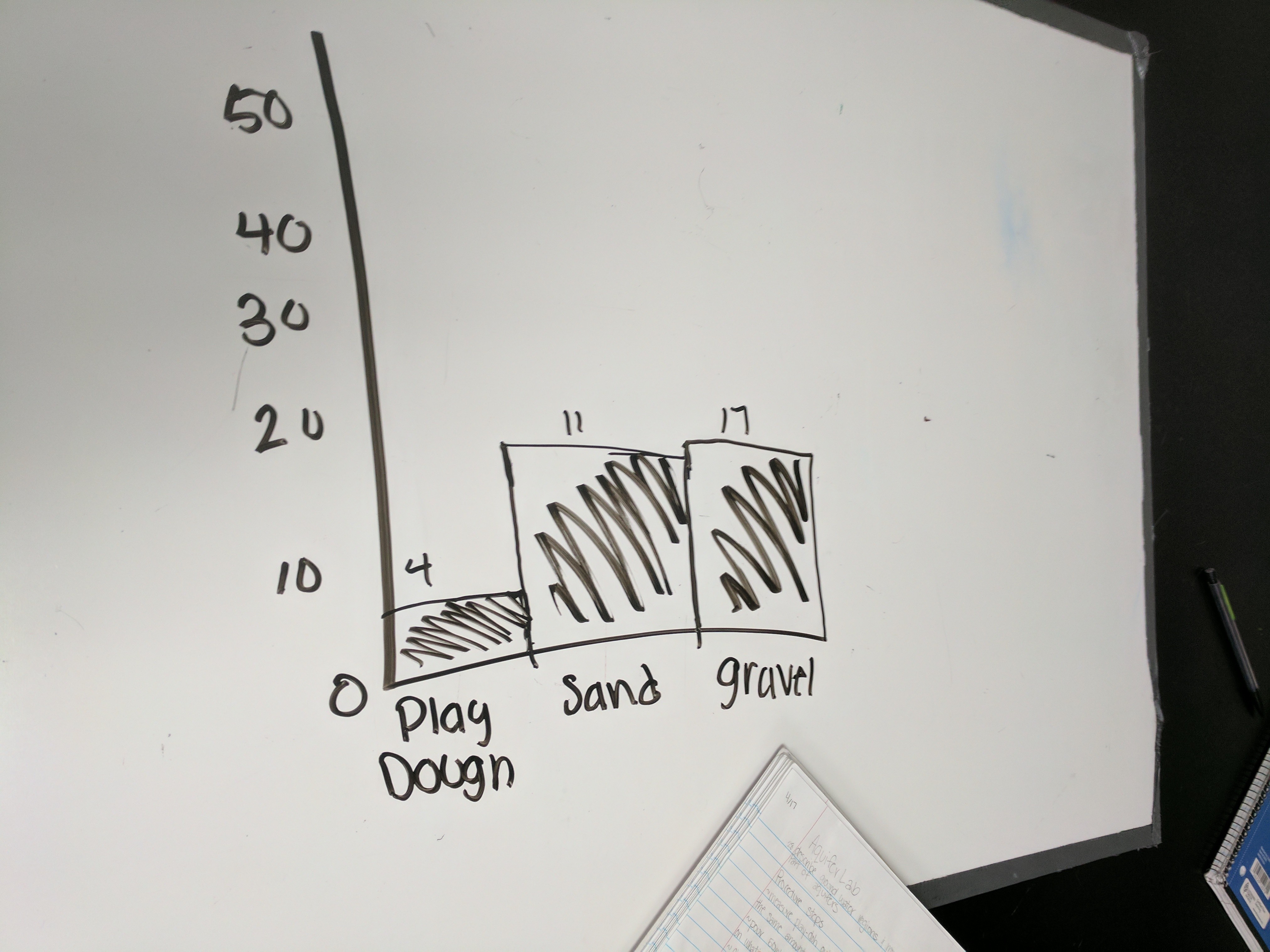
Students designed their own experiments to compare the porosity of sand, gravel, and Play-Doh. Students needed a little more scaffolding on how to measure the amount of water absorbed, but they ended up with nice results overall. Tomorrow, we’ll spend some time connecting these results back to the structure of aquifers.

aquifer

Day 134: Board Meeting & Artesian Wells

AP Physics: Board Meeting

Students whiteboarded the results of yesterday’s lab. Several students had already seen λ=c/f in AP Chemistry, and I was pleased to hear them discussing how their results fit with that formula.

wave wb

Earth Science: Artesian Wells

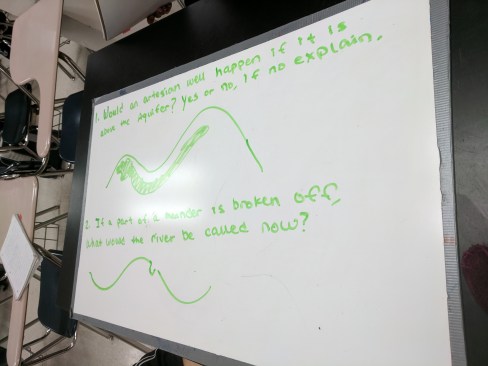
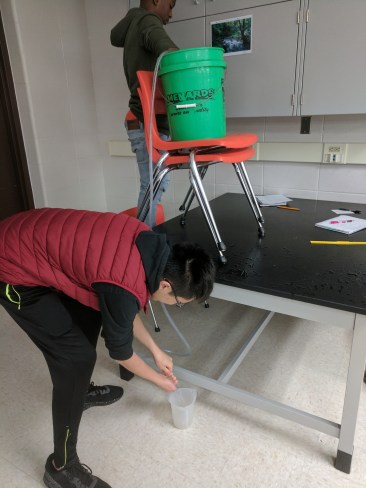
Students simulated an artesian well to find how the change in elevation affects the flow rate. I wish I’d spent more time on the pre-lab discussion to help set up what students should measure and why. I really liked the connections to energy it was possible to make; a few of the students I had last tri sketched bar charts and were able to generate some very nice explanations for why the big elevation change produced a high flow rate.

well